Inhaltsübersicht
TL;DR:
- The term “alternative social media” encompasses platforms with diverse motivations, structures, and outcomes, which creators must evaluate carefully. Not all platforms labeled “alternative” genuinely prioritize creator interests, as governance, moderation, and monetization vary widely. Long-term stability relies on diversification, direct audience relationships, and strategic content distribution rather than chasing fleeting platform trends.
The phrase “alternative social media” gets thrown around constantly in creator circles, usually with the assumption that anything not named after a large, publicly traded tech company is automatically better for creators. That assumption is wrong, and it’s costing people time, money, and audience loyalty. Before you migrate your content, your fans, and your income stream to any new platform, you need to understand what “alternative” actually means, because the word covers a surprisingly wide and sometimes contradictory range of platforms, motivations, and outcomes.
Inhaltsübersicht
- Understanding what defines alternative social media
- Core features and how they impact creators
- Typologies: Structural vs. ideological alternatives
- Practical considerations for creators: Choosing the right alternative
- Trends, challenges, and metrics: What’s changing in 2026?
- Why labels matter less than strategy: The creator’s real alternative
- Discover creator-first alternatives with Fanspicy
- Frequently asked questions
Wichtigste Erkenntnisse
| Point | Details |
|---|---|
| Alternative platforms defined | Alternative social media platforms focus on decentralization, user control, and non-profit motives over mainstream profit-driven models. |
| Varying motivations and risks | Not all alternatives are safer or more inclusive; some prioritize ideological or technical differences that carry new risks. |
| Creator opportunity and challenge | Creators gain more control and potential audience ownership but must adapt to fewer built-in tools and distinct moderation landscapes. |
| Importance of strategic selection | Evaluating governance, community culture, and monetization tools is critical for creators exploring alternative platforms. |
| Trends point to growth | Decentralized and alternative social media are growing in 2026 but require creators to stay proactive and adaptable. |
Understanding what defines alternative social media
Let’s clarify what “alternative social media” really means before exploring how it affects creators.
The phrase sounds simple, but it carries a lot of weight. According to the GCDI, “alternative social media” is an umbrella term for social-media-like services that position themselves as alternatives to mainstream, profit-maximizing corporate social media. That definition is broad by design. It covers everything from decentralized networks to creator-owned communities to niche subscription platforms.
A commonly cited set of shared features for alternative social media includes anti-profit orientation, non-centralized infrastructure, and frequent use of free/open-source software. Those three traits sound appealing on paper, but they play out very differently in practice depending on the platform.
Here is what that actually looks like in the real world:
- Anti-profit orientation does not mean the platform is free to use or that creators earn more. It means the organization running it prioritizes community goals over shareholder returns.
- Non-centralized infrastructure can mean more creator autonomy, but it also means less standardization and fewer built-in discovery tools.
- Open-source software enables transparency and community customization, but rarely translates directly into better monetization features for creators.
The label “alternative” can be claimed for multiple and sometimes conflicting reasons. A platform might call itself alternative because it refuses advertising revenue. Another might use the term because it promises less content moderation. A third might simply be smaller and newer. As a creator evaluating your options, you need to look past the label and ask what the platform is actually offering you.
“The word ‘alternative’ signals intent, not outcomes. Two platforms can both call themselves alternative while serving completely different audiences with opposite values.”
Understanding what kind of adult content platform you are joining, or what kind of adult social media ecosystem you are entering, is the first step toward making a smart platform decision.
Pro Tip: When researching any new platform, look for their published governance documents or community guidelines before signing up. These reveal far more about the platform’s real values than its marketing copy ever will.
Core features and how they impact creators
With the foundational definition clear, let’s break down the practical effects these features have for creators.
The most important thing to understand is that “alternative” is not a quality judgment. Research confirms that the “alternative” label is contested and historically situated. It can refer to structural critiques around power and surveillance, and also to content and outcomes, including the possibility of discriminatory or hateful narratives. In short, alternative platforms span an enormous range.
Decentralized platform models are frequently used as a practical alternative to centralized social networks, often emphasizing user control over feeds, data, and moderation. But decentralization also introduces usability and moderation challenges that directly affect creators.
Here is how core features translate into real creator experiences:
| Merkmal | Potential benefit for creators | Potential challenge |
|---|---|---|
| Decentralization | Own your audience data and relationships | Harder to get discovered by new audiences |
| Anti-profit model | Less pressure from advertisers shaping content | Fewer resources for creator tools and support |
| Open-source software | Community-driven improvements | Slower feature rollout, patchy user experience |
| Low algorithmic interference | Content reaches followers directly | Requires active promotion and community building |
| User-controlled moderation | Safer spaces are possible | Inconsistent enforcement across instances |
Creators who thrive on alternative platforms are rarely passive. They treat community engagement as a core part of their work, not an afterthought. Hybrid monetization approaches work especially well in these environments because no single revenue stream dominates. Subscriptions, tips, pay-per-view content, and community memberships can all coexist on alternative platforms in ways that mainstream ad-driven networks actively discourage.

Understanding the full range of monetization methods available to you as a creator is essential before committing to any platform. The tools a platform provides, or fails to provide, will determine how much energy you spend chasing income versus creating content.
Key takeaway: Decentralized and alternative platforms offer more creator autonomy, but that autonomy comes with responsibility. You need to build your own discovery funnel, manage your community culture, and diversify your income.
Typologies: Structural vs. ideological alternatives
Understanding the range of features sets the stage for evaluating why a platform is labeled “alternative.”
Not all alternative platforms are built on the same philosophy. There is a meaningful difference between platforms that are structurally alternative and those that are ideologically alternative, and confusing the two can seriously damage your brand and income.
According to HandWiki, “alt-tech” is sometimes defined more politically than “alternative social media,” framing certain platforms as offering a promise of uncensored speech, which may correlate with far-right, nationalist, or extremist communities. Not all alt-tech platforms fall into this category, but the association is real enough to affect audience culture and advertiser relationships.
Here is a practical comparison to help you evaluate any platform you encounter:
| Type | What “alternative” means | Who it serves | Creator risk |
|---|---|---|---|
| Structural alternative | Decentralized, open-source, anti-profit | Community-first users | Lower if moderation is strong |
| Ideological alternative | “Uncensored” or politically motivated | Often niche political audiences | Higher reputational risk |
| Creator-focused alternative | Subscription and monetization tools | Content creators and fans | Moderate, depends on policies |
| Federated network | Interoperable, instance-based | Tech-savvy users | Variable by instance |
Use this numbered process to evaluate any platform before investing your time:
- Read the governance documents. Who controls the platform? Is it a nonprofit, a cooperative, or a private company with a political agenda?
- Review content moderation steps and enforcement history. What gets removed, and who decides?
- Assess the audience culture. Are the existing users the kind of community you want to build in?
- Check financial transparency. How does the platform make money, and does that model align with creator interests?
- Look for creator success stories. Not testimonials, but real examples of creators with sustainable income on that platform.
Pro Tip: Run a search for your potential audience on any new platform before you post your first piece of content. If the conversations happening there do not match your values or content style, no amount of monetization tools will fix the audience mismatch.
Practical considerations for creators: Choosing the right alternative
Now that the types and risks are clear, let’s discuss how you should approach these options as a creator.
For creators and streamers, a common practical interpretation of “alternative social media” is any non-mainstream place to build community and monetization that is less dependent on centralized algorithmic feeds. That framing is useful because it keeps the focus on what matters most: sustainable income and genuine audience connection.
Here is what to prioritize when choosing an alternative platform:
- Audience culture fit. A platform with 500,000 engaged users who match your niche will outperform one with 5 million passive scrollers every single time.
- Data ownership. Can you export your subscriber list, contact information, or engagement data? Platforms that lock your data in are recreating the same dependency you are trying to escape.
- Moderation transparency. Are the rules clear? Are they applied consistently? Inconsistent moderation harms both creators and audiences.
- Discovery and promotion tools. Does the platform help new users find your content, or does all discovery depend on you driving traffic from elsewhere?
- Financial model alignment. Subscription-based platforms tend to align creator and platform incentives better than ad-supported ones.
“The best alternative platform for you is the one where your ideal audience already spends time, not the one with the most features or the most press coverage.”
Adopting a portfolio approach is the most resilient strategy for alternative platform creators. Rather than migrating entirely from one platform to another, smart creators maintain a presence across several spaces, each serving a different purpose. One platform might be your primary income source through subscriptions. Another might be your discovery engine, bringing new fans into your ecosystem. A third might be your community hub where your most loyal followers gather.
Invest heavily in content creation ideas that travel well across platforms. Then develop a clear system for promoting paid content across those spaces so your audience always knows where to find your best work and how to support you.
Trends, challenges, and metrics: What’s changing in 2026?
Finally, let’s look at how creators can track trends and measure the potential of their chosen platforms.
The alternative social media landscape is growing fast, but measuring that growth is genuinely difficult. Empirical benchmark metrics exist for decentralized ecosystems like fediverse component usage, but they are produced by third-party tracking and may measure different things, such as Monthly Active Users versus point-in-time snapshots, and only for selected software instances. This means the headline numbers you read about alternative platform growth should be treated as directional signals, not definitive data.
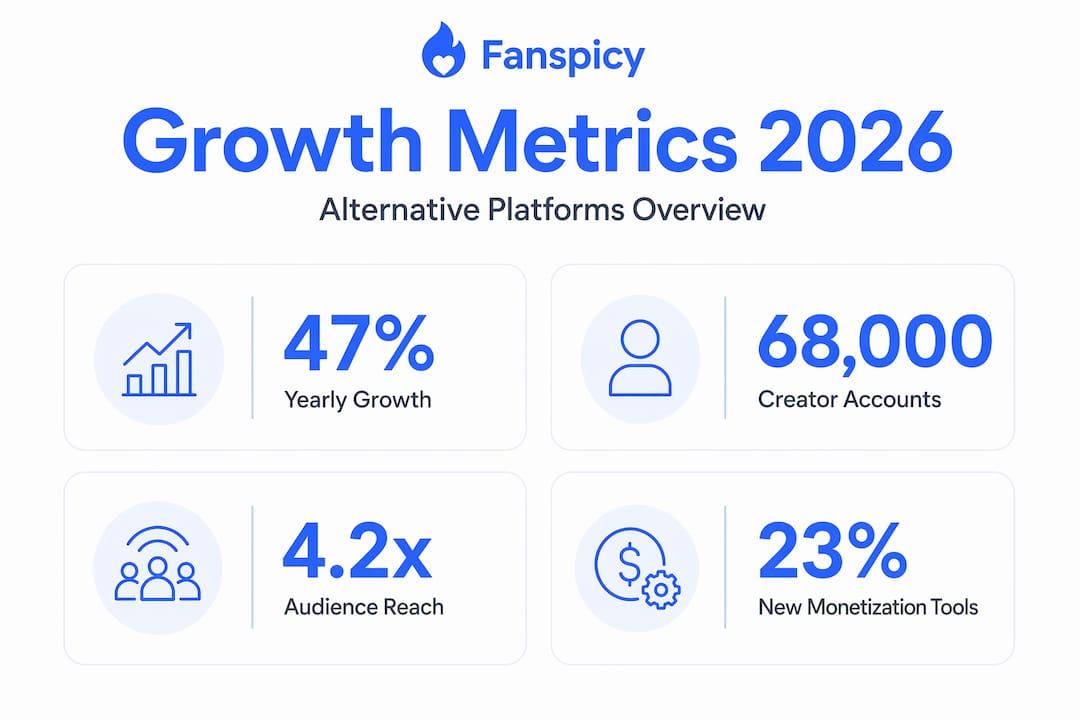
Here is what the available data does tell us:
| Metric type | What it measures | Creator relevance |
|---|---|---|
| Monthly Active Users (MAU) | Platform-wide engagement trend | Signals audience growth potential |
| Instance size (federated) | Individual server activity | Indicates community health |
| Creator revenue per user | Platform monetization efficiency | Direct income indicator |
| Content moderation reports | Enforcement volume and patterns | Signals platform safety culture |
Key trends shaping alternative platforms in 2026:
- Usability is improving but still lags behind mainstream platforms. Onboarding friction continues to limit growth, particularly for non-technical audiences.
- Creator tools are maturing. More alternative platforms are adding subscription tiers, tipping features, and pay-per-view content in response to creator demand.
- Moderation remains inconsistent. The decentralized model that gives creators autonomy also makes it difficult to enforce consistent safety standards across a network.
- Audience migration is slow. Most people follow creators, not platforms. Your audience will move where you actively invite them, not simply because you announce a new account somewhere.
- Data fragmentation is a real problem. If you spread across too many platforms without a clear system for tracking what works, you will spend more time managing accounts than creating content.
The smartest move for creators in 2026 is to track your own metrics obsessively regardless of what the platform reports. Email list size, direct subscription count, and monthly revenue from owned sources tell you far more about your real security than any platform’s public-facing growth statistics.
Developing a clear media marketing strategy helps you stay focused on your own growth rather than chasing platform trends that may not benefit your specific audience or content type.
Why labels matter less than strategy: The creator’s real alternative
Here is the honest truth that most platform guides will not tell you: many platforms that market themselves as “alternative” are simply recreating the same problems that drove creators away from mainstream networks in the first place. Opaque algorithms that favor certain content types. Weak moderation that allows bad actors to harass creators. Financial models that benefit the platform far more than the people generating the content. The word “alternative” changes none of that unless the platform’s governance and business model genuinely put creators first.
Long-term creator security does not come from finding the perfect platform. It comes from spreading risk intelligently, building direct relationships with your audience, and learning the specific quirks of each space you inhabit. A creator who owns their email list, diversifies income across three platforms, and actively engages their community in each space is far more stable than one who chases whichever “alternative” platform is generating buzz this quarter.
The most successful creators we observe treat platform decisions the way experienced investors treat portfolio decisions: diversification, risk management, regular review, and a willingness to exit when a platform’s incentives shift away from creator interests. They also invest in content marketing strategies that work independently of any single platform’s algorithm or policy.
Adaptability is the real alternative. Not a platform name.
Discover creator-first alternatives with Fanspicy
If this article has made one thing clear, it is that the platform you choose matters far less than whether that platform was genuinely designed with creators in mind. Most are not. Fanspicy was built differently, specifically as a paid social media, live cam, and subscription platform where creators control their content, their pricing, and their audience relationships from day one.
Explore what a creator-first experience actually looks like by browsing real profiles like this creator on Fanspicy und this active creator account to see how community-first engagement plays out in practice. Fanspicy gives you subscription tools, live cam features, and direct fan monetization without the algorithmic gatekeeping that defines mainstream platforms. If you are ready to diversify your creator income and build on a platform that shares your incentives, Fanspicy is a logical next step.
Frequently asked questions
What are the most important features of an alternative social media platform?
The most important features include decentralization, anti-profit orientation, and open-source development, but practical user control and strong moderation policies are what determine whether those features actually benefit creators.
Is “alt-tech” the same as “alternative social media”?
Not exactly. “Alt-tech” is often defined more politically, framing platforms around uncensored speech, while “alternative social media” is a broader term covering both technical infrastructure differences and ideological motivations.
How do creators earn money or build audiences on alternative platforms?
Creators succeed through community-driven engagement and direct monetization tools like subscriptions and tips, with non-mainstream community building that relies on owned audience relationships rather than centralized algorithms doing the discovery work for them.
Are decentralized or alternative platforms growing in 2026?
Yes, growth is real but measuring it is complicated. Fediverse usage metrics exist but are tracked inconsistently by third parties, and the numbers cover different things depending on who is measuring and which software instances are included.