
Inhaltsübersicht
Adult content is sexually explicit or nude material made for people over 18, and almost every platform, browser and country handles it differently. If you searched for a site by name, you will not find it here, but you will find what actually decides whether adult content shows up, gets hidden or gets removed: platform policy, age checks, search filters and the choices creators make before they post.
TL;DR
- Online, adult content covers nudity, sexually explicit material and sex acts, but each platform draws its own line between what is allowed, restricted or banned.
- Platforms restrict, age-gate or demote it to protect young users, meet legal duties and manage the risk their payment and advertising partners see.
- If your browser blocks adult results, the cause is usually SafeSearch, a device or network filter, a school or workplace policy, or public Wi-Fi.
- Age-verification rules differ by country, so a rule in Italy or Australia is not a universal rule.
- Creators should post only what they made or have written permission to share, protect personal details and document their own compliance steps.
Inhaltsübersicht
- What adult content means online
- How platforms draw the line
- Why platforms restrict, age-gate or hide adult content
- Why your browser may be blocking adult content
- How age verification differs by country
- Viewing and sharing adult content safely and consensually
- What creators should check before posting
- Our perspective on the creator side of adult content
- Where creators and fans can go next
- FAQ
- Sources
What adult content means online
There is no single legal or technical definition that every site shares. A useful working one comes from the trust-and-safety field: online explicit content describes or depicts intimate matters, which can include nudity, sexually explicit material or sex acts. Three ideas sit inside that definition, and mixing them up causes most of the confusion readers have.
- Nudity. A bare body is not automatically sexual. Medical, artistic and educational images are nude without being pornographic.
- Sexually suggestive material. Lingerie, implied acts and flirtatious posing sit in a gray zone that many mainstream platforms limit, even if they allow it.
- Sexually explicit material. Depictions of sex acts or explicit genital focus. This is the category that most mainstream platforms ban outright and that adult-focused platforms host behind age controls.
The common thread in every definition is consent and adulthood. Material that is not consensually produced and distributed, or that involves anyone under 18, is not adult content. It is abuse material, and no platform that operates legally treats it as a policy gray area.
How platforms draw the line
Platform rules fall along a spectrum. Some example policies permit mild nudity for artistic or educational purposes, with warnings and access restrictions. Stricter policies allow no exceptions at all, regardless of context. That is why the same image can be fine on one service and removed on another within minutes.
Researcher Laura Edelson, writing on content moderation in practice, notes that nearly every platform sets a minimum floor for what it will host, and applies a more rigorous standard to advertising. Many social networks add a third layer: separate criteria for what their algorithms recommend. In practice, a post can be allowed on a profile, blocked from ads and still kept out of recommendations.
For creators, this means the question is never just “is this allowed?” It is three questions:
- Can I host this here?
- Can I promote it here?
- Will the platform show it to people who did not search for it?
Platforms built for adult creators answer yes to the first, and handle the second and third through consent-based, opt-in discovery. That is a major reason independent creators look for dedicated homes instead of fighting rules written for general audiences. Our guide to content moderation steps for adult creators walks through how that works day to day.
Why platforms restrict, age-gate or hide adult content
There are four recurring reasons, and understanding them explains most of what you see on your screen.
Protecting young and sensitive users
Platforms may moderate explicit content or use age assurance to protect young or sensitive users and to comply with laws. X, for example, lets creators place adult media behind a content warning, and users under 18 or without a birth date on file cannot view marked posts.
Legal duties
Laws on pornography and online safety vary widely. Platforms may prohibit or restrict content they consider objectionable, including sexual content, or content that poses an immediate safety risk. Where the law demands age checks, services that do not comply risk penalties or blocks.
Financial pressure
Payment companies matter more than most readers realize. Academic work by Maggie MacDonald argues that financial firms exert infrastructural influence over adult platforms, pushing them toward automated moderation as a way to manage reputational risk. This is also why payment handling is a core topic for creators; see our overview of the role of payment processing for creators online.
Automation and its mistakes
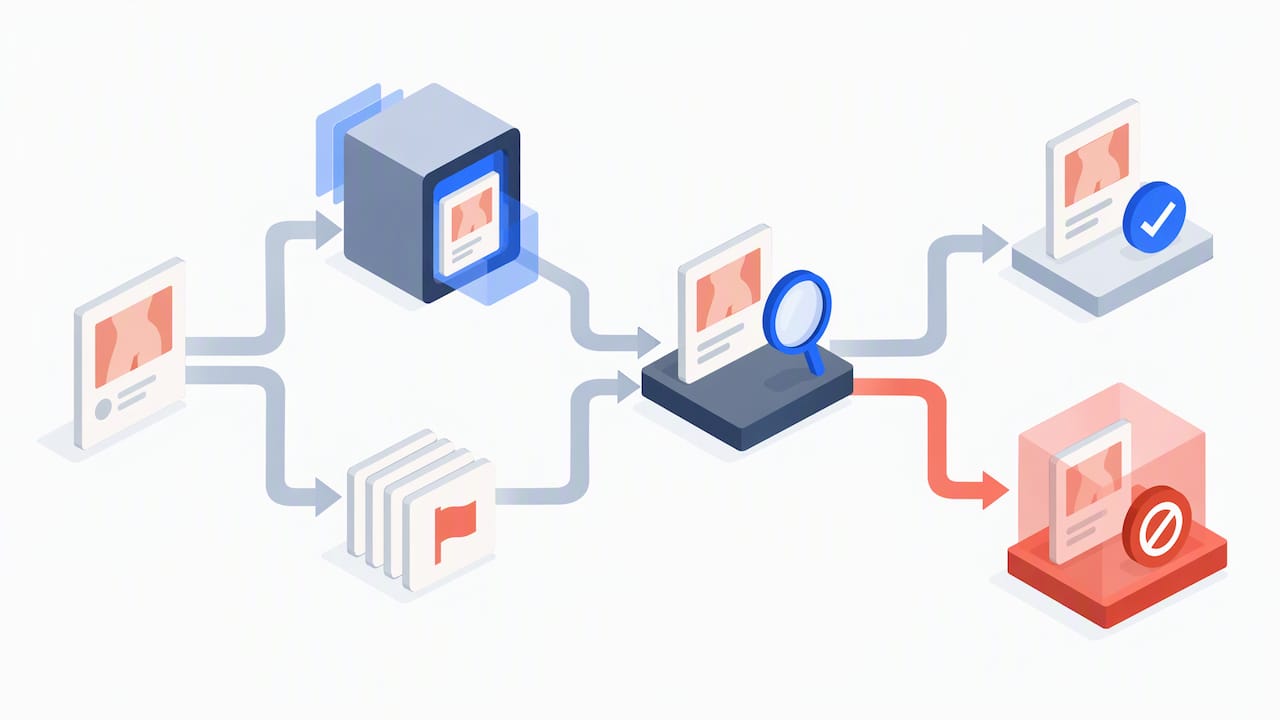
Platforms detect violations either proactively with automated tools or reactively through user complaints, as Edelson describes. Automation is imperfect. The Prostasia Foundation points out that mainstream platforms relying on software and user reports frequently mistake 18+ community content for policy-violating material. For a legitimate creator, that translates into wrongful removals, shadow limits and lost income.
Why your browser may be blocking adult content
If adult results never appear, or a page you expected is missing, the block usually comes from one of a handful of places. Work through them in this order.
1. SafeSearch on Google
SafeSearch only affects Google Search results, and it has three states. According to Google’s own help page, Filter blocks detected explicit results, Blur blurs explicit images while explicit text and links may still show, and Off shows relevant explicit results. The setting can be locked by account, device or network administrators, parents, schools, antivirus software and public Wi-Fi. If the toggle is grayed out or keeps switching back, someone or something else controls it.
2. Device and account controls
Parental-control tools, family accounts and managed work or school profiles can restrict adult sites for the whole device, not just the search engine. If the device belongs to an employer or school, the setting is almost certainly deliberate, and it is not yours to change.
3. Network filters
Home routers, internet providers and public hotspots often offer filtering at the network level. A site that opens on your mobile data but not on your home Wi-Fi points to this layer.
4. Security software
Some antivirus and browser-security extensions block categories of sites by default. Check the category settings in the software itself rather than disabling protection entirely.
5. Local law
In some countries a site may be unavailable or ask for age verification because of local rules. The next section covers how that differs by country.
A quick test helps: open the same page on a different network and a different browser. Whichever combination changes the result tells you which layer is responsible. If you manage a household, change settings from the account that set them up, and keep filters on wherever children use the device.
How age verification differs by country
Age checks are not one global standard, and a creator or fan should never assume a rule from one country applies everywhere.
| Country | What the official source says |
|---|---|
| Italy | Covered pornography sites and video-sharing platforms must use a third-party age check meeting the “double anonymity” criterion |
| Australien | The eSafety Commissioner enforces mandatory codes requiring high-risk services to implement age checks to protect children from harmful content |
The Italian model is worth understanding because it answers a real privacy worry. Under double anonymity, the third-party certifier confirms age without sharing identity details with the host platform. The site learns that the visitor is an adult, and the certifier does not learn which site the person is visiting.
For global platforms, this patchwork means features such as age gates, geo-blocking and identity checks are not optional extras. They are the operating system of a responsible adult service. Our guide to the role of privacy in adult platforms explains what to look for from the user side.
Viewing and sharing adult content safely and consensually
This is practical, common-sense guidance rather than legal advice, and the rules in your own country or state still apply.
For viewers and subscribers
- Stay on services that verify the age of everyone who appears and everyone who watches. A site with no age gate and no reporting tool is a warning sign.
- Pay inside the platform. Off-platform payment requests, gift-card demands and links sent in private messages are the usual shape of scams.
- Keep your own details private. Use a display name, avoid sharing your workplace or address, and treat any request for them as a red flag.
- Respect the creator’s terms. Paid content is not licensed for re-uploading, screen recording or passing around.
For anyone sharing intimate material of themselves
- Share only with adults who have clearly said yes, and only with the level of consent they gave. Consent to view is not consent to forward.
- Assume anything sent can be copied. Crop out faces, tattoos, backgrounds and anything that identifies you if anonymity matters.
- Never share, request or keep intimate material involving anyone under 18, and never share someone else’s private images without their permission. Doing so can be a crime in many places. If this has happened to you, contact local law enforcement or a victim-support service in your country.
Consent is not a one-time box to tick. It can be withdrawn, and a trustworthy platform gives people a simple way to report and remove content that was posted without it.
What creators should check before posting
Creators carry more risk than viewers, so a short checklist pays for itself.
- Ownership. Post only content you created or have written permission to publish. This rule appears in the published guidelines of adult platforms generally, and it protects you from takedowns and disputes.
- Identity of everyone on screen. Every person featured should be an adult who has agreed, in writing, to appear and to the way the material will be sold.
- Personal information. Avoid exposing legal names, locations or contact details, yours or anyone else’s, without consent. Check backgrounds, mail, reflections and file metadata before you upload. Our piece on digital privacy for adult cam creators covers the habits that matter most.
- Payments. Know how and when you are paid, and which processors the platform uses. Start with secure payment steps for adult content creators and the explanation of why payment security matters for earnings.
- Promotion rules. Mainstream social networks usually allow far less than your hosting platform does. Read the advertising and recommendation rules of every channel before you promote on it. Our NSFW marketing guide and the piece on social media content marketing for adult creators go deeper.
- Platform compliance. Attorney Corey D. Silverstein recommends that adult platforms document and periodically test their controls, including age and identity checks, consent, moderation, livestreams, complaints, anti-trafficking measures and geo-blocking where required. As a creator, you can use the same list as a yardstick when choosing where to work: ask whether the platform can show you how each of those controls works.
If you are unsure about a legal point, such as record-keeping, taxes or the rules of a specific country, speak to a lawyer or accountant who works with adult-industry clients before you publish.
Our perspective on the creator side of adult content
We built Fanspicy on a simple conviction: adult content is a legitimate part of the creator economy, and the people who make it deserve the same professional footing as any other independent business. That starts with ownership. Creators should own their audience, choose how they earn and keep a higher share of what they make, rather than renting reach from services whose rules can shift overnight.
We also believe safety and monetization are not opposites. Clear consent rules, privacy protection and transparent moderation make a platform more trustworthy for fans, and trustworthy platforms are where fans are willing to pay for subscriptions, private messages, live streams and tips. Creators who arrive from other services should not have to start from zero, so we focus on easy content migration and on supporting many content types and creator categories.
The automated moderation mistakes described earlier are a real cost to working creators. Our answer is to keep the rules visible, keep adult content in an adult-only space and treat creators as partners in that effort. Read more in our look at the role of creators in adult content in 2026.
— fan
Where creators and fans can go next
If you are a creator who wants a dedicated home for adult content, Fanspicy is a paid social media and live cam platform where you sell subscriptions, exclusive content, paid posts, private messages and live streams, and receive tips from fans. Creators do not pay fees to join or use the platform. Fanspicy takes a percentage commission on each transaction, so you earn when your fans pay.
Ready to start? Become a creator on Fanspicy and set up your exclusive content, tips and paid posts. If you are a fan, you can explore subscriptions, private messages and live streams from independent creators in an adult-only space.
FAQ
Why is my browser blocking adult content?
The most common cause is SafeSearch, which can filter or blur explicit results in Google Search. Parental controls, school or workplace policies, antivirus software, router filters and public Wi-Fi can also lock the setting. Testing the same page on another network and browser shows which layer is responsible.
How do I open adult content on Google?
Google lets you change the SafeSearch setting to Filter, Blur or Off from its search settings, as long as nobody else controls it. If an account, device or network administrator has locked it, only that administrator can change it. Do not try to bypass filters on a device that belongs to a school, employer or child.
What is the difference between nudity and adult content?
Nudity is the depiction of a bare body, and it can be artistic, medical or educational. Adult content usually means sexually explicit material or sex acts. Platform rules differ: some allow mild nudity with warnings and access limits, while stricter ones ban it in every context.
Do all countries require age verification for adult sites?
No. Requirements vary by country. Italy, for instance, requires a third-party check with double anonymity for covered sites, and Australia enforces codes that require high-risk services to run age checks. Always check the rules of the country where you or your audience live.
Can creators protect their identity?
Yes, to a large extent. Use a stage name, strip identifying details and metadata from files, avoid sharing your location and choose a platform that explains its privacy and payment protections. Our privacy guides for adult creators describe the steps in more detail.
Sources
- Explicit Content, IFTAS
- Content Moderation in Practice, Laura Edelson
- X officially allows porn under updated policy, Variety
- The Algorithmic Moderation of Sexual Expression, Maggie MacDonald
- Multi-stakeholder Dialogue on Consent and Safety in Adult Content, Prostasia Foundation
- Filter or blur explicit results with SafeSearch, Google Search Help
- Comunicato stampa, Agcom
- Accessing online porn and adult content FAQs, eSafety Commissioner
- Adult Platforms Need to Prove Their Compliance Controls Work, Corey D. Silverstein