
Inhaltsübersicht
Webcamming is broadcasting live video and sound over the internet with a webcam. The word covers everything from a public camera pointed at a landmark to a video call, but in search and in the creator economy it usually means one thing: performing live on camera for a paying online audience, often in adult entertainment. This guide explains both meanings, how a cam show works, how performers get paid, what the risks are, and how to judge a platform if you are thinking about trying it.
TL;DR
- Webcamming in the broad sense is live video broadcast over the internet. In the adult context it is a live, interactive show that viewers pay to watch, chat in and tip.
- Public shows are one-to-many and run on tips. Private sessions are one-to-one and are generally billed per minute.
- Income depends on visibility, tips, session time and the share the platform keeps, so the revenue split matters as much as the audience.
- The main risks are privacy, unclear platform terms, content rules that shape how performers work, and exploitation by third parties.
- If you are curious about performing, start with a platform that has no joining fee, transparent terms and tools to control your audience.
Inhaltsübersicht
- The two meanings of webcamming
- How a cam show works
- What you need to start
- How webcam performers earn money
- Risks to understand before you go live
- Our perspective on webcamming
- Webcamming platforms compared by type
- Try live streaming on Fanspicy
- How to decide if webcamming is for you
- FAQ
- Sources
The two meanings of webcamming
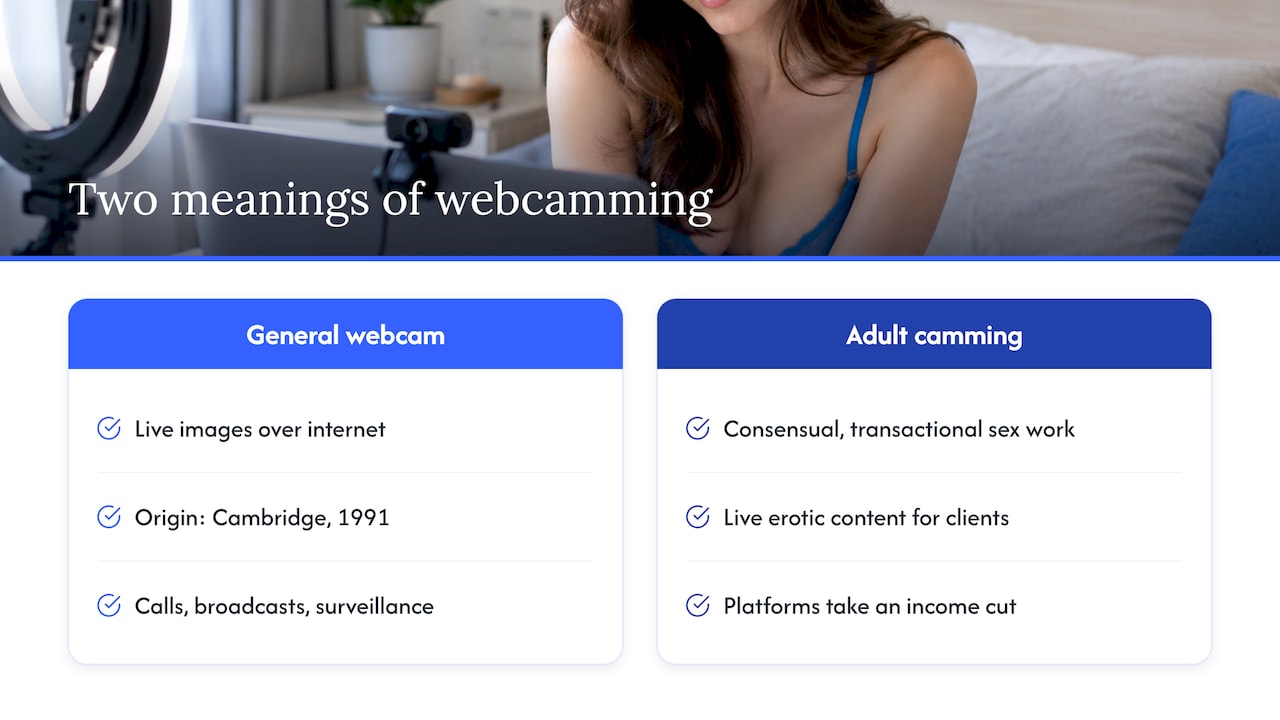
The general definition is the older one. Britannica describes a webcam as a camera that transmits live images over the internet, and notes that the first one was set up in 1991 at Cambridge University to monitor a coffee pot. Today webcams power video conferencing, public broadcasts and surveillance.
The second meaning is the one most people searching today have in mind. Researchers at the University of Amsterdam describe adult webcamming as consensual, transactional online sex work: performers livestream sexual and erotic content on platforms that connect them with clients and take a cut of their income. People also call it camming, and a performer is a cam model or cam performer.
Not every live-cam creator performs explicit content. Many hosts run flirty chats, fitness sessions, gaming streams, lifestyle shows or fan hangouts, and earn from the same tools: tips, private chats and paid extras. The mechanics below apply across that range.
How a cam show works
A cam platform is more than a video player. A peer-reviewed study describes these services as ones that facilitate, aggregate, monetize and govern real-time interactions between performers and viewers, after identity verification and acceptance of platform terms. In practice, a session looks like this.
Public shows
In a public show, a performer streams to many viewers at once. According to an academic review of cam sites, viewers can chat, make requests and tip with tokens. The chat room is part of the product. Research by Antonia Hernández found that one-to-many performers juggle performance, entertainment and conversation at the same time, and that moderators often help manage disruptive users, answer questions and encourage tips.
Private sessions
Private sessions are one-to-one. The same review says they may include both participants on camera and generally charge the customer per minute. Because the viewer has the performer’s full attention, private time is usually where the strongest regulars are built.
Why viewers come back
It is not only about the content. The same research reports that performers and customers co-create each encounter through conversation, and that repeated real-time contact can develop emotional intimacy beyond sexual exchange. Hernández adds that the pull of a cam room depends partly on a shared chatroom atmosphere and a sense of togetherness, which also creates extra emotional and administrative labor for the performer. A good cam host is part entertainer, part community manager.
What you need to start
The equipment list is short:
- A camera and microphone. A decent webcam or phone works at the start. Clear audio matters as much as picture.
- Good, even lighting. A ring light or a window in front of you beats any camera upgrade.
- A stable connection. Live video drops are the fastest way to lose a room.
- A private, tidy space. Check the background for anything that identifies you.
- A verified account. Platforms require identity verification before you go live.
Ideas for what to do on camera matter more than gear. Our guides on live cam content types that boost viewer engagement und interactive content ideas for live cam creators are good places to plan your first shows.
How webcam performers earn money
Earnings come from live interaction. University of Amsterdam research on performers in three countries says creators earn through tips and per-minute fees for livestreamed interactions, that platforms shape how performers make a living, and that visibility is central to income.
Tokens
Most sites run on virtual tokens. A peer-reviewed article explains that customers buy tokens, spend them to request acts or enter private chats, and that the platform deducts a hosting fee before the model receives the rest. If you want the detail, see our guide to the role of tokens on cam sites.
Visibility
The Amsterdam thesis, based on interviews with 67 performers and 13 industry insiders in the Netherlands, Romania and the United Kingdom, links earnings to the need to stay visible online and says platforms profit from that visibility. In plain terms: more hours, more regular schedules and more promotion tend to matter, and the platform’s discovery tools can raise or lower your reach.
The revenue split
The share a platform keeps can change what you take home dramatically. Human Rights Watch reported in December 2024 that multinational webcam platforms hosting Colombian studio sessions kept an average of 50% to 65% of models’ income, and the studios then kept 60% of the platform payout, leaving workers the remainder. That is one country and one studio model, not a universal rate, but it shows why the split deserves a close read before you commit.
Beyond live shows
Live streaming is rarely the only income stream. Many creators combine it with subscriptions, paid posts, bundles and private messages so that the audience they build in a live room keeps paying between shows. Our guides on monetizing a live stream und why live cam platforms boost revenue and connection cover the options in detail.
Risks to understand before you go live
Webcamming can be a legitimate way to earn, and it has real downsides. Researchers describe it as both platform work and sex work, and the University of Amsterdam report says it is affected by algorithmic control, unclear content moderation, platform competition, repressive policies and stigma.
Unclear terms and rules
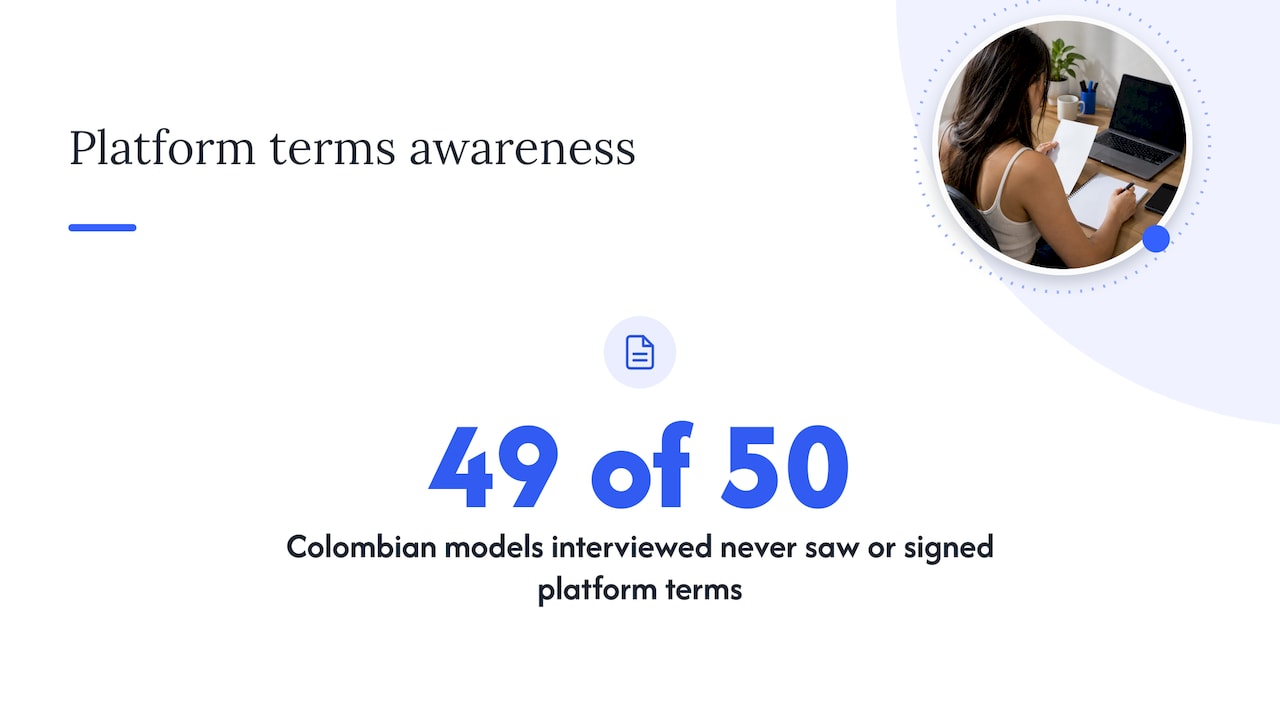
In the HRW research, 49 of 50 Colombian webcam models interviewed had never seen or signed the platform terms, which the researchers linked to wage theft, coercion and sexual and labor exploitation. HRW recommends accessible information for performers, account-transfer rights, confidential abuse reporting, studio oversight and measures against recycled accounts that can bypass age verification. The lesson for any performer: read the terms yourself, keep control of your own account, and be wary of anyone who wants to manage it for you.
Content rules are work rules
Rébecca Franco and Hanne Stegeman argue that content moderation works as de facto labor management, because content rules shape what performers do, how much they produce and how they deal with clients. The same paper notes that most platforms prohibit sharing personal information, links to other streaming platforms and alternative payment methods, so performers cannot be paid outside the platform. Knowing the rules in advance saves bans and lost income. Our content moderation guide for adult creators walks through the steps.
Datenschutz
Anything you show on stream can be recorded or recognized. Use a separate stage name and email, check your background, avoid location clues and review geo-blocking tools. Our guide to digital privacy for adult cam creators covers the practical checklist.
Risks for viewers
Viewers have their own trade-offs. A 2025 study in Computers in Human Behavior analyzed 1,225 open-ended comments from a survey of 10,570 viewers and found connection and sexual benefits alongside addiction, guilt and worries about exploitation. Setting a spending limit and choosing platforms that vet their performers are sensible habits.
Legal basics
Rules differ by country and by state, so check the law where you live and where you work. In the UK, for example, Ofcom guidance for video-sharing platforms hosting pornography calls for robust age verification, clear rules against criminal content and easy reporting. Age and identity checks are a common thread, and a platform that skips them is a red flag. If you are unsure about tax or legal status as an independent worker, ask a qualified accountant or attorney in your jurisdiction.
Our perspective on webcamming
We think webcamming is best understood as a business, not just a show. The performers who last treat their live room as the front door to a wider audience: they build regulars on camera, then give those fans more ways to support them through subscriptions, exclusive content, private messages and tips.
That is why we built Fanspicy around a few principles. Creators should keep a higher percentage of what they earn, own the relationship with their audience, and be able to move content over from other platforms without starting from zero. Creators do not pay a fee to join or use Fanspicy; the platform takes a commission on each transaction, so our interests line up with yours. We also believe a platform should support many creator types, not force everyone into one mold, and that clear rules and privacy tools are part of the product, not an afterthought.
If you are weighing options, ask every platform the same questions: what share do you keep, who owns my audience, can I take my content with me, and who can see my terms? Good answers to those four tell you more than any ranking.
— fan
Webcamming platforms compared by type
Not all sites work the same way. Here is how the main types differ on the things that affect a creator’s income and control.
| Platform type | How you earn | Audience ownership | Best for |
|---|---|---|---|
| Traditional cam site | Tips and per-minute private shows, with a large share kept by the site | Mostly stays with the site | Performers who want built-in traffic and accept a heavier cut |
| Studio-managed cam work | Share of platform payout after the studio’s cut | Often tied to the studio’s account | People who need equipment and support, with the risks described above |
| Subscription platform | Monthly fans, paid posts, messages, tips | Stronger, through fan lists and messaging | Creators with an existing following |
| Hybrid platform (live plus subscriptions) | Live tips, subscriptions, paid messages, bundles, exclusive content | Stronger, with multiple income streams in one place | Creators who want to go live and build recurring income |
A hybrid model is the one we recommend for most independent creators, because live shows bring fans in and subscriptions and messages keep them paying.
Try live streaming on Fanspicy
Fanspicy is a paid social media and live cam platform where independent creators sell subscriptions, exclusive content, paid posts, private messages and bundles, run live streams and receive tips from fans. There is no fee for creators to join or use it. If you are ready to start, create your creator profile to set up exclusive content, tips and paid posts, or explore subscriptions, private messages and live streams. For a deeper look at what the format offers, read our overview of live cam streaming and its earning potential and the benefits of live cam platforms for creators.
How to decide if webcamming is for you
Run through these questions honestly before your first stream:
- Comfort. Are you comfortable being on camera live, with chat, for an hour or more?
- Boundaries. Have you written down what you will and will not do, and what you will charge for?
- Privacy. Could someone link your stage persona to your real identity, and are you prepared if they do?
- Consistency. Can you keep a regular schedule? Visibility drives income.
- Terms. Have you read the platform’s terms and payout rules yourself?
- Support. Do you have a person you trust who knows what you are doing?
If most answers are yes, start small: a few short shows a week, a clear menu of paid extras, and a plan to move regulars into subscriptions or messages. Our guide on why creators join live cam platforms shows how the earning power and control fit together.
FAQ
Is webcamming the same as camming?
Yes. Camming, webcamming and cam modeling all describe broadcasting live on a webcam. In everyday use the terms usually refer to live shows where viewers pay through tips or per-minute private sessions, though the technical meaning is broader and includes any live webcam broadcast.
Is webcamming only adult content?
No. Webcamming in the technical sense includes video calls, public cameras and surveillance. Within the creator economy, many live hosts stream non-explicit content such as chats, fitness, gaming or lifestyle shows and earn through tips and paid extras. Adult webcamming is the best-known use of the term.
How do webcam models get paid?
Mostly through tips and per-minute fees in private sessions, often bought with tokens. The platform takes a share before the performer is paid, so the revenue split directly affects take-home income. Many creators add subscriptions, paid messages and exclusive content to earn between live shows.
Is webcamming safe?
It can be managed, but it carries privacy and exploitation risks. Use a stage name, check your background, read the platform terms yourself, and keep control of your own account. Anyone with legal or tax questions should ask a qualified professional in their country or state.
Sources
- Britannica: Webcamming
- University of Amsterdam report on adult webcamming
- Regulating and representing camming (SAGE Journals)
- Camsites as emerging relationship contexts (Ovid)
- Hernández, “There’s something compelling about real life” (SAGE Journals)
- Stegeman, Behind the webcam (UvA DARE)
- “Always hot, always live”: computer-mediated sex work (WSANZ)
- Human Rights Watch: “I Learned How to Say No”
- Content moderation as worker management (Taylor & Francis)
- The dialectics of sextech (Computers in Human Behavior)
- Ofcom: Better protections from harmful online videos