

Зміст
TL;DR:
- Independent creators build steady income streams by directly engaging with paying fans.
- Diversifying platforms and monetization models is essential for creator success and resilience.
- Treating content creation as a business through testing, analysis, and systems unlocks higher earnings.
The digital creator economy has flipped traditional media on its head, and you do not need millions of followers to benefit from it. Most people assume only viral stars earn real money online, but the reality is far more interesting. Independent creators across every niche, from fitness coaches to adult content creators, are building steady income streams by connecting directly with paying fans. The digital creator economy is a system where creators earn directly from audiences, bypassing traditional media gatekeepers entirely. This guide breaks down exactly how it works, which platforms matter, and how you can build a real business from your content.
Зміст
- Defining the digital creator economy
- Core components: Platforms, tools, and services
- Monetization models: How creators earn income
- Success strategies: Growing, promoting, and protecting your business
- Why most creators miss the true opportunity
- Start building your creator business today
- Frequently asked questions
Key Takeaways
| Point | Details |
|---|---|
| Direct-to-fan monetization | The digital creator economy allows creators to earn directly from their audience, cutting out traditional media gatekeepers. |
| Multiple income streams | Successful creators diversify across platforms, earning via subscriptions, tips, sponsorships, and digital products. |
| Business mindset required | Treating content creation as a business and using analytics, privacy, and promo tools is key to real, sustainable growth. |
| Strategy over luck | Building online income takes smart planning and testing, not just persistence or viral moments. |
Defining the digital creator economy
The creator economy is not a trend. It is a structural shift in how media, entertainment, and information get produced and consumed. For decades, earning from content meant signing with a network, a record label, or a publishing house. Those middlemen decided who got paid, how much, and when. That model is largely gone for independent creators.
Today, the digital creator economy refers to the ecosystem where independent content creators monetize skills and personal brands directly from audiences via online platforms, tools, and services. You own the relationship with your fans. You set your prices. You decide what you create.
“The shift from advertiser-driven revenue to direct fan funding is the single biggest structural change in media since the printing press.”
This matters because it changes the entire value equation. Instead of chasing mass appeal to attract advertisers, you only need a dedicated niche audience willing to pay for your specific value. A creator with 2,000 highly engaged fans paying $15 per month generates $30,000 monthly. That is not a side hustle. That is a business.
Creator types operating in this economy today include:
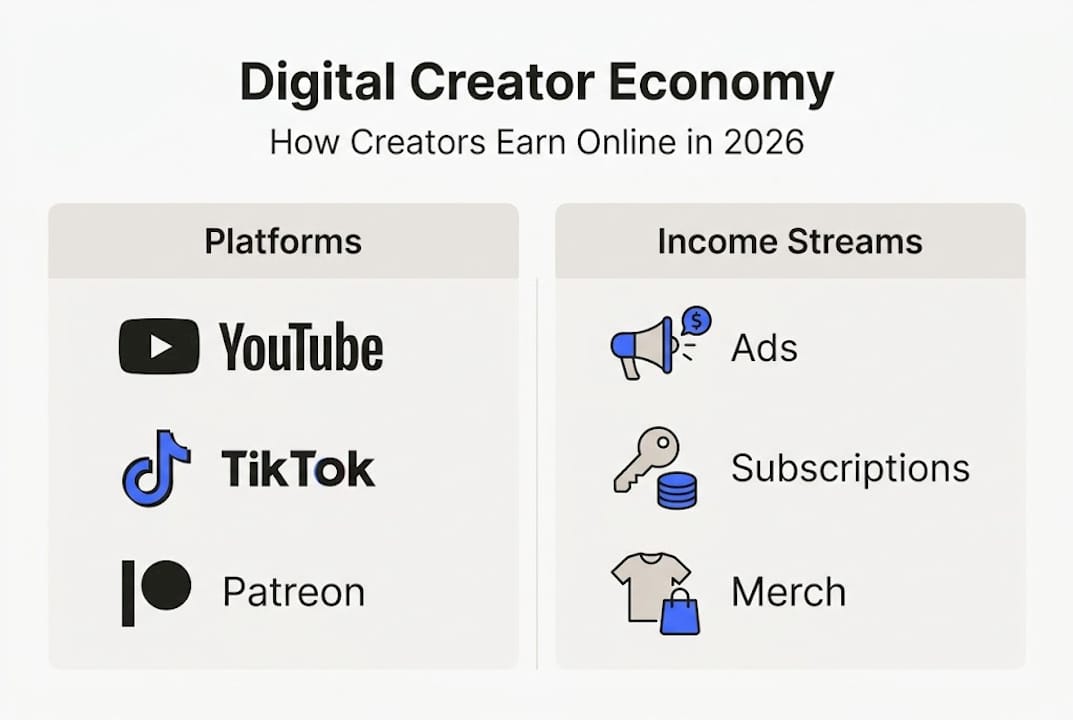
- Video creators on YouTube and TikTok earning through ads and brand deals
- Audio producers running paid podcast communities on Spotify or Patreon
- Subscription content creators on platforms like OnlyFans, Fansly, or FanSpicy, where fans pay monthly for exclusive access
- Educators and coaches selling courses, workshops, and consulting
- Newsletters and writers monetizing directly through paid subscriber models
| Creator type | Primary platform | Revenue model |
|---|---|---|
| Video | YouTube, TikTok | Ads, sponsorships |
| Audio | Spotify, Patreon | Підписки |
| Subscription content | OnlyFans, Fansly, FanSpicy | Monthly subscriptions, PPV |
| Освіта | Teachable, Gumroad | Course sales |
| Писати | Substack, Ghost | Paid newsletters |
For creators looking to explore platforms for digital creators, comparing each platform’s revenue share and audience fit is the smartest first step before committing to any one ecosystem.
Core components: Platforms, tools, and services
Understanding the landscape means knowing what each piece does and how they fit together. The core components include platforms like YouTube, TikTok, Instagram, OnlyFans, Fansly, and Patreon, alongside brands and enabling services like analytics and digital marketplaces.
Think of it in three layers:
Layer 1: Content platforms
These are where your audience lives. Each platform has a different culture, algorithm, and monetization structure. TikTok rewards short, trend-driven content. YouTube rewards depth and watch time. OnlyFans and Fansly reward intimacy, exclusivity, and direct fan relationships. Choosing your platform should match your content style, not just the platform’s popularity.
Layer 2: Monetization tools
Beyond the platform’s built-in features, creators stack additional tools:
- Subscription tiers that reward loyal fans with exclusive perks
- Контент з оплатою за перегляд (PPV) for premium one-off releases
- Digital storefronts for selling presets, templates, or guides
- Brand deals and sponsored posts for creators with established audiences
- Поради as a frictionless way for fans to show appreciation in the moment
Layer 3: Supporting services
This layer is what separates casual creators from serious businesses. Analytics platforms help you understand what content converts. DMCA tools and watermarking services protect your intellectual property. Digital asset marketplaces let you license or sell your content beyond your primary platform.
Pro Tip: Never rely on a single platform for all your income. If one platform changes its algorithm or payment structure, you need backup revenue channels already running. Building content creation ideas across multiple formats keeps your business resilient.
У "The audience growth checklist is a practical tool for making sure you cover all the basics before scaling your promotional efforts.
Monetization models: How creators earn income
Knowing the platforms is step one. Building income from them is where the real work begins. Here is a clear breakdown of how creators actually generate revenue:
- Підписки. Fans pay a recurring monthly fee for access to your content. This is the most predictable income stream. Set a competitive monthly price, offer exclusive content unavailable anywhere else, and reward long-term subscribers with loyalty perks.
- Контент з оплатою за перегляд. Charge fans individually for premium content beyond your standard subscription. This works especially well for high-production pieces, behind-the-scenes access, or personalized messages.
- Tips and direct payments. During live streams or through tip menus, fans pay spontaneously. Encourage tipping by engaging directly during sessions and calling out generous fans.
- Sponsorships and brand deals. Once you have a measurable audience, brands will pay for access to your followers. Rates vary widely, but $500 to $5,000 per post is realistic for creators with engaged mid-size audiences.
- Digital merchandise and products. Guides, presets, custom content packs, and digital products let you earn outside of platform revenue splits.
The uncomfortable statistic: 97.5% of creators on platforms like YouTube and the vast majority of Patreon users earn below the poverty line. This is not a reason to quit. It is a reason to be strategic.
Success requires diversification, strong off-platform promotion, privacy tools, and treating your channel as a business, not a hobby.

Використовуючи creator analytics for revenue shows you exactly which content earns the most, which subscribers churn fastest, and where to invest your next hour of effort.
Pro Tip: Publish on a content calendar, not when inspiration strikes. Creators who post consistently, even three times a week, outperform sporadic high-effort posters over any 90-day window. Combine this with smart media marketing ideas to pull in new fans without burning out.
Success strategies: Growing, promoting, and protecting your business
Most creators learn the earning models but underinvest in growth and protection. These two areas separate serious earners from those who plateau early.
Audience growth strategies that actually work:
- Cross-promote on free platforms (Reddit, X, Instagram) to drive subscribers toward your paid platforms
- Use consistent visual branding so fans recognize you across every channel instantly
- Collaborate with creators in adjacent niches to reach new, pre-warmed audiences
- Lean into trending topics early, even loosely related ones, to ride algorithmic boosts
- Build an email list independent of any platform so you own direct fan communication
Content protection is non-negotiable. Leaks and unauthorized sharing can destroy a creator’s income. Use DMCA takedown services to remove stolen content fast. Watermark every piece of premium content with your brand or username. Manage your community actively and remove bad actors quickly before they can cause damage.
“Consistent posting, strong promotion, and business-minded tools like analytics and DMCA support are what separate growing creators from stagnant ones.”
Business habits that matter most:
- Review your analytics weekly, not monthly. Patterns you catch early can be capitalized on or corrected before they compound.
- Use a content calendar planned at least two weeks ahead.
- Diversify revenue so no single stream represents more than 40% of your total income.
Pro Tip: Fan engagement is your most underrated growth tool. Responding to messages, running polls, and asking what content fans want next builds loyalty that no algorithm can replicate. Creators who master this skill retain subscribers far longer than those who only focus on posting volume.
Content marketing for creators goes deeper on how to structure your free-to-paid funnel effectively. If you want a system for promoting paid content, using free platforms as the top of your funnel is still the highest-return strategy available. The audience building steps guide lays out a repeatable sequence for growing from zero.
Why most creators miss the true opportunity
Here is the uncomfortable truth that most creator advice skips entirely. “Just be consistent” is the most repeated and least complete advice in this space. Persistence matters, but persistence without experimentation is just running in place faster.
The top-earning creators we see are not the ones who worked the hardest. They are the ones who tested the most. They tried different price points, rotated content formats, tested promotional copy, and switched platforms when the data told them to. They treated every decision as a variable worth measuring.
Most creators treat their channel like a creative outlet with a tip jar. The ones who break through treat it like a digital marketing operation with a content arm. That mindset shift is the real unlock, not the next viral post or trending audio. Build systems, analyze results, and iterate fast. That is the actual formula.
Start building your creator business today
The digital creator economy is growing fast, and the creators who move early on the right platforms capture the most loyal audiences before the market gets crowded.
If you are ready to move beyond theory and start earning from your content, FanSpicy gives you the tools to monetize directly: subscriptions, pay-per-view, live streaming, and a community built for serious creators. You do not need to be famous to start. You need a strategy, a platform built for your goals, and the willingness to treat your content like the business it already is. Start experimenting today, because the creators building income right now are not waiting for the perfect moment.
Frequently asked questions
How do digital creators make money?
Digital creators monetize directly from audiences via platform-based subscriptions, tips, pay-per-view content, brand collaborations, and digital product sales.
What platforms are part of the digital creator economy?
Popular platforms include YouTube, TikTok, Instagram, OnlyFans, Fansly, and Patreon, each serving different creator types and monetization styles.
Is it possible to have a sustainable income as a digital creator?
Yes, but it requires diversification across multiple revenue streams, consistent promotion, content protection tools, and a business-first mindset rather than a hobby approach.
Do most creators earn high incomes online?
No. 97.5% of YouTube creators and most Patreon earners make less than a living wage, which means sustainable income depends entirely on smart strategy, not just content volume.