
Зміст
TL;DR:
- Social media marketing uses platforms like Instagram, TikTok, and LinkedIn to achieve business goals through strategic content. Building a clear strategy with audience research, platform focus, and engagement boosts performance and growth. Consistent interaction and data-driven adjustments are essential for sustained success.
Social media marketing is the strategic use of platforms like Instagram, TikTok, LinkedIn, and YouTube to build brand awareness, drive traffic, and engage a defined audience. It is not casual posting. Every piece of content serves a business goal, and every interaction feeds a measurable outcome. Creators and marketers who treat social media as a living system, not a one-time campaign, consistently outperform those who post without a plan. This guide covers the core components of an effective strategy: audience research, platform selection, content creation, engagement, and performance measurement.
What is a social media marketing guide, and why does it matter?
A social media marketing guide is a structured framework that aligns your daily content activity with specific business goals. Without that alignment, posting becomes noise. The American Marketing Association identifies 3 to 5 content pillars as the foundation of high-performing strategies. Those pillars keep every post connected to a purpose, whether that purpose is audience growth, revenue, or brand trust.
Social media marketing is also an iterative discipline. Platforms change their algorithms. Audiences shift their behavior. What worked in january may fail by june. Creators who build a feedback loop between content performance and strategy updates stay ahead. Those who set a plan once and ignore the data fall behind fast.
How do you define and understand your social media audience?
Audience research is the single most important step in any social media promotion guide. Without it, you are guessing at content, platform choice, and tone. With it, every decision has a rationale.
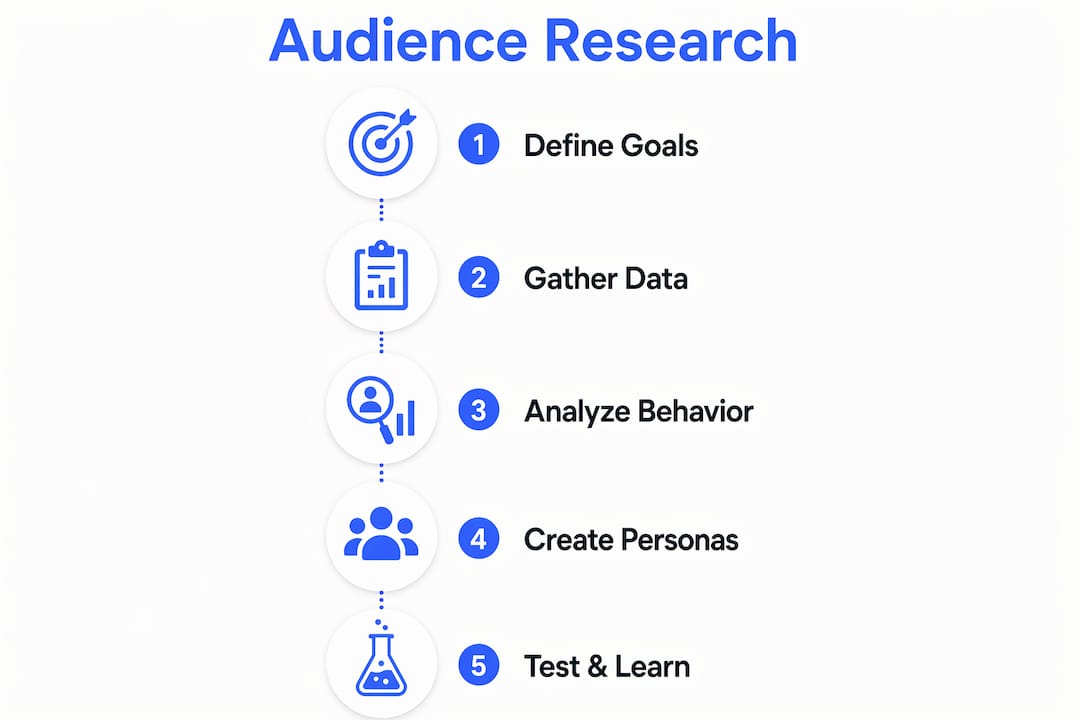
Start with the data you already have. Native analytics on Instagram, TikTok, and LinkedIn show you age ranges, locations, peak activity times, and content preferences. These numbers tell you who is already paying attention. Social listening tools like Brandwatch or Sprout Social extend that picture by tracking what your audience says about topics you cover, even when they are not talking directly to you.
Qualitative research fills the gaps that numbers miss. Reading comment threads, direct messages, and community forums reveals the language your audience uses, the problems they want solved, and the content formats they prefer. That language belongs in your captions, headlines, and calls to action.
- Демографія: Age, location, gender, and income level shape platform preference and content tone.
- Behaviors: When your audience scrolls, what they save, and what they share tells you more than follower count.
- Platform presence: Your audience may be on five platforms, but they are active on two. Focus there.
- Pain points: The problems your audience wants solved are your best content ideas.
Порада професіонала: Build one detailed buyer persona per audience segment. Give each persona a name, a job, a daily routine, and a specific frustration your content can address. That specificity makes content decisions faster and more consistent.
Which platforms should you focus on?
Platform selection is where most creators waste the most time. Spreading content across every available channel feels productive. It rarely is. Lean teams that concentrate on one or two platforms for deep, consistent engagement consistently outperform those who post everywhere at low quality.

The right platform depends on two factors: where your audience spends time, and what content format you produce best. A creator who excels at short video should prioritize TikTok and Instagram Reels. A marketer building B2B authority belongs on LinkedIn. A creator with a visual catalog of work thrives on Pinterest or Instagram.
| Платформа | Best content format | Primary audience strength |
|---|---|---|
| Short video, carousels, Stories | Visual brands, lifestyle, creators | |
| TikTok | Short-form video | Gen Z, entertainment, discovery |
| Long-form posts, articles | B2B, professional services | |
| YouTube | Long-form and tutorial video | Education, evergreen content |
| Static visuals, infographics | DIY, fashion, food, lifestyle |
Platform-native creative is not optional. Content formats matched to platform norms build trust and reduce friction in the path to conversion. A vertical video repurposed as a horizontal LinkedIn post loses context and credibility.
Порада професіонала: Audit your current platform performance before adding a new channel. If your existing platforms are not generating results, adding more channels multiplies the problem, not the output.
How do you create content pillars and platform-native content?
Content pillars are the 3–5 recurring themes that define what you post about. They connect your audience’s interests to your business goals. Most effective strategies rely on this structure because it removes the daily guesswork of “what should I post today?” and replaces it with a system.
A creator in the adult content space might build pillars around personal storytelling, behind-the-scenes production, community Q&A, educational content about the creator economy, and promotional posts for paid content. Each pillar serves a different audience need and a different business function. Together, they create a balanced feed that neither bores nor overwhelms followers.
High-performing posts consistently include three content types: educational material that teaches something useful, community-focused narratives that humanize the creator, and behind-the-scenes content that builds trust. These formats work because they give the audience a reason to return, not just a reason to click once.
Platform-native content means creating for the format, not just the topic. Short-form video on TikTok and Reels rewards fast hooks in the first two seconds. YouTube tutorials reward depth and structure. LinkedIn rewards insight-driven text posts with a clear professional takeaway. Cross-posting the same asset everywhere without adaptation signals low effort to both algorithms and audiences.
- Educational posts: Teach one specific skill or answer one specific question per post.
- Behind-the-scenes content: Show your process, workspace, or creative decisions. Audiences connect with the person, not just the product.
- Community stories: Feature audience responses, testimonials, or user-generated content to build belonging.
- Short-form video: Use the first two seconds to state the value. Do not bury the hook.
- Promotional content: Keep promotional posts to roughly one in five. Audiences disengage from feeds that feel like ads.
For creators building a paid content strategy, content pillars also serve as a funnel. Free content builds trust. Paid content delivers the deeper value that trust earns.
Why does engagement matter more than reach?
Reach tells you how many people saw your content. Engagement tells you how many people cared. Algorithms on every major platform prioritize content that generates replies, saves, and shares over content that simply gets views. Engagement is the signal that your content is worth distributing further.
Accounts that actively reply to followers see engagement increases of up to 42% on Threads and 30% on LinkedIn compared to accounts that post without responding. That gap is significant. It means the act of replying is itself a growth tactic, not just a courtesy.
Treating comments as conversations, not metrics, changes how you respond. A generic “Thanks!” adds nothing. A reply that asks a follow-up question, adds context, or acknowledges the commenter by name extends the conversation and signals to the algorithm that your post is generating meaningful interaction.
- Reply within the first hour. Early engagement signals boost algorithmic distribution before the post ages.
- Ask a question in your caption. Posts with a direct question in the caption generate more comments than those without.
- Use polls and interactive stickers. Instagram Stories polls and LinkedIn polls generate responses from followers who would not otherwise comment.
- Pin top comments. Pinning a thoughtful comment encourages others to match that quality.
- Acknowledge regulars. Followers who comment consistently are your most valuable community members. Name them. Thank them specifically.
Порада професіонала: Set aside 15 minutes after every post goes live to reply to every comment. That single habit compounds over weeks into measurably higher engagement rates and stronger algorithmic placement.
Building a community around your content also protects you from platform volatility. An engaged audience follows you across platforms and converts to paid offerings. A passive audience disappears when the algorithm changes. Creators who grow followers fast consistently credit active community management as the primary driver.
How do you measure social media performance and improve your strategy?
Measurement without a goal is just data collection. Every metric you track should connect to a specific business outcome. Setting SMART goals (Specific, Measurable, Achievable, Relevant, and Time-bound) before you start tracking prevents the common trap of optimizing for vanity metrics like follower count instead of meaningful ones like conversion rate or revenue per post.
The core metrics that matter most fall into three categories:
- Reach and impressions: How many unique accounts saw your content, and how often. Useful for brand awareness goals.
- Engagement rate: Likes, comments, shares, and saves divided by reach. The clearest signal of content quality.
- Conversion metrics: Link clicks, profile visits, and direct purchases or sign-ups attributed to social traffic.
Platform analytics tools give you most of this data natively. Instagram Insights, TikTok Analytics, and LinkedIn Analytics all provide post-level and account-level breakdowns. Third-party tools like Sprout Social or Later add cross-platform reporting and scheduling, which matters when you manage more than one channel.
A focused strategy document typically takes 2–4 weeks to develop and functions as a living guide, not a static plan. Review it quarterly. Update your content pillars when performance data shows a shift in what your audience responds to. Retire formats that consistently underperform. Double down on the content types that drive the outcomes you care about.
The most common measurement mistake is waiting too long to act on data. If a content format consistently underperforms after 30 days and 10 posts, that is enough data to make a decision. You do not need six months of evidence to pivot.
Key Takeaways
Effective social media marketing requires a structured system of audience research, platform focus, content pillars, active engagement, and data-driven iteration.
| Point | Details |
|---|---|
| Audience research first | Use native analytics and social listening to identify where your audience is active and what they need. |
| Platform concentration wins | Focus on one or two platforms for deep engagement rather than spreading effort across many channels. |
| Content pillars remove guesswork | Build 3–5 recurring themes that connect audience interests to your business goals. |
| Engagement drives algorithmic reach | Replying to comments within the first hour increases engagement and boosts distribution. |
| Measure against SMART goals | Track engagement rate and conversion metrics, not just follower count, and update your strategy quarterly. |
What I have learned from watching creators build and burn their social presence
Most creators I have observed fail not because they lack talent or ideas. They fail because they treat social media as a broadcast channel instead of a conversation. They post, wait for results, get discouraged, and either quit or pivot to a completely different strategy before the first one had time to work.
The 2–4 week strategy development timeline that most marketing teams follow exists for a reason. It forces you to think before you post. It makes you define your audience, choose your platforms deliberately, and write down your content pillars before you create a single piece of content. Creators who skip that step spend months producing content that goes nowhere and blame the algorithm.
Consistency beats perfection every time. A creator who posts three times a week with clear pillars and active comment replies will outgrow a creator who posts daily with no system and no engagement. The algorithm rewards reliability. Audiences reward creators who show up and respond.
The other thing I have seen underestimated repeatedly is the compounding effect of authentic engagement. One genuine reply that starts a real conversation is worth more than a hundred passive likes. That conversation gets seen by everyone who follows both accounts. It signals community. It builds trust faster than any paid promotion.
If you are building a content business, treat your social media presence as the top of your funnel, not the whole business. The goal is to move people from passive followers to engaged community members to paying subscribers. That progression requires a system, not just a feed.
— fan
Fanspicy: a platform built for serious content creators
Content creators who want to put these strategies to work need more than advice. They need a platform designed for paid content, direct audience monetization, and real community building.
Fanspicy is a paid social media and live cam platform built specifically for creators who are ready to convert their social audience into paying subscribers. Whether you are building your first content strategy or refining an existing one, Fanspicy gives you the tools to monetize your content and grow on your own terms. Creators on Fanspicy also get access to a library of content creation insights designed to help you apply the strategies in this guide to a real, revenue-generating presence.
ПОШИРЕНІ ЗАПИТАННЯ
What is social media marketing?
Social media marketing is the use of platforms like Instagram, TikTok, and LinkedIn to build brand awareness, engage an audience, and drive measurable business outcomes. It requires a defined strategy, consistent content, and active community management.
How many content pillars should a creator use?
Most effective strategies rely on 3–5 content pillars that align with both audience interests and business goals. Fewer than three creates a narrow feed; more than five makes the strategy hard to execute consistently.
How long does it take to build a social media strategy?
A focused strategy typically takes 2–4 weeks to develop. The result is a living document that guides daily posting decisions and gets reviewed and updated quarterly based on performance data.
How do you increase engagement on social media posts?
Replying to comments within the first hour after posting is the single most effective tactic. Accounts that actively reply see engagement increases of up to 42% on Threads and 30% on LinkedIn compared to those that do not respond.
Which social media platform is best for content creators?
The best platform depends on your content format and where your audience is most active. Short-form video creators perform best on TikTok and Instagram Reels. Creators building long-form educational content get stronger results on YouTube.