
Зміст
The easiest way to never run out of social media content ideas is to stop hunting for random posts and start working from a short list of content pillars. Teach something, show how you work, prove that it works, connect with your audience, and only then sell. Below you will find more than 40 post ideas sorted that way, a one-week posting plan, a table of formats, and notes on adapting one idea to each platform. It is written for shop owners, local service providers and independent creators who run their own accounts.
TL;DR
- Build every post around a pillar: Promotion, Education, Proof or Behind the Scenes, as Constant Contact frames them.
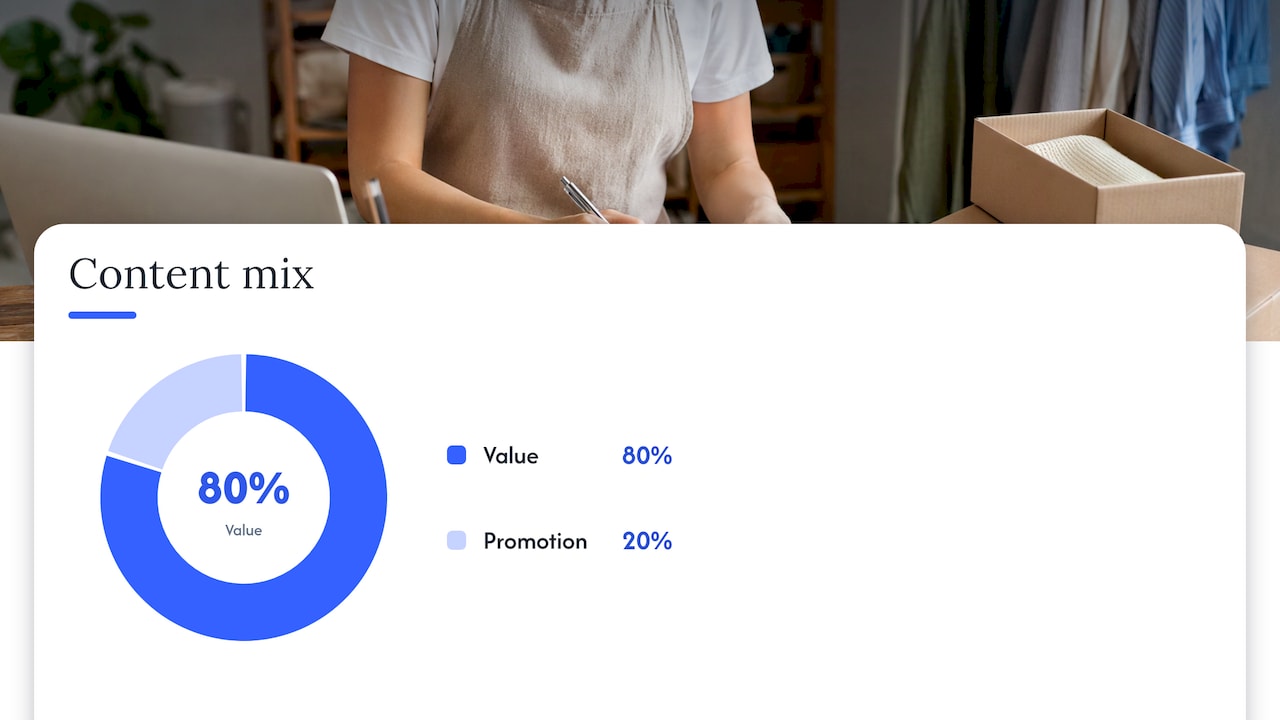
- Keep roughly 80% of posts valuable (tips, stories, entertainment) and about 20% promotional, the ratio Forbes Advisor recommends.
- Pick one core idea per week and rework it for each platform instead of inventing new posts every day.
- A simple five-day rhythm (tip, behind the scenes, offer, question, fun post) is enough to stay consistent.
- Independent creators can use the same pillars to grow paying fans, and we show where below.
Зміст
- Start with content pillars, not individual posts
- Teach: posts that answer what customers already ask
- Show: let people see how you work
- Prove: show that what you do works
- Connect: start conversations
- Sell: make offers clear, not loud
- Match the format to the idea
- A simple weekly plan
- Adapt one idea for each platform
- Our view: your audience is the asset
- For creators: turning posts into paying fans
- Ready to monetize your audience?
- ПОШИРЕНІ ЗАПИТАННЯ
- Sources
Start with content pillars, not individual posts
A blank content calendar is hard to fill because “what should I post?” is too broad. Pillars narrow it. Constant Contact’s guide suggests four for small businesses:
- Promotion: announce products, run sales, tell people how to book.
- Освіта: share tips, bust myths, answer common questions.
- Proof: customer reviews, case studies, before-and-after photos.
- Behind the scenes: introduce your team, show your workspace, tell why you started.
Shopify’s guide lists six common pillars: educational, inspirational, entertaining, promotional, interactive and user-generated. It notes that promotional content usually takes up a smaller share of the mix. Whichever list you choose, three to five pillars is plenty. Byter recommends three to five: Educate, Entertain, Promote and Engage.
The pillars below follow a five-part split used by PostMediaAI: Teach, Show, Prove, Connect and Sell. Each section gives ideas you can use this week.
Teach: posts that answer what customers already ask
Educational posts earn trust before anyone is ready to buy. They also give you the easiest material, because the questions already land in your inbox.
- Answer the question you hear most. Beevi.ai lists this as a trust-building idea. Turn the last customer question into a 30-second video or a text post.
- Answer the phrase people type into search. Outfeed AI suggests this for local service businesses, for example “how much does a boiler service take?”
- Share common mistakes and a checklist. PostBase’s service business guide covers how-tos, common mistakes and checklists as core educational formats.
- Post a mini tutorial. Impact Media House recommends short how-to clips that add immediate value.
- Bust a myth in your industry. One myth, one correction, one example.
- Share a care or usage tip. Beevi.ai files this under retention: it keeps existing customers happy and coming back.
- Explain a policy in plain words. Marka suggests explaining a guarantee or policy simply. It removes a buying objection.
How-to content also has data behind it. Green Frog Labs cites a Google YouTube Insights report saying how-to searches on YouTube grew 24% year over year. That is a report cited by a company blog, so treat it as a direction rather than a guarantee for your niche.
Show: let people see how you work
Behind-the-scenes posts are the cheapest content you can make, because the work is already happening.
- A day in the life. Film the first hour of your day, from opening up to the first customer.
- How it is made. Marka lists a how-it-is-made video and a what’s-inside carousel.
- Packing orders. WowPost.io includes packing orders and workspace tours in its behind-the-scenes ideas.
- Meet the team. Introduce one person per post, with one fact customers would not guess.
- Your origin story. Tell the moment you decided to start. Beevi.ai places this in its awareness posts.
- Work in progress. Show a project half finished.
- Name the supplier who delivered this morning. Outfeed AI lists this as a no-face idea for businesses that do not want to be on camera.
Why does it work? Green Frog Labs cites a Sprout Social 2025 consumer survey in which 68% of consumers said they feel more connected to brands that show behind-the-scenes content. The same page quotes marketing professor Jonah Berger on the effort heuristic: people value a finished product more when they see the work behind it. A rough 30-second clip of your team at work often tells that story better than a polished brand video.
Prove: show that what you do works
Proof is the pillar that turns a follower into a buyer.
- Customer spotlight. A photo or short video with a quote. Ask for consent first, as Marka advises.
- Before and after. WowPost.io lists transformations, reposted user-generated content, milestones and case studies as social proof formats.
- Screenshot testimonials. A review in the customer’s own words, cropped cleanly.
- A detailed case study. One problem, what you did, the result.
- A quality checkpoint. Beevi.ai suggests revealing a step in your process where you check quality.
- Milestones. Your 500th order, your fifth anniversary, a new certification you actually hold.
Connect: start conversations
Engagement posts are quick to write and they teach you what your audience wants.
- A this-or-that choice. Marka suggests a direct question with two options to drive replies.
- A focused ask-me-anything. Beevi.ai recommends keeping it narrow, for example “ask me anything about choosing a wedding florist.”
- A poll. SocialPilot reports, citing LinkedIn, that polls can generate up to 2x more engagement than standard posts on that platform.
- A quiz. The same source says quizzes used for lead generation have an average conversion rate of 50%. Treat that as a ceiling, since results depend on your audience.
- Team shoutouts and daily thoughts. Sendible lists these among universal formats that suit any brand.
- Repost customer content. Credit the person and add one line about why you picked it.
Sell: make offers clear, not loud
Selling posts matter, but they work best when plain. Apaya’s guidance is to state the offer directly: what it is, how much, until when and how to claim it. It also advises running offers in at most one post out of five, so the feed does not turn into a catalog people mute.
Ideas that fit that approach:
- A new arrival with a date. From Marka’s list.
- A product demo snippet. Show the product doing its job in under a minute.
- A limited-availability post. The Owner’s Playbook offers a template: “We have [number] openings left for [service] this [week/month].” It works for appointment-based businesses.
- Share this week’s route and open slots. Outfeed AI suggests this for local services such as cleaners, mobile groomers and tradespeople.
- A free lead magnet preview. The Small Business Expo’s list includes lead magnet previews, free audit offers and pricing breakdowns.
- A practical checklist or a workshop invitation. Beevi.ai places these under lead generation.
- Ask for a referral at the right moment, such as right after a happy review.
Match the format to the idea
One idea can be a photo, a carousel, a short video or a poll. Buffer’s guide groups content into four types: text posts, image posts including carousels, short-form video and long-form video. It adds that most channels support several formats, so you can mix them.
| Idea | Easiest format | Pillar |
|---|---|---|
| Answer a customer question | Short video or text post | Teach |
| Day in the life | Short video or Stories | Show |
| Customer story | Photo plus quote | Prove |
| This-or-that choice | Poll or Stories sticker | Connect |
| New arrival or open slots | Single image with date | Sell |
| Step-by-step guide | Carousel | Teach |
Long videos have a place too. SocialPilot notes that videos of roughly 2 to 10 minutes suit YouTube, LinkedIn and Facebook, where people expect more depth. They are good for storytelling and product education.
A simple weekly plan
Consistency beats volume for most small teams. Byter’s five-day framework is a good template:
- Monday: educational tip or how-to
- Tuesday: behind the scenes or team content
- Wednesday: promotional post
- Thursday: engagement post, such as a question, poll or user-generated content
- Friday: something entertaining or trending
That gives you one promotional post in five, which matches the 80/20 split in PostEverywhere’s strategy guide: 80% value, 20% promotion. Byter itself suggests keeping promotion under 20 to 30 percent.
To stretch the plan, use Buffer’s 5-to-1 rule: aim to create at least five smaller posts from every long-form piece. A single customer interview could become a quote graphic, a short clip, a carousel of lessons, a poll and a caption-led photo.
Adapt one idea for each platform
Before you rewrite anything, separate the core idea from its expression. Socialk.it explains that the idea (the insight or story) stays constant while format, length, tone and hashtags change, so adapting feels like translation rather than duplication.
The same guide describes the typical fit:
- Інстаграм: visual-first, aspirational content with carousels and Reels.
- TikTok: casual, hook-first video.
- LinkedIn: professional long-form text.
- X: punchy, opinionated posts under 280 characters.
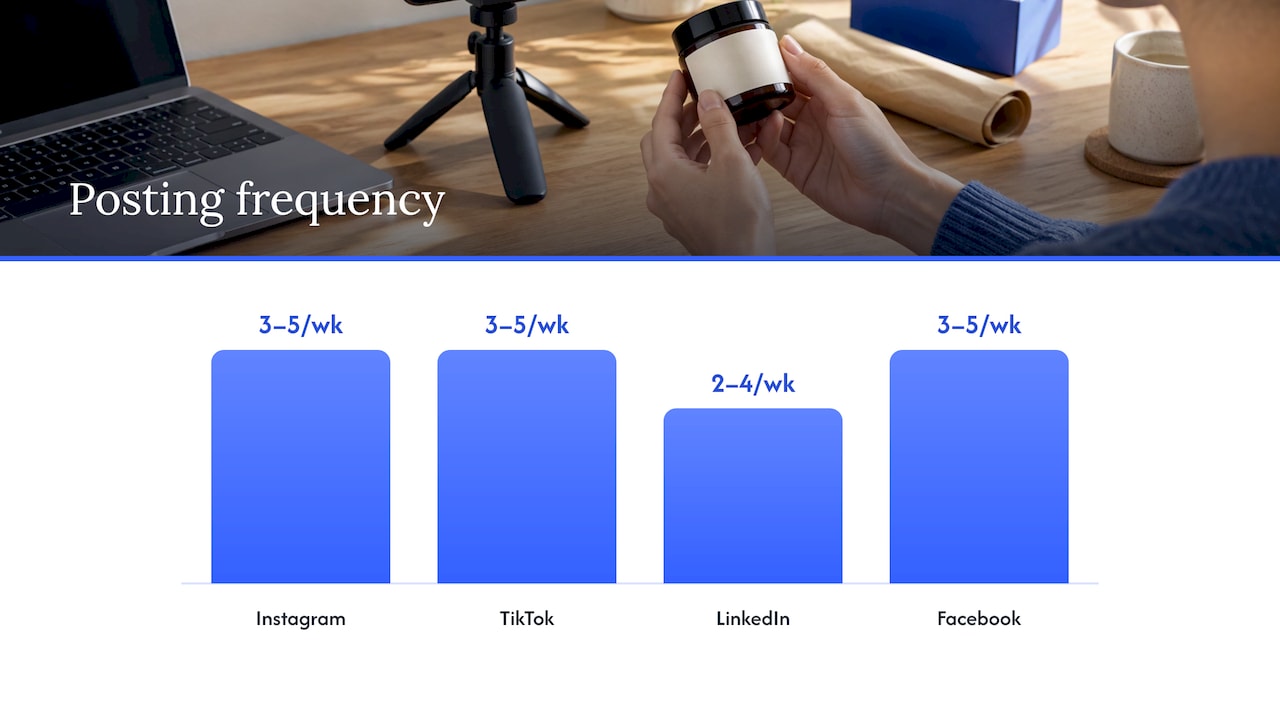
For frequency, Bravery Technology suggests 3 to 5 Instagram feed posts per week with daily Stories, 3 to 5 TikTok videos, 2 to 4 LinkedIn posts and 3 to 5 Facebook posts. Treat these as a ceiling, not a minimum. Buffer advises focusing on the platforms where your audience already is, rather than being on every channel.
On Facebook specifically, Sprout Social reports that 35% of users interact with brand content daily, and it recommends authentic, conversational posts that invite feedback.
Our view: your audience is the asset
We built Fanspicy around one belief: the people who follow you are worth more than the reach any single feed gives you.
The pillars in this article apply whether you run a bakery or you are an independent creator. Teach, show, prove, connect, sell: each post moves someone one step closer to supporting you directly.
That is why we focus on direct audience ownership, flexible ways to earn (subscriptions, paid posts, private messages, live streams, bundles and tips) and easy content migration from other platforms. Creators keep a higher share of what they earn with us, and joining costs nothing.
Free social posts bring attention. A place where fans can subscribe, message and tip turns that attention into income you can plan around. That is the creator economy at its best.
fan
For creators: turning posts into paying fans
If you sell your own content rather than products, the same ideas apply with a different goal: sending followers to a page where they can subscribe. Our guides go deeper on each part:
- Social media content marketing for creators covers how to plan posts around a paid page.
- Interactive post ideas expand on polls, questions and prompts.
- Post design ideas for creators help your feed look consistent.
- Ideas to boost subscriber engagement cover keeping existing fans active.
- Promotional tactics for subscriber growth show how to make offers that convert.
Ready to monetize your audience?
Fanspicy is a paid social media and live cam platform where independent creators sell subscriptions, exclusive content, paid posts, private messages and live streams, and receive tips from fans. If you are ready to build income from the audience your posts attract, start on Fanspicy as a creator.
You can bring your content over from other platforms, mix content types, and keep the relationship with your fans. Fans who want to see what creators publish can browse Fanspicy.
ПОШИРЕНІ ЗАПИТАННЯ
What should a small business post on social media?
Post across four jobs: promote what you sell, educate customers, prove your results with reviews and case studies, and show behind the scenes. Start with the question customers ask most and the work you already do every day. Those need almost no production.
How much of my content should be promotional?
About one post in five. Forbes Advisor, citing an agency founder, recommends 80% value and 20% promotion, and Byter suggests staying under 20 to 30 percent. When you do promote, state what the offer is, the price, the deadline and how to claim it.
Як часто я повинен публікувати?
Only as often as you can keep up. A five-day rhythm of tip, behind the scenes, offer, question and fun post works for many small teams. Pick one or two platforms where your customers are and add more only when the routine feels easy.
Do I have to be on camera?
No. Text posts, carousels, photos of finished jobs, supplier shout-outs, this week’s open slots and screenshot testimonials all work without showing your face. Add short video when you are comfortable.
Can I reuse one idea on several platforms?
Yes. Keep the core idea and change the format, length and tone for each network. One customer story can be a photo post, a short clip, a LinkedIn write-up and a poll.
Sources
- Constant Contact: social media post ideas for small businesses
- Forbes Advisor: social media marketing guide
- Shopify: social media post ideas
- Byter: content plan for social media
- PostMediaAI: social media content ideas
- Beevi.ai: what to post for business
- Outfeed AI: business social media post ideas
- Impact Media House: post ideas for small businesses
- Green Frog Labs: promo video ideas
- Marka: post ideas for small businesses
- WowPost.io: Instagram post ideas
- SocialPilot: social media content types
- Sendible: Threads post ideas
- Apaya: Facebook post ideas
- The Owner’s Playbook: post templates
- The Small Business Expo: post ideas
- Buffer: social media content creation
- Buffer: repurposing content guide
- PostEverywhere: social media strategy
- Socialk.it: adapting a post for every platform
- Bravery Technology: content calendar
- Sprout Social: what to post on each platform