

Innehållsförteckning
TL;DR:
- Most creators overlook the potential of tiered access, which unlocks steady revenue from casual fans. Implementing multiple tiers allows fans to pay what they can afford, fostering loyalty and engagement. Building genuine, audience-specific perks enables creators to scale income without relying solely on big spenders.
Most creators assume the path to higher earnings means chasing bigger spenders. That assumption leaves serious money on the table. Entry-level tiers priced between $1 and $5 boost conversions by 34%, which means your casual, on-the-fence fans are actually one of your most powerful growth levers. Tiered access lets you meet every type of fan exactly where they are financially, while nurturing them toward deeper loyalty over time. This article breaks down the mechanics, the benefits, the real-world examples, and the traps to avoid so you can build a subscription model that scales.
Innehållsförteckning
- What is tiered access and how does it work?
- The benefits of tiered access for creators
- Common tier structures: Real-world examples
- Potential pitfalls and alternatives to classic tiered models
- A creator’s perspective: What most guides miss about tiered access
- Take your tiered access to the next level with Fanspicy
- Frequently asked questions
Key Takeaways
| Point | Details |
|---|---|
| Tiered access maximizes earnings | Segmenting fans by willingness-to-pay lets you capture more revenue from every audience segment. |
| Entry tiers drive growth | Low-cost micro tiers dramatically increase conversion rates and attract more paying fans. |
| Engagement fuels retention | Escalating perks motivate fans to stay longer and move up to higher membership tiers. |
| Customize for your community | Effective tiers depend on your unique fan base—testing, feedback, and iteration get the best results. |
What is tiered access and how does it work?
With that surprising data point in mind, let’s clarify what tiered access actually means and why it’s become such a fixture for creators building sustainable income.
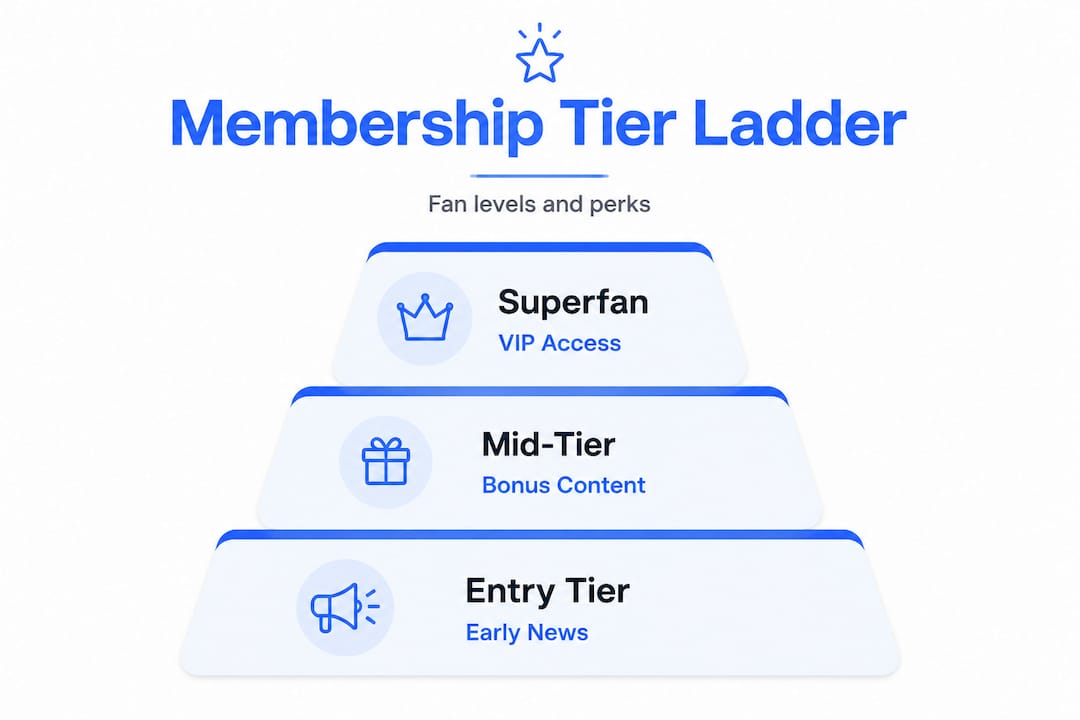
Tiered access is a subscription structure where you divide your content, perks, and community into multiple membership levels. Instead of a single all-or-nothing price, fans choose the level that matches what they value and what they’re willing to spend. Each higher tier adds cumulative benefits, following a classic “good-better-best” logic that reduces decision paralysis and makes it easier for people to say yes at their own comfort level.
Skapare use tiered access to generate predictable recurring revenue from diverse audience segments, capturing value from casual fans to superfans. The beauty of the system is that no single fan feels priced out, and no superfan feels like they aren’t being rewarded for their loyalty.
Typical perks at each level include:
- Entry tier: Exclusive posts, early access to public content, shout-outs, and a sense of “insider” belonging
- Mid tier: Behind-the-scenes content, direct messages or Q&A access, exclusive polls, and personalized fan recognition
- Top tier: One-on-one interactions, custom content requests, early and exclusive access to everything, live session priority, and premium merchandise or digital gifts
Tiered memberships are most popular for segmenting audiences by willingness to pay, maximizing both revenue and engagement simultaneously. Here’s how the three levels compare at a glance:
| Tier | Typical price | Key perks | Creator goal |
|---|---|---|---|
| Entry | $1 to $5/month | Exclusive posts, early access, shout-outs | Lower barrier, volume conversions |
| Mid | $10 to $25/month | DMs, behind the scenes, polls, recognition | Anchor tier, reliable recurring income |
| Top | $30 to $100+/month | Custom content, 1-on-1, priority access | Maximize value from superfans |
Building recurring revenue with subscriptions becomes far more predictable when you stop relying on a single price point and start giving fans a ladder to climb at their own pace.
The benefits of tiered access for creators
Once you understand the structure, it’s easy to see the appeal. But the real power is in the tangible business results. Here’s what’s actually in it for you as a creator.
Predictable, diversified income. A flat subscription model ties your entire income to one price point. If that price feels too high to casual fans, they leave. Too low, and your superfans feel undervalued. Tiered access solves both problems at once. You’re capturing revenue from fans at $3/month and fans at $75/month, all within the same ecosystem.

Stronger fan retention. When fans have a tier to level up to, they stay longer. Instead of canceling when they feel they’ve “seen everything,” they migrate upward. A casual $5 fan who starts engaging with your content naturally gravitates toward the mid-tier once they’re hooked. That progression feels rewarding for them and lucrative for you.
Community depth and engagement. Tiers build engagement through escalating benefits, including early access, behind-the-scenes content, and personalized interaction, all of which foster loyalty and a genuine community feeling. Fans at higher tiers don’t just consume your content, they become invested participants in your creative world.
Subscriber perks for engagement become a powerful feedback loop. When you reward mid and top-tier fans with genuine access and recognition, they talk about it. Word of mouth from loyal superfans brings in new entry-level subscribers, who then work their way up the tier ladder. The system feeds itself.
“Most creators underestimate how much casual fans want to support them. A $3 monthly tier removes every excuse. You’re not asking for commitment—you’re opening a door.”
Better price sensitivity optimization. Not all of your fans earn the same income. A fan in one city might comfortably spend $50/month on creators they love. A fan just starting their career might max out at $5. Tiered access means you’re not forcing either fan to choose between “all in” or “nothing.” You capture both, and you respect both.
Pro Tip: Always design your mid-tier as the anchor. Research consistently shows that when people are presented with three or more pricing options, the majority gravitate toward the middle choice. Price your mid-tier at the income level you need, and let the entry and top tiers frame it as the obvious, sensible pick.
Combining hybrid monetization strategies with tiered memberships, such as adding pay-per-view content on top of your subscription tiers, can push your overall revenue even higher without requiring you to recruit more fans from scratch.
Common tier structures: Real-world examples
Now that you know why tiered access matters, let’s look at how these tiers actually show up in real-world, revenue-driving creator businesses.
A well-built three-tier ladder works like this for most content creators:
Tier 1: The micro/entry tier ($1 to $5/month)
This is your conversion engine. Its only job is to get fence-sitters off the fence. The perks don’t need to be elaborate. A welcome post, your name in a monthly shout-out, and access to a members-only feed is more than enough. The goal is inclusion, not depth. Adding this tier has been shown to increase conversions by 34% compared to single-tier or high-entry-point models.
Tier 2: The mid-tier ($10 to $25/month)
This is where most of your revenue will come from. Perks here should feel meaningfully better than entry. Think behind-the-scenes content, access to a private community chat, monthly Q&A sessions, and personalized fan acknowledgments. This tier should feel like a genuine relationship, not just a slightly bigger content dump.
Tier 3: The superfan/top tier ($30 to $100+/month)
This is for your most invested fans, and it should feel genuinely exclusive. Custom content requests, direct message access, priority seats in live sessions, and early previews of everything you create. Some creators even offer physical perks like signed photos or merchandise at this level.
Here’s how a typical three-tier pricing table looks across key metrics:
| Tier | Price range | Avg. % of subscribers | Revenue contribution |
|---|---|---|---|
| Entry | $1 to $5 | 40 to 55% | 15 to 25% of total |
| Mid | $10 to $25 | 30 to 45% | 45 to 60% of total |
| Top | $30 to $100+ | 5 to 15% | 20 to 35% of total |
How to build your own tier ladder, step by step:
- Map out your current content and ask yourself what’s already exclusive vs. what’s already public
- Identify three distinct levels of fan engagement in your existing audience (browsers, regulars, and die-hards)
- Assign perks to each tier based on time cost to you and perceived value to fans
- Price entry at the lowest comfortable amount, mid at your income target, and top at what your most loyal fans already spend
- Announce the structure clearly with a simple breakdown graphic before launch
Consider exploring marketing ideas for creators to build launch momentum around your new tier rollout, and think carefully about content creation types that work best at each level so you’re not overcommitting your production time.
A mid-career creator who added a $3 entry tier and a $75 superfan tier to their existing $15 offering saw subscriber volume jump 40% within 60 days, with superfan tier revenue adding an entirely new income stream that didn’t exist before. The math is simple. More doors mean more people walking through them.
Potential pitfalls and alternatives to classic tiered models
Tiered access isn’t magic. The details matter enormously. Let’s address common mistakes and explore some alternative approaches if classic tiers don’t fit your audience perfectly.
Common pitfalls creators run into:
- Overloading perks: Promising too much at every tier creates a fulfillment nightmare. If you can’t consistently deliver every perk, fans feel shortchanged.
- Unclear messaging: Fans won’t upgrade if they can’t quickly see the difference between tiers. Your tier descriptions need to be crisp and benefit-driven, not a wall of bullet points.
- Paywalling your best content too soon: Putting your strongest work exclusively behind high-tier paywalls early in your growth phase can actually slow audience growth. Some creators keep their best content public and use paid tiers for relationships and extras, not core value. This approach builds a larger free audience that then converts into paid fans over time.
- Too little differentiation: If entry and mid tiers feel nearly identical, fans won’t see a reason to upgrade. Each tier must feel like a genuinely different experience.
Pro Tip: Before you launch your tiers publicly, run a soft test with a small group of existing fans. Share your tier descriptions in a message or a poll and ask them which level they’d choose and why. Their answers will reveal whether your perks are compelling or confusing, saving you weeks of trial and error after launch.
Alternatives to traditional tiered models worth considering:
A community-first entry tier focuses less on exclusive content and more on belonging. Fans pay a small fee to join a private community, participate in group chats, and get recognition. The content is secondary to the connection.
Free-to-paid funnels using lead magnets work well for creators building a following quickly. You offer a free tier or public content to attract a large audience, then use tiers as the upgrade path for fans who want more depth and direct access.
Hybrid models that combine subscriptions with top revenue models like pay-per-view drops or tip-based unlocks give fans flexibility and can increase average revenue per fan without requiring them to commit to a higher recurring tier. Strong strategies for promoting paid content can amplify either approach when you know your audience well.
A creator’s perspective: What most guides miss about tiered access
Most how-to articles on tiered access treat the “good-better-best” ladder as a plug-and-play formula. Copy the price points, list the perks, launch it. Done. But hands-on experience reveals a more nuanced truth: the framework only works when you genuinely understand the specific people in your audience.
Price ladders don’t sell themselves. The story behind each tier sells it. A fan doesn’t upgrade from $5 to $25 because the bullet point list is longer. They upgrade because the $25 experience feels like it was designed specifically for someone like them. That requires you to actually know your audience’s motivations, not just their willingness to pay.
Testing messaging beats following any template. The language you use to describe your mid-tier perk package matters as much as the perks themselves. “Get behind-the-scenes access” sounds generic. “See the raw footage and creative process before anyone else” sounds personal and specific. One of those converts. The other gets skimmed.
The hardest-won lesson we’ve seen from successful creators is this: tiers should reward your most invested fans, not withhold your best work from everyone else. Using paywalls primarily as gatekeeping tools creates a transactional dynamic that erodes trust. Using them as a way to give your biggest fans an even richer experience builds genuine loyalty.
Balance matters too. Keep nurturing your free and lower-tier audience consistently. Those fans are your next mid-tier subscribers. The best content ideas for fans often live at the boundary between public and paid, pulling curious fans deeper into your world rather than pushing them away with aggressive paywalls.
Take your tiered access to the next level with Fanspicy
You’ve got the strategy. Now you need the right platform to put it into practice. Fanspicy is built for creators who are serious about growing both their audience and their income through smart subscription structures.
Creators like Jackiepott och Sese are already using Fanspicy’s flexible membership tools to run tiered access models that drive real, consistent revenue. The platform supports multiple subscription tiers, live cam sessions, pay-per-view content, and direct fan messaging, everything you need to build the layered engagement strategy this article lays out. Whether you’re launching your first tier ladder or optimizing an existing model, Fanspicy gives you the tools and the audience to make it work from day one.
Frequently asked questions
How many membership tiers are ideal for creators?
Most creators see the best results with three to four tiers, which provides clear options for casual fans and superfans without overwhelming anyone with too many choices.
What should I offer in my entry-level tier?
Entry tiers work best with lightweight perks like early access, shout-outs, or exclusive posts that feel rewarding without requiring deep time investment from you to deliver consistently.
Do low-cost tiers really increase conversions?
Yes—adding a $1 to $5 micro tier has been shown to boost conversion rates by up to 34% by removing the financial friction that keeps casual fans from committing.
Can I keep my best content free and still use tiers?
Absolutely—many creators publish their best work publicly to maximize reach and use paid tiers for relationship access and extras rather than gating their most compelling content.
How do I know if my tiers are working?
Track conversion rates at each tier, monitor monthly churn, and watch which tier attracts the most signups. Test different perk descriptions and price points until the numbers improve consistently over at least 60 days.