
Índice
The most effective way to build an audience on social media is to pick one focused topic and one primary platform, publish on a consistent schedule, then move your most engaged followers to a channel you own, like email or Discord. This guide covers content clarity, consistency, collaboration, and repurposing, the four levers that compound fastest. Follow it closely and you can expect measurable movement in your core metrics within 90 days.
TL;DR:
- Focusing on one niche topic and platform, then shifting engaged followers to owned channels, significantly boosts long-term reach and engagement.
- Consistent publishing of 9 to 12 posts over 90 days, combined with testing different formats, accelerates audience growth and reveals top-performing content.
- Tracking active reach through metrics like unique viewers and retention yields better insight than follower count alone.
- Collaborations, paid boosts, and community engagement significantly expand reach when based on value and targeted at your niche.
- Building a loyal, engaged audience often outperforms chasing large but passive follower numbers or buying followers altogether.
Índice
- Quick checklist: eight practical actions you can do this week
- Step-by-step 90-day framework: planning, publishing, promoting, iterating
- Platform and format notes: how to choose the best starting place
- Tactical growth levers: collaborations, paid boosts, trends, and community
- Measure what matters: replace vanity metrics with actionable KPIs
- Practical 90-day testing checklist and FanSpicy practitioner tips
- Author perspective: quick lessons from hands-on creator work
- An honest alternative: how FanSpicy helps convert an audience into paying fans
- PERGUNTAS FREQUENTES
- Sources
Quick checklist: eight practical actions you can do this week
You do not need an elaborate plan to start moving. These eight actions take a single creator from idea to first measurable output in a week.
- Pick one topic, one angle, and one primary platform where that audience already gathers.
- Optimize your bio, link, and pinned post so a new visitor knows what you offer in five seconds.
- Build a simple editorial schedule at a cadence you can sustain for months, not days.
- Choose one repeatable format or series instead of reinventing your content every time.
- Reply to early commenters and engage with a handful of creators in your niche daily.
- Line up one collaboration or cross-promotion to attempt within the next 30 days.
- Repurpose one long piece of content into three or four shorter posts for other formats.
- Start an owned contact channel, whether that is an email list, a Discord server, or a creator landing page.
Dica profissional: Batch your bio, pinned post, and link updates in one sitting so profile optimization never becomes a recurring task you postpone.
Step-by-step 90-day framework: planning, publishing, promoting, iterating
Growth on social media rewards structured repetition more than bursts of inspiration. Copyblogger’s framework for building an audience centers on choosing a topic, medium, and angle, then publishing consistently and repurposing what works, which maps directly onto a 90-day cycle.
- Week 0: Research your audience, lock in a topic and angle, and set one leading metric to track, such as follows-per-view or unique viewers.
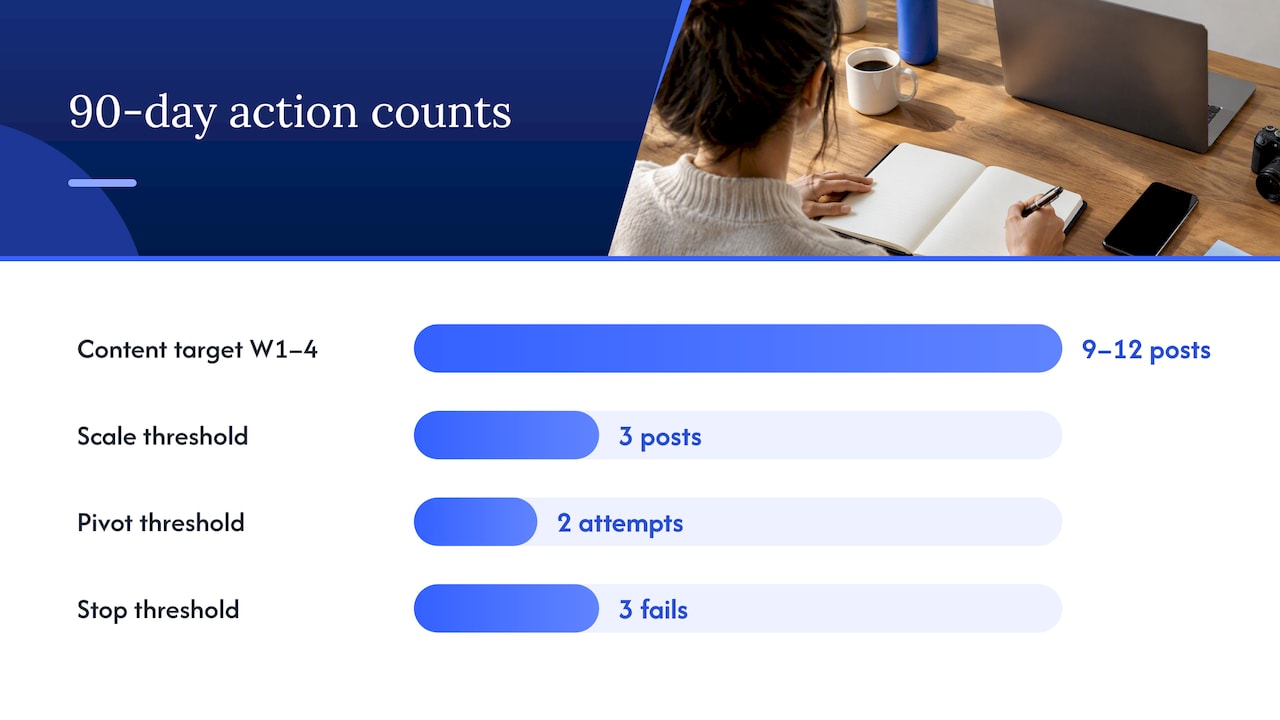
- Weeks 1 to 4: Prioritize volume and consistency. Aim for 9 to 12 pieces of content and log results after each one. Learning signals matter more than polish here.
- Weeks 5 to 8: Identify your top-performing formats and double down. Repurpose winning posts, build a simple editing workflow, and schedule ahead instead of posting reactively.
- Weeks 9 to 12: Pursue one or two collaborations, put a small paid boost behind proven posts, and start converting your most engaged followers into an owned channel.
A simple experiment each week keeps you from guessing. Write a one-line hypothesis (“a question hook outperforms a statement hook”), run one treatment, track a single primary metric, and set a review date before you publish. Treat every post as a small, interpretable test rather than a one-off bet.
Decision rules keep the framework honest. Scale a format when it beats your account average on the leading metric across at least three posts. Pivot a format when two attempts underperform but engagement quality (comments, saves, shares) still looks promising. Stop a format outright when three consecutive attempts fail on both reach and engagement, no exceptions for sunk effort.
Statistic callout: YouTube’s Creator Help documentation recommends tracking monthly audience and unique viewers, then segmenting them into new, casual, and regular viewers, because that view of active reach is more useful for planning content than a raw subscriber count.
Dica profissional: Log every test in one shared spreadsheet so you can spot patterns across weeks instead of judging each post in isolation.
Platform and format notes: how to choose the best starting place
Spreading effort across five platforms from day one is the fastest way to stall. Pick one primary platform using a few criteria, then expand once you have proof that something works.
- Audience fit: go where your specific niche already spends time, not where total user numbers are highest.
- Discoverability: favor platforms with active search and recommendation systems over ones that rely purely on existing follower graphs.
- Production effort: match the format to what you can sustain weekly. Short-form video is fast to produce but demands constant hooks; long-form video and podcasts build deeper trust but take longer per piece; text threads sit in between and are the cheapest to test ideas with.
- Profile basics: a clear one-line bio, a recognizable profile image, one link that goes to your most important destination, and a pinned post that explains your value in seconds.
Expand to other platforms only after one format shows consistent results over several weeks. At that point, repurposing becomes the growth lever rather than starting from scratch on each new channel.
Tactical growth levers: collaborations, paid boosts, trends, and community
Four tactics move the needle faster than anything else once your foundation is in place.
Collaboration works best when you lead with value. Offer a creator repurposing rights to a joint piece, a shoutout in your next post, or a genuine skill trade, rather than a vague “let’s collab” message. Small paid boosts can help break the cold start on a post that is already performing organically, but paying to promote a post with no early traction usually wastes the budget. Use trends and hashtags to extend the reach of your own original angle, not to copy a format that has nothing to do with your niche.
Community-building moves do not need to be elaborate: a small ask in your caption (“tell me your biggest struggle with this”), a short live Q&A once your audience reaches a few hundred engaged followers, and a simple welcome message or pinned comment for new followers all build trust over time.
- Watch for followers-for-sale offers and engagement pods, both of which inflate numbers without building real reach.
- Avoid depending on a single traffic source for all of your growth, since one algorithm change can erase it overnight.
Dica profissional: Ask every potential collaborator one direct question, “What does your audience struggle with that my content solves?” If you cannot answer it, the collaboration is not ready yet.
Measure what matters: replace vanity metrics with actionable KPIs
Follower counts are the easiest number to track and the least useful one for decisions. YouTube’s Audience tab recommends monthly audience and unique viewers as better indicators of active reach, then breaks that audience into new, casual, and regular viewers so creators can see whether content is converting casual viewers into regulars.
A minimal dashboard needs only three numbers:
- A primary metric, such as follows-per-view or unique viewers, reviewed weekly.
- A secondary metric, like average retention or saves per post, reviewed alongside it.
- A conversion metric, tracking how many engaged followers join your owned list or channel each month.
Run tests for the full 90-day window before drawing firm conclusions. Shorter windows rarely produce enough posts per format to separate a real pattern from normal variance.
Practical 90-day testing checklist and FanSpicy practitioner tips
A simple experiment template keeps testing honest: write a hypothesis, pick one format, choose a distribution channel, track one metric, and set a review date before you publish. Skipping the review date is the single most common mistake, since it lets a test drag on past the point where the data already answered the question.
- Write the hypothesis in one sentence before you create anything.
- Publish the treatment and resist editing it mid-test.
- Track the one metric you chose, not whatever number looks best that day.
- Review on the date you set, then scale, pivot, or stop.
Two mistakes slow creators down more than any other: overlong production cycles that turn one post into a week-long project, and chasing vanity metrics instead of the leading indicator you picked in Week 0. Forbes Agency Council’s guidance for 2026 points to owned channels, like email and proprietary platforms, as the safest long-term hedge against algorithm shifts, which is why moving engaged followers off rented platforms early protects the reach you have already earned.
Dica profissional: The moment a follower comments twice or shares your content once, invite them to your owned channel directly. That window of attention does not last.
Author perspective: quick lessons from hands-on creator work
Most creators fail by chasing every platform at once instead of mastering one. What scales is boring consistency: the same format, the same day, for months. The counterintuitive part is that a smaller, loyal audience often outperforms a larger passive one, a point Inc.’s reporting on audience growth backs up directly. One creator who followed this exact 90-day structure went from scattered posting to a tight niche audience with real reply rates, simply by cutting four platforms down to one and repurposing relentlessly.
— fan
An honest alternative: how FanSpicy helps convert an audience into paying fans
Once your audience is engaged, the next problem is turning attention into income without losing the relationship you built. Creators can offer subscriptions, private messages, live streams, exclusive content, and tips in one place, providing the audience you grew on social media a direct way to support you.
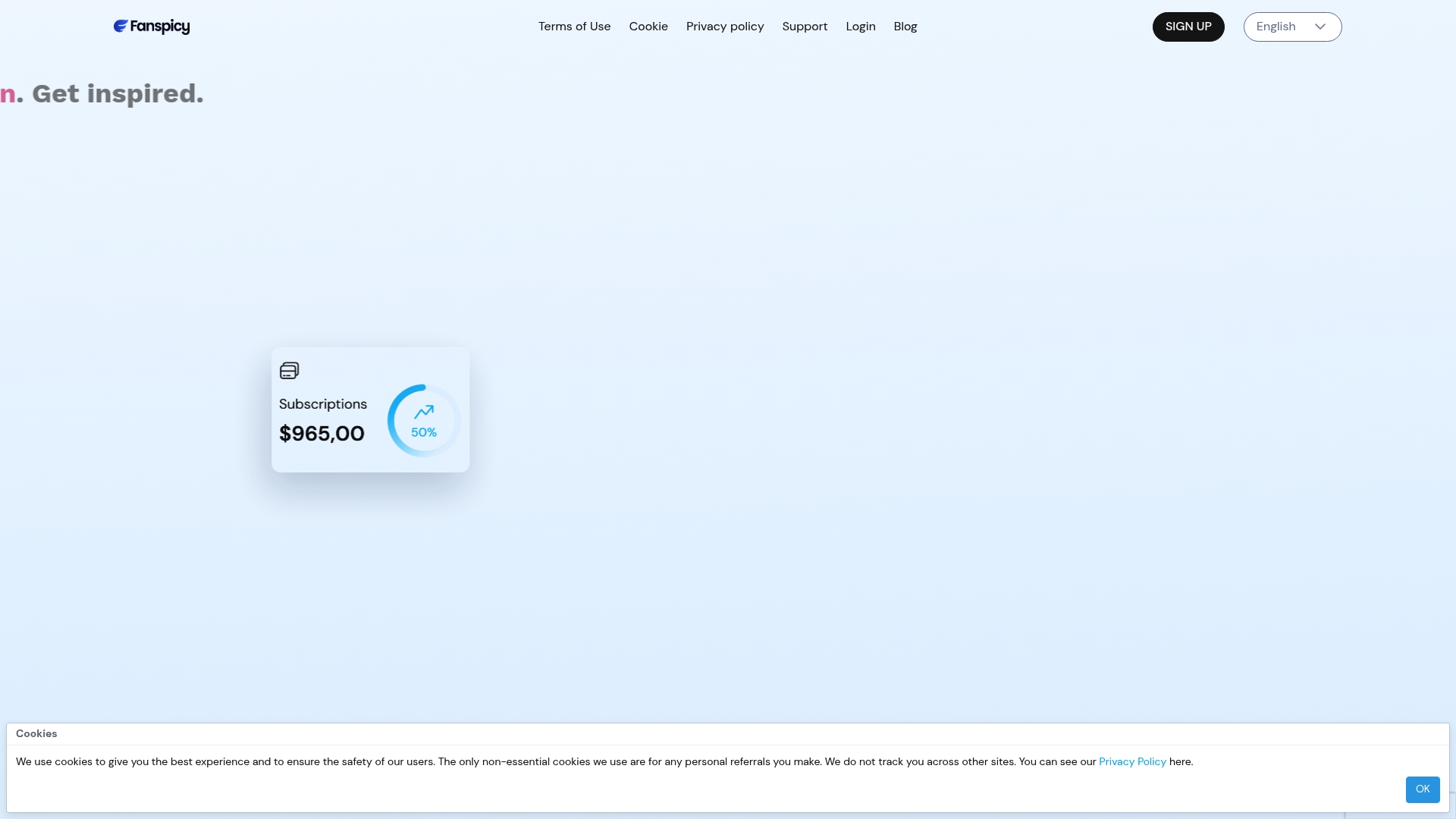
Moving your most engaged followers from a social feed to a creator landing page with one exclusive piece of content tends to lift conversion, because it gives your biggest fans a reason to act now rather than scroll past. A practical first task: set up your creator profile this week and offer a limited exclusive to your first 50 fans to start converting attention into revenue.
PERGUNTAS FREQUENTES
How long does it take to build a social media audience?
Expect to see meaningful movement in your leading metric, such as follows-per-view or unique viewers, within a 90-day testing window if you publish consistently and track results weekly. Growth compounds slowly at first, then accelerates once you identify your best-performing format.
What is the best platform to start building an audience?
The best starting platform is the one where your specific niche already gathers and where discovery tools (search, recommendations) can surface your content to people who do not already follow you. Match the platform to your production capacity before trying to maintain several at once.
How many followers do I need before monetizing?
There is no fixed follower threshold, since engagement quality and niche fit matter more than raw count, as Inc.’s coverage of audience growth notes about loyal, well-defined audiences outperforming larger disengaged ones. Many creators start testing monetization, including subscriptions and tips through platforms like Fanspicy, as soon as a small group of fans engages repeatedly.
Should I buy followers or use engagement pods?
No. Purchased followers and engagement pods inflate numbers without producing real reach, discoverability, or revenue, and they distort the metrics you need to judge content honestly.
What metrics matter more than follower count?
Unique viewers, monthly audience, retention, and follows-per-view are more useful than total followers because they reflect active reach and content performance, a distinction YouTube’s Creator Help resources make explicit through their new, casual, and regular viewer segments.
Sources
- Your 2026 marketing strategy edge: email, education and authenticity – Forbes Agency Council
- New, casual & regular viewers – YouTube Help
- How to build an audience – Copyblogger
- Global social networks ranked by number of users – Statista
- The truth about growing an audience – Inc.