

Spis treści
TL;DR:
- Paid media provides creators with immediate reach and measurable subscriber growth through targeted campaigns. It accelerates conversion, tests creative strategies quickly, and supports long-term growth when paired with organic content and optimized landing pages.
Paid media delivers immediate, measurable reach and the fastest path to converting fans into paying subscribers. For creators on Fanspicy, Meta Ads, and TikTok Ads, paid advertising generates impressions within hours while organic growth typically takes several months to show meaningful results. Here is what that buys you right now:
- Immediate visibility within hours of launching a campaign
- Precise audience targeting by interest, behavior, age, and location
- Measurable ROI with every click and conversion tracked
- Creative validation to test thumbnails, CTAs, and pricing before committing budget
- Accelerated funnel testing to find your best-converting subscriber path fast
Spis treści
- What are the real benefits of paid media for creators?
- Which paid channels should creators actually use?
- How do you measure paid media success as a creator?
- How much should you budget and how long does testing take?
- How do paid and organic work together to build lasting growth?
- What compliance and safety checks do U.S. creators need before running ads?
- A 7-step playbook to test paid media this week
- When is paid media the right move for creators?
- Key Takeaways
- Why the conventional wisdom on paid media gets it wrong for creators
- Fanspicy supports your paid media growth from day one
- Useful sources
What are the real benefits of paid media for creators?
Paid ads allow precise audience targeting and creative control that organic posting simply cannot match. When a creator on Fanspicy runs a paid campaign, they are not broadcasting to everyone and hoping the right fans notice. They are placing a specific offer in front of people who already fit the subscriber profile.
Speed matters here. Organic content may take months to gain traction; paid campaigns produce data the same day. That speed converts into a monetization advantage: faster subscriber discovery, quicker ARPU growth, and earlier LTV signals.
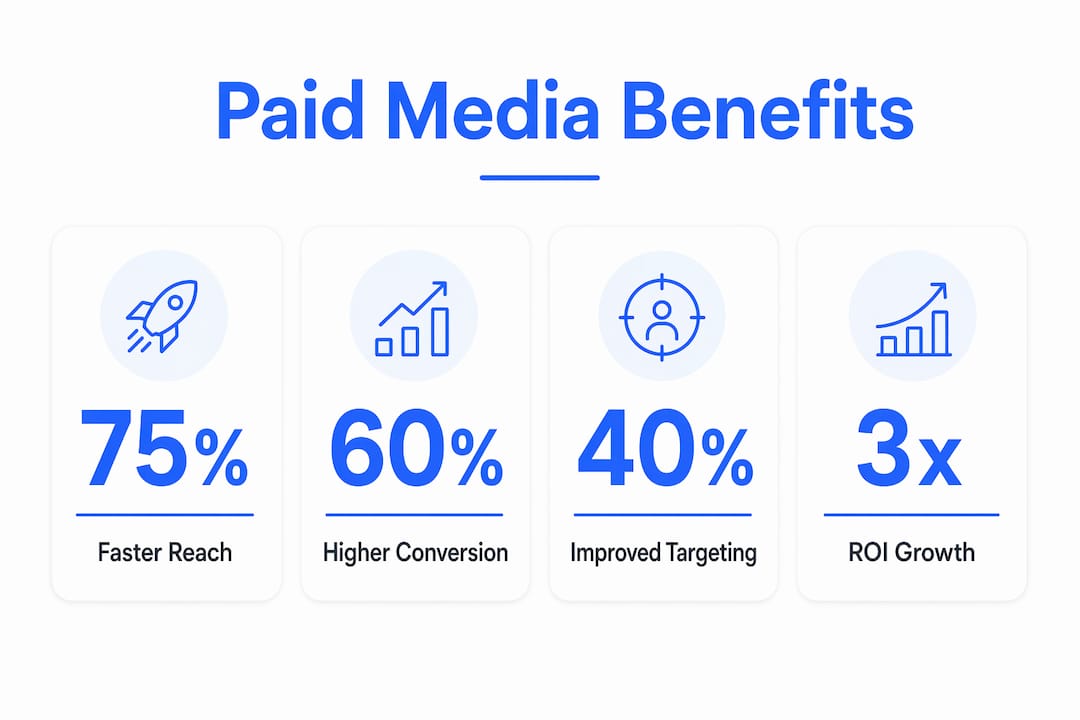
Premium tiers remove friction and add trust elements that increase subscription conversion probability. Paid traffic landing on a frictionless Fanspicy subscription page converts at a meaningfully higher rate than cold organic traffic hitting a cluttered profile.
Pro Tip: Treat paid media as a data engine first. Run small tests, read the conversion signals, and kill underperformers within 7 days before scaling what works.
Which paid channels should creators actually use?
Paid ads let creators reach ready-to-subscribe fans across social, search, and platform-native placements. The channel you choose should match your funnel stage and content style.
| Channel | Best objective | Creative style | Cost signal | When to prioritize |
|---|---|---|---|---|
| Meta Ads (Facebook/Instagram) | Awareness + conversions | Visual, lifestyle, short video | Moderate CPM | Building a new subscriber base |
| TikTok Ads | Discovery + reach | Raw, authentic short-form video | Lower CPM for young audiences | Reaching targeted age-range fans at scale |
| Google Ads | Intent-driven traffic | Text + landing page match | Higher CPC | Capturing fans actively searching |
| Platform-native promotions | Direct monetization | Profile highlights, paid messages | Variable | Upselling existing fans |
Meta’s family of apps gives creators granular demographic and interest targeting, which is valuable for subscription funnels. TikTok Ads reach younger audiences at competitive CPMs and reward authentic creative over polished production. Google Ads work best when fans are already searching for a creator’s niche. Platform-native paid messages on Fanspicy are the most direct monetization lever because they reach fans who already opted in.
Start with one platform. Test two creatives. Only expand to a second channel once the first produces a profitable cost per subscriber.

Pro Tip: Start where your best fans already spend time. If your content performs on Instagram, Meta Ads is the natural first test before moving to TikTok or Google.
How do you measure paid media success as a creator?
Measurement turns ad spend into decisions. Without it, you are paying for impressions and hoping. The KPIs that matter most for creator campaigns:
- CAC (cost per subscriber): total ad spend divided by new subscribers
- Conversion rate: percentage of ad clicks that become subscribers or tip transactions
- CPM: cost per 1,000 impressions, a signal of audience competition
- CTR: click-through rate, a signal of creative relevance
- ROAS: revenue generated per dollar spent
- LTV/ARPU: average revenue per subscriber over their lifetime
Tracking setup follows a clear order of operations:
- Build a dedicated landing page with a single CTA (subscribe, unlock, tip).
- Add UTM parameters to every ad link using this template:
utm_source=meta&utm_medium=paid_social&utm_campaign=[offer_name]&utm_content=[creative_id] - Install the platform pixel (Meta Pixel or TikTok Pixel) on your landing page.
- Define conversion events: subscribe, message purchase, tip.
- Run a test event to confirm the pixel fires correctly before launching.
- Launch the campaign and review data after 48 hours minimum.
Attribution has real limits due to privacy changes and cross-device tracking gaps. Plan for imperfect data and use conservative scaling rules. A 20% attribution gap is normal; build that buffer into your CPA targets.
How much should you budget and how long does testing take?
Set a test budget you can afford to lose entirely. That is not pessimism; it is how disciplined testing works. A small daily budget run for 7–14 days gives enough data to make a kill-or-scale decision without overcommitting.
| Marketing approach | Time to visible results | Control level | Cost structure |
|---|---|---|---|
| Paid media | Hours | Wysoki | Ongoing spend |
| Organic social | several months | Niski | Time investment |
| Platform-native promos | Hours–days | Średni | Per-message or feature cost |
Paid media provides immediate visibility while organic strategies require months of consistent effort before delivering comparable reach. That gap is the core argument for testing paid early, even at modest budgets.
Cost-control tactics that protect budget:
- Set a hard daily cap and never raise it mid-test
- Narrow your audience to reduce wasted impressions
- Apply frequency caps (3–5 impressions per user per week)
- Kill any ad that has not hit your target CTR after 3 days of spend
Pro Tip: Before scaling ad spend, improve your landing page conversion rate. A 2% conversion rate doubled to 4% cuts your CAC in half without touching your budget.
How do paid and organic work together to build lasting growth?
Paid media amplifies owned content and creates a flywheel that supports long-term subscriber growth. The mechanics are straightforward: paid reach brings in new fans, quality content converts them to subscribers, and satisfied subscribers generate organic social proof that lowers future acquisition costs.
Practical amplification tactics:
- Boost your highest-performing organic posts with paid spend to extend their reach
- Use earned social proof (fan comments, reaction clips) as ad creative
- Promote creator highlights to lookalike audiences built from your existing subscribers
Paid media does not fix poor content. It amplifies what already works. A creator who runs paid traffic to a weak profile will spend money accelerating their own churn rate. Optimize the funnel first, then scale the spend.
The cadence that works: promote owned hits within 48 hours of peak organic engagement, then pause paid spend and let organic momentum carry the post. Reserve discovery budget for new offer launches and seasonal promotions.
What compliance and safety checks do U.S. creators need before running ads?
U.S. creators must clear platform policy and payment compliance before launching any paid campaign. The practical checklist:
- Confirm your ad creative meets platform age-gating rules (Meta and TikTok both restrict adult content categories)
- Use a business account, not a personal profile, for all paid campaigns
- Separate your payout account from your ad spend account to simplify tax reporting
- Keep dated records of ad creative approvals, spend receipts, and any platform policy notices
- Display clear subscription terms and refund language on your landing page
- Verify your payment processor terms allow the content category you are promoting
Fanspicy’s secure payment guidance for creators covers payout safeguards and account setup steps that reduce financial risk.
Pro Tip: Keep a single dated folder with ad creative screenshots, approval emails, and spend receipts. If a platform disputes a charge or flags an account, that folder resolves most issues in one conversation.
This article is general information, not legal or financial advice. Confirm current platform policies and tax obligations with the relevant platform’s policy center or a qualified professional.
A 7-step playbook to test paid media this week
- Pick one objective: subscriber acquisition or tip/message conversion.
- Choose one platform and define your audience: age range, interests, and geography.
- Create two ad variations: same offer, different headline or visual.
- Set UTMs and install your pixel: follow the tracking setup from the measurement section above.
- Launch with a small daily budget: run for 7–14 days without adjusting targeting mid-test.
- Measure at day 7: compare CTR, conversion rate, and CAC across both creatives.
- Decide: kill the underperformer, pause the winner for creative refresh if CTR drops, or scale budget on the winning creative by 20% increments.
Creative checklist for a subscription-focused ad:
- Headline states the offer clearly (e.g., “Exclusive content, no algorithm”)
- CTA is a single action (“Subscribe now” or “Unlock access”)
- Landing page matches the ad’s promise exactly
- Subscription price and terms are visible before the click-through
Low CTR fix: test a new headline or swap the visual. Low conversion fix: simplify the landing page and remove competing CTAs. If neither metric improves after a second creative test, pause and audit the offer itself before spending more.
When is paid media the right move for creators?
Paid media works when the fundamentals are in place. It accelerates a working funnel; it does not build one from scratch.
You are ready to run paid campaigns when:
- Your profile converts at least 2–5% of cold visitors to subscribers organically
- You have two or more polished creative assets ready to test
- You have a dedicated landing page with a single CTA
- You have a test budget you can afford to lose entirely
- Your content cadence is consistent (at least weekly posts)
Hold off on paid spend if your landing page has no clear CTA, your content is inconsistent, or your payment setup is not verified. Paid traffic to an unready funnel produces data you cannot act on and subscribers you cannot retain.
Paid is the right call for launches, time-limited promotions, testing new pricing tiers, and scaling a subscription funnel that already converts organically. For proven promotional tactics that pair well with paid campaigns, Fanspicy’s creator resources cover the full acquisition-to-retention flow.
Key Takeaways
Paid media delivers immediate reach and measurable subscriber growth for creators, but only when launched against a tested funnel with clear tracking in place.
| Point | Details |
|---|---|
| Speed advantage | Paid media generates impressions within hours; organic growth takes several months. |
| Test before scaling | Run a 7–14 day test with a small budget before increasing spend. |
| Measure the right KPIs | Track CAC, conversion rate, CTR, ROAS, and LTV/ARPU from day one. |
| Paid amplifies, not fixes | Optimize your landing page and content before scaling ad spend. |
| Fanspicy as your base | Fanspicy’s subscription flows, paid messaging, and creator analytics reduce friction and raise conversion rates for paid traffic. |
Why the conventional wisdom on paid media gets it wrong for creators
Most paid media advice treats ad spend as a cost center. For creators on platforms like Fanspicy, it is better understood as a validation budget. The real value of a $50 test campaign is not the subscribers it generates. It is the data that tells you whether your offer, your creative, and your landing page are working before you commit serious money.
The creators who get the most from paid media are not the ones with the biggest budgets. They are the ones who run tight tests, read the signals honestly, and kill underperformers without sentiment. That discipline is harder than it sounds when you have creative investment in an ad that simply is not converting.
The flywheel effect is real, but it requires patience. Paid reach brings in fans; quality content retains them; retained fans generate organic word-of-mouth that lowers your next acquisition cost. Skipping the organic foundation and relying entirely on paid spend produces subscribers who churn the moment you stop spending. Build the content engine first, use paid to accelerate it, and the compounding effect becomes the actual return on investment.
Fanspicy supports your paid media growth from day one
Creators who want to put paid media to work need a platform that converts the traffic they pay for. Fanspicy is built for exactly that: subscription flows designed to minimize drop-off, paid messaging features that turn fan engagement into direct revenue, and creator analytics that show you which content drives the most conversions.
When paid traffic lands on a Fanspicy profile, fans encounter a clean, frictionless subscription experience with clear pricing and verified payment options. That reduces the gap between ad click and paying subscriber. If you are ready to test your first paid campaign or scale an existing one, start on Fanspicy and use the platform’s built-in monetization tools to make every ad dollar work harder.
Useful sources
- Sprout Social — digital marketing benchmarks — paid vs organic timeline data
- CXL — What Is Paid Media? Channels, Strategy, and Examples — flywheel and amplification framework
- Neil Patel — What Is Paid Media? Definition, Examples & Strategy — targeting and creative control overview
- Shopify — What Is Paid Advertising and How Can It Grow Sales? — channel mechanics and attribution limits
- Kellogg Insight — Free or Paid Subscription? For Online Platforms, It’s a Dance — premium tier conversion analysis
- Amazon Advertising — measurement & optimization guidance — data engine approach to paid spend
- Neil Patel — Paid internet advertising (how to drive conversions) — landing page and CTA conversion guidance
- Fanspicy — How to promote paid content: strategies for creators 2026
- Fanspicy — Advantages of paid social media for creators
- Fanspicy — Secure payment steps for adult content creators