

目次
TL;DR:
- Exclusive content must provide unique formats or direct access that cannot be replicated outside a paid subscription. Creating tiered memberships with distinct, self-sufficient benefits encourages engagement and reduces churn through personalized experiences. Focusing on relationship-building and high-quality offerings over volume sustains long-term loyalty and revenue.
Exclusive content is digital material restricted to select subscribers, designed to deliver unique value that free content simply cannot replicate. Creators on subscription platforms like Substack, Instagram Subscriptions, and Fanspicy use it to build loyalty, reduce churn, and justify recurring payments. The difference between a thriving paid community and a stagnant one often comes down to whether subscribers feel they are getting something genuinely irreplaceable. Learning how to create exclusive content the right way means going beyond paywalls and building experiences your audience cannot find anywhere else.
How to create exclusive content that actually feels exclusive
Most creators make the same mistake: they take content they would have posted for free, lock it behind a paywall, and call it exclusive. True exclusivity requires distinct formats, direct interactions, and access that free content structurally cannot offer. Subscribers notice the difference immediately, and perceived value collapses when they realize they are paying for recycled material.
Genuinely exclusive content falls into a few clear categories:
- Unfiltered insights: Raw opinions, process breakdowns, or behind-the-scenes access that you would never share publicly because it is too personal or too niche for a broad audience.
- Subscriber-only Q&As: Live or async sessions where paying members ask questions directly. The interaction itself is the product, not just the answer.
- Early access: Releasing content to subscribers 48 to 72 hours before the public creates a tangible status benefit without requiring extra production effort.
- Premium formats: Long-form deep dives, annotated resources, or video walkthroughs that go far beyond what a free post covers.
True exclusivity requires unique, non-duplicable elements controlled by the creator. That means the value must come from あなた, not just from the platform’s lock icon. A subscriber-only Zoom call with 20 people is exclusive because it cannot be copied or redistributed in a way that preserves its value. A PDF behind a paywall can be screenshotted and shared in seconds.
プロのアドバイス Before publishing any piece of subscriber content, ask yourself: “Could I have posted this for free without losing anything?” If the answer is yes, rework it or save it for your public channel.

The common pitfall is treating exclusivity as a distribution decision rather than a content decision. Mailchimp identifies exclusive content types including discounts, member-only articles, early access, and premium features. Notice that each of these involves a structural difference in what the subscriber receives, not just where they receive it.
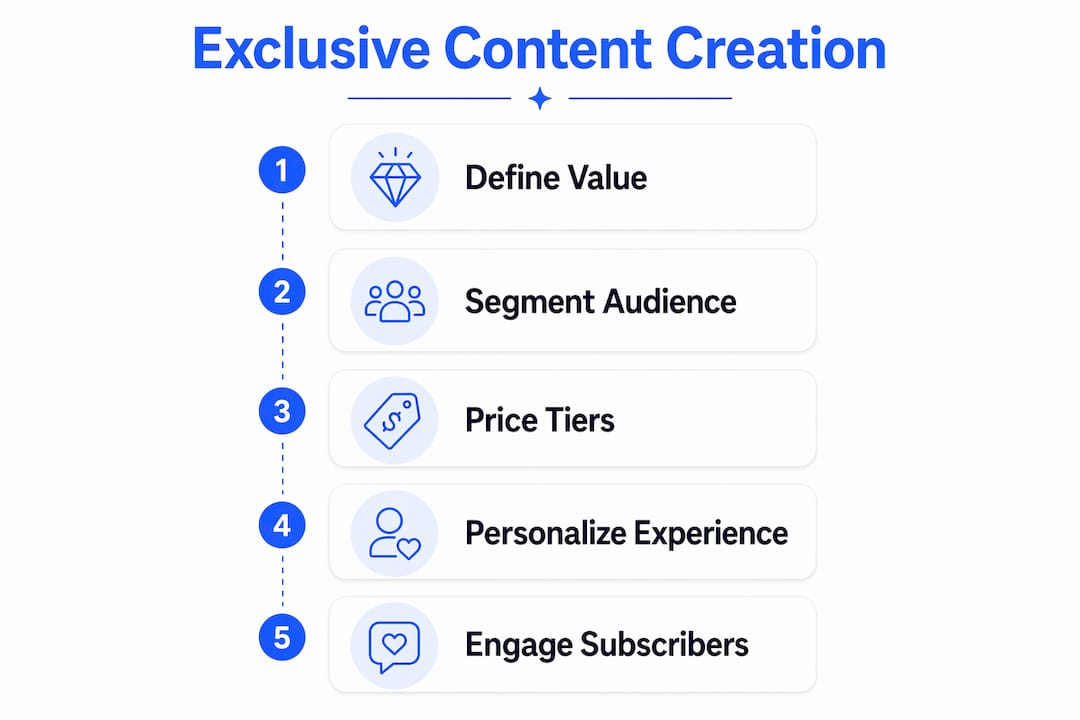
What tiered memberships look like and how to price them
Tiered membership models let you serve different audience segments without burning out trying to create infinite content. The logic is simple: each tier delivers escalating value, and subscribers self-select based on how deeply they want to engage with your work.
Standard tiers run $10 to $20 per month, while premium tiers typically range from $50 to $150 per month with distinct content and access levels. That pricing spread exists because different subscribers have different relationships with your content. Some want access. Others want proximity.
Here is how a practical three-tier structure looks for most creators:
| Tier | Monthly Price | What subscribers get |
|---|---|---|
| Entry | $10 to $15 | Member-only articles, early access, ad-free experience |
| Standard | $25 to $35 | All entry benefits plus monthly Q&A, exclusive video content |
| Premium | $75 to $150 | All standard benefits plus direct messaging, personalized content, community calls |
The critical design principle is that each tier must feel complete on its own. If your entry tier feels like a teaser for the real product, subscribers will either upgrade or leave. Most will leave. Build the entry tier so that someone who never upgrades still feels they got full value for their money.
プロのアドバイス Limit your tiers to three at launch. More than three creates decision paralysis for new subscribers and operational complexity for you. You can always add a tier later once you understand which benefits your audience values most.
Content production across tiers does not need to triple your workload. A single long-form video can become a full-length premium release, a condensed standard-tier highlight, and a short public teaser. One piece of content, three versions, three tiers served. Subscriber segmentation and onboarding flows are critical operational aspects for sustainable paid subscriber growth, and tiering is where that segmentation begins.
For creators on Fanspicy, the platform’s built-in membership tier tools make it straightforward to set up differentiated access without custom technical work.
How personalization keeps subscribers from churning
Personalization is the mechanism that turns a subscriber into a loyal community member. Without it, even well-produced exclusive content starts to feel generic after a few months, and churn accelerates.
The most practical personalization tool is the short periodic survey. Playwire recommends short, periodic surveys and progressive profiling to build audience intelligence over time. A three-question survey sent 30 days after subscription tells you more about what a subscriber values than any amount of engagement data. Ask what content they have found most useful, what they wish you covered more, and what would make them consider upgrading.
Progressive profiling means you do not ask everything at once. You build a picture of each subscriber across multiple touchpoints. By month three, you know enough to segment your list into two or three distinct groups and deliver targeted content to each.
The onboarding sequence is where most creators lose subscribers before personalization even begins. Mapping new subscriber journeys in the first 7 to 14 days to deliver valued experiences quickly is the single highest-leverage retention activity available to you. A subscriber who receives three high-value touchpoints in their first two weeks is far less likely to cancel at the 30-day mark.
Loyalty-based exclusivity takes personalization one step further. The concept of an “inner circle” model rewards your most engaged subscribers with access that goes beyond what their tier technically includes. A subscriber who has been with you for 12 months gets invited to a private group call. Someone who consistently replies to your emails gets a personal response. These gestures cost almost nothing to produce but create emotional connections that transactional paywalls cannot. Loyalty models foster earned exclusivity that builds genuine attachment between creators and their most dedicated followers.
For content variety ideas that map to different subscriber segments, Fanspicy’s guide on content creation ideas covers formats that work across different audience types.
Practical steps for delivering premium content on subscription platforms
Building premium content requires a repeatable system, not just good ideas. Without a clear process from concept to delivery, quality degrades as your subscriber count grows.
Follow these steps to build a delivery system that scales:
- Define your content calendar by tier. Map out one month of content for each tier before you launch. Know exactly what entry subscribers get in week one, what standard subscribers get in week two, and so on. Ambiguity at this stage creates gaps that subscribers notice.
- Set clear expectations at signup. Your subscription page should state exactly what subscribers receive and how often. Vague promises like “exclusive content” convert worse than specific ones like “two subscriber-only videos per month plus a monthly live Q&A.”
- Use teasers strategically. Subtext advises using subscriber reactions, specific update counts, and limited-time offers to generate authentic urgency. A public post that shows the first 60 seconds of a subscriber-only video is more effective than any written description of what subscribers get.
- Gate content at the platform level. Use your platform’s native tools to control access. Fanspicy, Instagram Subscriptions, and Substack all offer content gating that ties directly to subscription status. Manual gating through password-protected links creates friction and erodes the subscriber experience.
- Track performance metrics weekly. Open rates, content completion rates, and tier upgrade rates tell you which content is working. Mailchimp recommends measured gating, quality control, and continuous evaluation to maintain exclusive content benefits. A piece of content that gets low completion rates is either too long, poorly positioned, or not exclusive enough.
Promotion of exclusive content to non-subscribers requires a specific mindset. You are not selling the content. You are selling the feeling of missing out on something real. Show the reaction, not the content. Share a screenshot of subscriber responses to a Q&A without revealing the answers. Post a blurred preview of a behind-the-scenes video. The goal is to make non-subscribers feel the gap between what they have and what they could have.
Interactive features like polls, live sessions, and direct messaging amplify the exclusivity of any content tier by making subscribers feel seen rather than just served.
Key takeaways
Exclusive content succeeds when it delivers experiences that are structurally impossible to replicate outside a paid subscription, not just content that happens to sit behind a paywall.
| Point | Details |
|---|---|
| Define real exclusivity | Exclusive content must offer unique formats or direct access, not just gated versions of free posts. |
| Use tiered pricing | Structure three tiers from $10 to $150 per month, each complete on its own merits. |
| Personalize from day one | Send surveys within 30 days and map onboarding touchpoints in the first 7 to 14 days. |
| Promote the feeling, not the content | Use teasers, reactions, and previews to create authentic urgency for non-subscribers. |
| Measure and adjust weekly | Track completion rates and upgrade rates to identify which content drives the most retention. |
What I have learned about exclusivity after watching creators succeed and fail
The creators who struggle most with exclusive content are the ones who think about it as a product category rather than a relationship mechanic. They ask “what content should I make?” when the better question is “what experience can only I provide?”
I have seen creators with modest followings build six-figure subscription revenues on Fanspicy not because they produced more content, but because they made subscribers feel like insiders. The content was almost secondary. What kept people paying was the sense that they had access to a version of the creator that the public never saw.
The trap I see most often is what I call the “content treadmill.” Creators launch with strong exclusive material, subscribers grow, and then the pressure to keep producing leads to quality shortcuts. Within six months, the exclusive tier looks indistinguishable from the free channel. Churn spikes. The creator blames the platform.
The fix is not more content. It is better constraints. Commit to fewer pieces at higher quality. One genuinely irreplaceable subscriber experience per month beats four mediocre ones every time. Exclusive content ecosystems that combine member benefits with continuous relevance sustain long-term subscriptions far better than volume-based approaches.
Two-way communication is the most underused tool in any creator’s exclusivity strategy. Reply to subscriber messages. Acknowledge long-term members publicly. Ask for input before you create. These behaviors cost almost no production time and signal to every subscriber that their membership is a relationship, not a transaction.
— fan
Build your exclusive content strategy on Fanspicy
Fanspicy gives creators the tools to build, gate, and monetize exclusive content without the technical overhead of managing multiple platforms. The platform supports tiered memberships, content access controls, and integrated billing so you can focus on creating rather than configuring.
Creators like Jackie Pott are already using Fanspicy to deliver tiered exclusive content to paying subscribers, combining live cam sessions, subscriber-only posts, and direct messaging into a single monetized experience. If you are ready to turn your content into a sustainable subscription business, Fanspicy’s creator tools give you everything you need to launch, grow, and retain a paid audience. Explore the platform and see how other creators are building premium subscriber communities that generate consistent recurring revenue.
よくあるご質問
What is exclusive content for subscription platforms?
Exclusive content is digital material accessible only to paying subscribers, including member-only articles, early access releases, subscriber Q&As, and behind-the-scenes access. Mailchimp defines it as content that enhances engagement and loyalty by providing value unavailable to non-paying audiences.
How is exclusive content different from gated content?
Gated content simply restricts access to existing material. Exclusive content offers formats, interactions, or experiences that are structurally different from anything available for free. Putting a regular blog post behind a paywall is gating. Hosting a subscriber-only live Q&A is exclusivity.
How many membership tiers should I offer?
Three tiers is the practical standard for most creators. Standard tiers run $10 to $20 per month and premium tiers reach $50 to $150 per month. More than three tiers creates decision paralysis and operational complexity without proportional revenue gains.
How do I reduce subscriber churn on a paid platform?
Map your onboarding sequence to deliver clear value in the first 7 to 14 days after signup, and send short surveys at the 30-day mark to understand what subscribers value most. Churn spikes when subscribers feel the content has become generic or indistinguishable from free material.
How do I promote exclusive content without giving it away?
Use teasers that show subscriber reactions rather than the content itself. Share blurred previews, partial clips, or screenshots of subscriber responses to create authentic urgency. Subtext recommends limited-time offers and specific update counts to generate genuine FOMO without overexposing the exclusive material.