

Table des matières
TL;DR:
- A stage content creator combines performance skills and technical production to deliver engaging live performances. They use structured content, audience anticipation, and theatrical techniques to maintain viewer retention and confidence. Building disciplined preparation and structured engagement leads to more professional and monetizable live shows.
A stage content creator is a professional who designs and executes purposeful content for live performances and streaming events, blending theatrical techniques with digital production to captivate audiences in real time. This role sits at the intersection of performance art and digital media. Mastering it means combining presence, pacing, and technical execution into a single cohesive show. Whether you perform on a physical stage or stream live to thousands of viewers, the same core principles apply: structure your content, command your space, and give your audience a reason to stay.
What skills define an effective stage content creator?
The most effective live event content creators treat performance presence as a learnable skill, not a personality trait. Presence is not a fake persona. It is the art of making your authentic qualities easier for an audience to perceive, with warmth and clarity as the primary tools.
Performance presence and physical technique
Breath control is the foundation of confident delivery. Long-exhale breathing lowers your heart rate and steadies your voice before you go live. Posture alignment signals authority to your audience before you say a single word. Emotional rhythm, the deliberate rise and fall of energy throughout a show, keeps viewers engaged rather than passive.
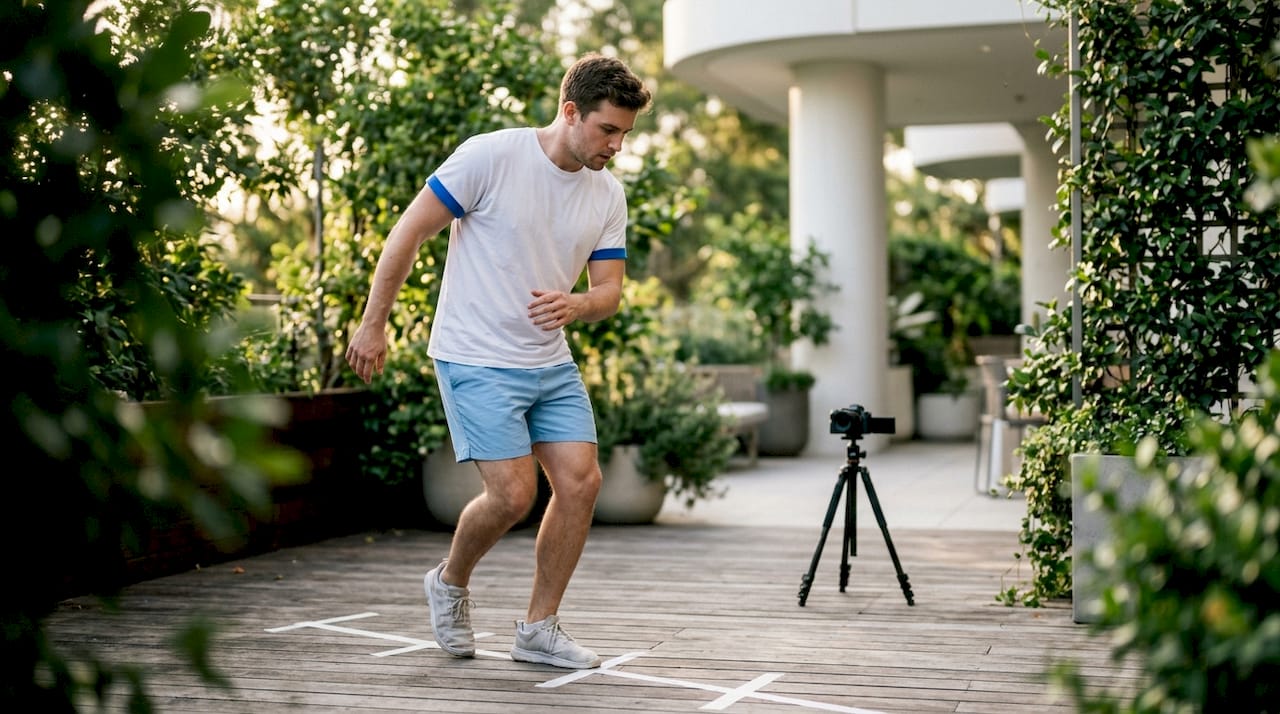
Micro-blocking is a stagecraft technique that assigns precise physical intent to every movement on camera. It converts jittery, nervous energy into intentional rhythm. A creator who knows exactly where to look, when to lean forward, and when to step back reads as confident and compelling on screen.
Content structuring and narrative pacing
Live content needs beats, just like a theater script. A beat is a unit of action with a clear beginning, middle, and end. Structuring your show around three to five beats gives viewers a sense of forward momentum. Without that structure, even a charismatic creator loses the audience after the first ten minutes.
Audience anticipation is a technique, not an accident. Tease what is coming next, pause before a reveal, and let silence do work. These are tools borrowed directly from stage production design and they translate perfectly to live streaming.
Technical basics
Gear investment follows a clear hierarchy. Audio quality delivers the highest return for creators at every level, outperforming video upgrades in audience impact. A beginner kit costs around $300 and a professional setup can reach $2,000 depending on your camera, lighting, and audio choices.
- Audio: A dedicated microphone with a boom arm is the single most impactful upgrade for any creator.
- Camera: A smartphone with a stable mount works for entry-level streams. A mirrorless camera with a clean HDMI output is the professional standard.
- Lighting: Three-point lighting, adapted from theater, eliminates harsh shadows and creates a polished, broadcast-quality look.
- Connectivity: Stable streaming requires 5–10 Mbps upload speed. Multi-camera setups benefit from a hardware switcher for reliability.
Conseil de pro : Run a 5-minute pre-performance routine before every show. Start with long-exhale breathing, check your posture, rehearse your opening two minutes aloud, then trigger a physical anchor, such as pressing your feet into the floor, to signal your nervous system that it is time to perform.
How do you build viewer anticipation before a live show?
Anticipation is the engine of live engagement. Building anticipation 48–72 hours before your event with teaser clips, time confirmations, and countdowns consistently improves audience turnout and early engagement. The pre-show window is as important as the show itself.
A structured pre-show sequence works like this:
- 48 hours out: Post a short teaser clip. Show a prop, a set detail, or a behind-the-scenes moment. Give viewers a reason to mark their calendars.
- 24 hours out: Send a reminder with the confirmed start time and a one-sentence hook about what to expect.
- 2 hours out: Drop a countdown post or story. Include a pre-show checklist for your audience, such as “grab your headphones” or “turn on notifications.”
- Live: Open with a 60-second warm-up that rewards early arrivals. Acknowledge the chat by name. This signals that showing up early has value.
Pacing your live show for maximum retention
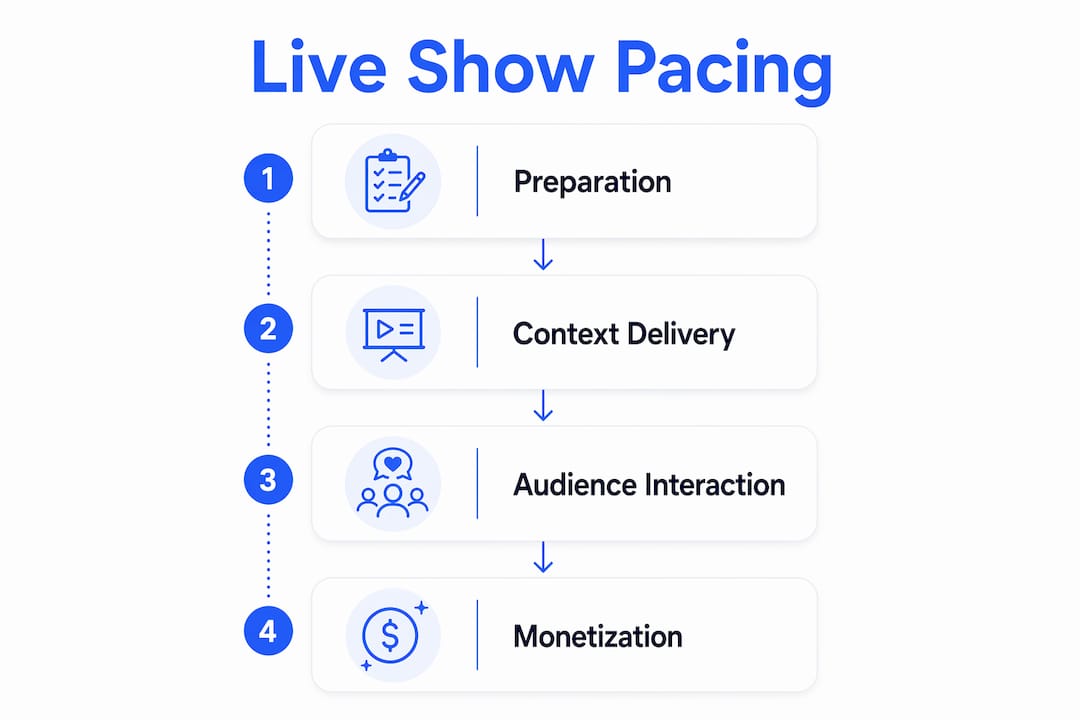
The 60-30-10 content ratio is the most reliable structure for viewer retention during live performances. Sixty percent of your show delivers context and value. Thirty percent invites direct interaction. Ten percent is the payoff, the moment your audience has been waiting for. This ratio keeps energy high without burning out your viewers or your own performance stamina.
Real-time attention metrics matter. Watch your viewer count, chat velocity, and drop-off points during every show. If chat slows down, introduce a poll or a direct question. Adjust your pacing based on what the numbers tell you, not on gut feeling alone.
The moderator advantage
Moderators function as digital ushers who set the room’s tone before you even appear on screen. A trained moderator drops reminders, highlights community members, and manages the chat atmosphere so you can focus entirely on your performance. Treat your moderator as a co-producer, not a volunteer.
Conseil de pro : Give your moderator a show runsheet with timestamps. At the 10-minute mark, they prompt a specific question in chat. At the 25-minute mark, they pin a poll. This keeps interaction consistent even when you are deep in performance mode.
What technical setup do stage content creators need?
Production quality signals professionalism before you speak. The table below maps three gear tiers to realistic budgets and use cases for creators at different stages.
| Tier | Budget | Microphone | Camera | Lighting | Best for |
|---|---|---|---|---|---|
| Starter | ~$300 | USB condenser mic | Smartphone + mount | Ring light | First 6 months of streaming |
| Mid-range | ~$800 | XLR mic + audio interface | Webcam or entry DSLR | Two-point softbox | Growing audience, regular schedule |
| Professional | ~$2,000 | Broadcast XLR mic + mixer | Mirrorless + capture card | Three-point theatrical lighting | Full-time creators, live events |
A $70 microphone paired with a boom arm and a basic light dramatically improves stream quality for under $120 total. That single investment separates amateur streams from watchable ones.
Workflow and rehearsal practices
Structured rehearsal progressions from script reading to full tech runs are critical to confidence and smooth live delivery. A creator who rehearses their camera blocking makes fewer fumbles and reads as more authoritative on screen. Run a soundcheck 30 minutes before every show. Test your stream output at the platform level, not just through your headphones.
Camera choreography is the streaming equivalent of stage blocking. Define two or three fixed camera positions and practice moving between them deliberately. Practicing fixed positions reduces on-screen fumbles and creates intentional viewer focus. Viewers notice when a creator knows exactly where to look.
How do theatrical skills translate to digital live performances?
Theater training gives live content creators a vocabulary that most streaming guides ignore entirely. The skills below transfer directly from the stage to the screen.
- Center and anchor routines: Theater actors use a physical center point to ground their energy before a scene. Creators can use the same technique to project calm and focus at the start of a live show.
- Scene beats: Breaking a live stream into discrete beats, each with a clear purpose, mirrors how directors structure acts. It prevents the shapeless, meandering quality that kills viewer retention.
- Gesture and blocking for the frame: Stage gestures are large and broad. Camera gestures are smaller and more deliberate. Adapting your physical vocabulary to the camera frame is a skill that takes practice but pays off immediately in perceived confidence.
- Breath support and voice projection: Theater voice training teaches diaphragmatic breathing and forward resonance. These techniques reduce vocal fatigue during long streams and keep your voice clear and authoritative.
- Feedback and peer practice labs: Theater companies use post-show feedback sessions to identify what worked and what did not. Creators benefit from the same practice. Record every show, review it with a peer, and identify one specific improvement for the next session.
Le functional threshold system combines physical anchoring with breath control to keep performance energy in a usable range. Too little energy reads as flat. Too much reads as chaotic. The goal is controlled intensity, which is exactly what theater training produces.
Principaux enseignements
A stage content creator succeeds by combining theatrical performance discipline with deliberate technical production and structured audience engagement strategies.
| Point | Details |
|---|---|
| Audio is the top priority | A quality microphone delivers more audience impact than any other gear upgrade. |
| Anticipation drives attendance | Start building pre-show momentum 48–72 hours before every live event. |
| Structure retains viewers | The 60-30-10 ratio of context, interaction, and payoff keeps audiences engaged throughout. |
| Theatrical skills transfer directly | Micro-blocking, breath control, and scene beats all improve live streaming performance. |
| Moderators are co-producers | Trained moderators shape audience energy and maintain engagement while you perform. |
What I have learned from years of watching creators succeed and fail live
The creators who grow fastest are not the most naturally charismatic. They are the most disciplined about preparation. Every great live show I have seen was built on a rehearsal no one watched.
The biggest mistake I see is treating live streaming as casual. Creators show up without a runsheet, without a soundcheck, and without a clear content structure. Then they wonder why their viewer count drops after the first five minutes. Spontaneity is a skill you earn through preparation, not a substitute for it.
Theatrical discipline changed how I think about digital presence entirely. When you understand that presence enhances authentic qualities rather than replacing them, the pressure to “perform” disappears. You stop trying to be someone else on camera and start making it easier for your audience to see who you already are.
Start modest. One camera, one microphone, one structured show per week. Track your drop-off points. Adjust one variable at a time. Consistency compounds faster than gear upgrades ever will.
— fan
Fanspicy supports creators who take their live shows seriously
Live creators who treat their shows as productions, not casual broadcasts, build audiences that pay. Fanspicy is a paid social media and live cam platform built for creators who want to monetize their live presence directly.
Fanspicy gives you the tools to run professional live streams with real audience interaction and direct revenue. The platform is designed for creators who understand that engagement and income are connected. If you are ready to apply the production skills covered here to a platform that rewards them, start on Fanspicy and build the live show your audience will pay to watch.
FAQ
What does a stage content creator actually do?
A stage content creator designs and delivers live content that combines performance presence, narrative structure, and technical production. The role covers everything from pre-show anticipation building to real-time audience interaction during a live stream or event.
How much does a beginner streaming setup cost?
A functional beginner kit costs around $300, covering a USB microphone, a smartphone mount, and basic lighting. A $70 microphone with a boom arm alone can dramatically improve audio quality for under $120 total.
What is the 60-30-10 rule for live content?
The 60-30-10 ratio structures live shows as 60% context and value delivery, 30% direct audience interaction, and 10% payoff or climax. This balance maintains viewer retention and prevents energy from peaking too early.
How do theatrical techniques improve live streaming?
Techniques like micro-blocking, breath control, and scene beats give creators physical and structural tools to manage energy, reduce fumbles, and hold viewer attention. These methods transfer directly from stage training to camera performance.
How far in advance should creators promote a live show?
Building anticipation 48–72 hours before a live event with teaser clips, countdowns, and reminders consistently improves audience turnout and early engagement during the broadcast.