

Table des matières
TL;DR:
- Content creation involves researching, planning, producing, publishing, and optimizing digital media to grow an audience.
- Effective creators follow a five-step process and set SMART goals to build authentic trust and engagement.
Content creation is the systematic process of researching, planning, producing, publishing, and optimizing digital media to engage and grow an audience. It is the foundation of every successful creator career, from YouTube channels to paid subscription platforms. This guide covers the full content creation 101 framework, including beginner content strategies, core writing skills, and audience growth tactics grounded in real industry research. Whether you are building a personal brand or launching a paid content channel, these fundamentals apply from day one.
What are the essential steps in the content creation process?
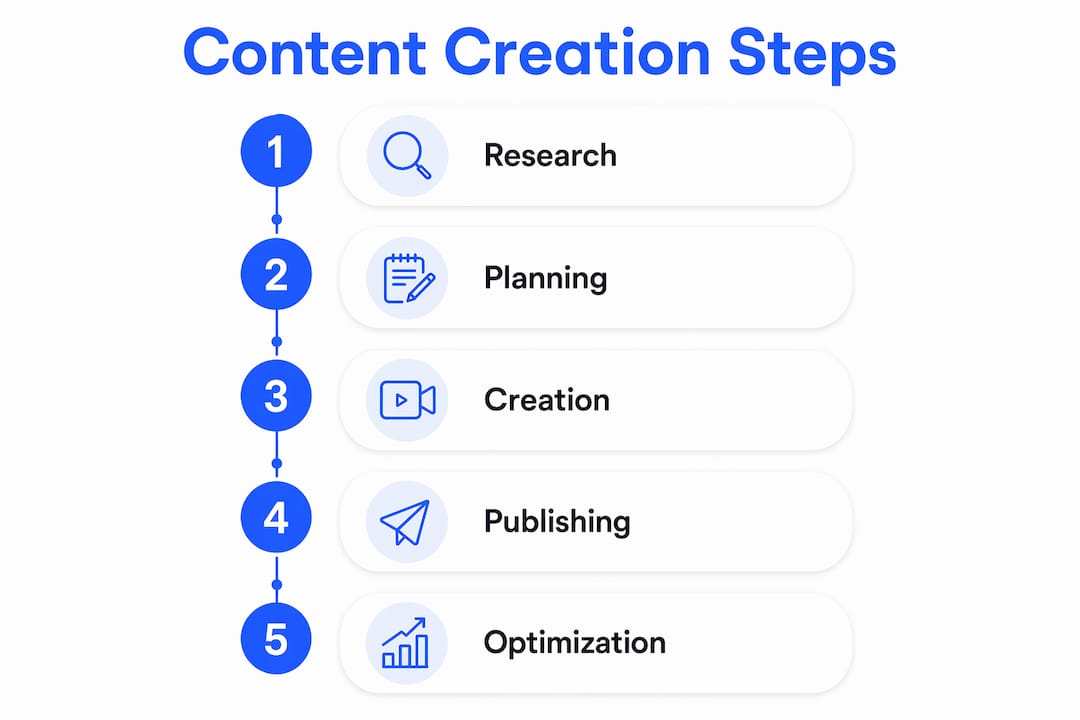
Content creation is a full end-to-end process that spans research, planning, production, publishing, and optimization. Skipping any phase, especially the last one, leaves growth on the table. The five steps below form the backbone of every effective content workflow.
1. Research
Research is where every piece of content begins. You need to understand your audience’s pain points, the topics they search for, and the keywords that surface your content in discovery feeds. Audience research tools like Google Trends and platform analytics give you real signals instead of guesses.
2. Planning
Planning means deciding your goals, formats, platforms, and call to action before you write a single word. A content calendar locks in publishing dates and prevents the most common beginner mistake: random, inconsistent posting. Treating content strategy as a measurable roadmap aligns every piece you create with a clear outcome.
3. Creation
Creation covers writing, filming, recording, or designing the actual content. Focus on clarity and intent at this stage. A rough draft that communicates the core idea clearly beats a polished piece that says nothing memorable.

4. Publishing
Publishing means placing your content where your audience already spends time. Platform choice matters. A short video performs differently on TikTok than it does embedded in a blog post. Match the format to the platform, not the other way around.
5. Optimization
Optimization is the step most beginners skip entirely. Content creation is a continuous loop, not a one-time event. Review your performance data after each publish cycle and adjust headlines, thumbnails, posting times, or formats based on what the numbers tell you.
Conseil de pro : Set a recurring 30-minute weekly review to check your top three performing pieces. Small adjustments to titles and thumbnails compound into significant reach gains over time.
How to develop effective beginner content strategies
A beginner content strategy is a written plan that connects your content output to specific goals. Without one, you are posting into a void. The Salesforce 7-step content strategy framework builds from audience personas and SMART goals through content audits, ideation, creation, distribution, and performance measurement. That sequence works because each step feeds the next.
Here is how to apply the most critical elements as a beginner:
- Run a content audit first. If you have posted anything before, catalog what exists, what performed, and what flopped. Patterns in your own data beat any generic advice.
- Set SMART goals. Specific, Measurable, Achievable, Relevant, and Time-bound goals give you a clear target. “Grow my subscriber count by 500 in 90 days” beats “get more followers.”
- Build a content calendar. A calendar is not just a schedule. It is a commitment device that forces you to plan formats, topics, and publishing windows in advance.
- Integrate SEO from the start. Optimizing content for search engines is a creation step, not an afterthought. Research keywords before you write, not after.
- Pick two platforms maximum. Spreading across five platforms dilutes your energy. Master one, then expand.
Quality beats volume at every stage of a beginner content strategy. One well-researched, clearly written piece outperforms five rushed posts every time. Audiences reward consistency and depth, not frequency alone.
Conseil de pro : Use a simple three-column spreadsheet as your first content calendar: topic, format, and publish date. You do not need expensive software to stay consistent.
What skills and tools support high-quality content writing and production?
Strong content writing rests on a small set of learnable skills. Top content writers use a repeatable process that includes deep research, structured outlining, unique angle development, and clarity-first editing. None of these skills require natural talent. They require practice and a system.
The core skills every creator needs:
- Deep research. Evidence-backed writing builds trust. Cite real data, name real sources, and verify claims before publishing.
- Structured outlining. An outline prevents rambling. Write your main point for each section before filling in the prose.
- Unique voice. Your perspective is your differentiator. AI can produce generic text. Only you can write from your specific experience and point of view.
- Clarity-first editing. A clarity-first editing checklist confirms that every claim is evidence-based and every sentence drives the reader toward action. Cut anything that does not earn its place.
- Multimedia integration. Images, short clips, and audio segments increase time-on-page and signal value to platform algorithms.
Workflow tools matter as much as writing skills. Automated content status fields, moving pieces from draft to review to published, prevent bottlenecks and lost drafts. Formalizing content states and automating task assignments keeps production moving, especially when you are working solo. A creator who ships consistently beats a creator who ships perfectly once a month.
The combination of research skills, a clear voice, and a reliable workflow is what separates creators who grow from creators who stall.
How to grow and engage an audience through creator-driven content
Audience growth is a direct result of trust. Creators who share authentic stories and genuine opinions build audiences that buy, share, and return. Generic content gets scrolled past. Specific, personal content gets saved and shared.
The data on creator impact is striking. A Google study on YouTube creator marketing found that users are 13X more likely to search for a brand after a creator talks about it. The same study found users are 5X more likely to buy. Creator content also boosts incremental return on ad spend by 16% when layered with paid promotion. These numbers show that authentic creator voices drive behavior at a scale that polished brand ads rarely match.
“Creators talking about brands significantly increase user brand search and purchase behaviors, showing the power of authentic creator content.” — Think with Google
Platform mechanics amplify authentic content. Reply to comments within the first hour of publishing. Ask direct questions in your captions. Use polls and interactive features to signal to algorithms that your content generates conversation. Each engagement signal extends your organic reach without spending a dollar.
| Growth tactic | What it does |
|---|---|
| Une narration authentique | Builds trust and drives repeat visits |
| Comment engagement within 1 hour | Signals activity to platform algorithms |
| Paid promotion layering | Boosts incremental ROAS by 16% |
| Platform-specific formats | Matches content to native discovery mechanics |
| Consistent publishing schedule | Trains audience expectations and algorithm favor |
Paid promotion works best when it amplifies content that already performs organically. Boost posts that have already earned engagement, not posts that flopped. That principle applies whether you are growing a YouTube channel or building a subscriber base on a paid content platform. For creators ready to take distribution further, proven promotional tactics for subscriber growth offer a practical next step.
Key takeaways
Successful content creation combines a structured five-step process, SMART goal setting, clarity-first writing skills, and authentic audience engagement to produce consistent, measurable growth.
| Point | Details |
|---|---|
| Follow the five-step process | Research, plan, create, publish, and optimize every piece without skipping the final step. |
| Set SMART goals | Specific, measurable goals prevent random posting and keep your strategy on track. |
| Write with clarity first | Use an editing checklist to confirm every claim is evidence-based and every sentence drives action. |
| Engage authentically | Creators who share genuine perspectives drive 13X more brand searches than passive content. |
| Automate your workflow | Formalize content states and task assignments to prevent bottlenecks and maintain consistent output. |
What I have learned about content creation that most guides skip
Most content creation guides treat optimization as a bonus step. They walk you through research and writing, then mention analytics in a closing paragraph as if it were optional. That framing is wrong. Optimization is where the real growth happens.
I have watched creators produce genuinely good work and then abandon it after two weeks because the numbers did not pop immediately. The problem was never the content. It was the missing feedback loop. A piece published and never revisited is a dead asset. A piece published, reviewed, adjusted, and republished is a compounding one.
The other thing guides consistently undervalue is the human voice. AI tools can draft outlines, suggest headlines, and fill in research gaps. They cannot replicate the specific way you phrase an idea, the story only you have lived, or the opinion only you hold. Top writing performance comes from learnable research and structure skills combined with a human storytelling layer that no tool can duplicate. Lean into that layer hard.
Finally, systems beat motivation every time. A content calendar with real due dates and defined content states keeps you publishing even when inspiration is low. Motivation is unreliable. A workflow is not.
— fan
Fanspicy for creators who are ready to grow
Building an audience takes more than great content. It takes a platform designed to support creators at every stage of growth. Fanspicy is a paid social media and live cam platform built for creators who want to monetize their content directly and build genuine fan relationships.
Fanspicy gives creators the tools to publish paid content, run live sessions, and grow a subscriber base without the friction of traditional social media gatekeeping. The platform is built for creators who take their work seriously and want real results. If you are ready to put your content strategy into practice, start on Fanspicy and connect with an audience that pays for what you create. For a deeper look at growing your reach, the guide on promoting paid content covers the tactics that move the needle in 2026.
FAQ
What is content creation in simple terms?
Content creation is the process of researching, producing, and publishing digital media to attract and engage a specific audience. It covers written posts, videos, audio, and images across any platform.
How do I start a beginner content strategy?
Start by defining your audience, setting one SMART goal, and building a simple content calendar with two to four posts per week. Pick one platform and master it before expanding.
What skills do I need for content writing?
The core skills are deep research, clear structure, a distinct voice, and a clarity-first editing habit. Backlinko identifies eight key skills that separate top writers, all of which are learnable with practice.
How does creator content affect audience behavior?
Creator content drives measurable action. A Google study found users are 13X more likely to search for a brand and 5X more likely to buy after a creator discusses it.
How often should beginners publish content?
Consistency matters more than frequency. Two to three well-researched pieces per week outperform daily rushed posts. Set a schedule you can maintain for at least 90 days before adjusting.