

Inhaltsübersicht
TL;DR:
- Restaurant content marketing combines food and experience content to attract new guests and build loyalty over time. Consistent updates on local SEO profiles and short-form videos significantly influence guest decision-making. Focusing on owned channels and tracking revenue metrics ensures long-term growth and repeat visits.
Restaurant content marketing is the strategic creation and distribution of food and dining experience content designed to attract new guests, build brand loyalty, and drive repeat visits. Unlike paid advertising, it builds compounding value over time. 90% of diners check social media before booking a table, and 76% of local searchers visit a restaurant within 24 hours of searching. Those two numbers define the opportunity. Restaurants that publish consistent, well-planned content across owned and social channels capture that intent. Those that don’t hand it to competitors who do.
What is restaurant content marketing and why does it matter for local search?
Local SEO is the highest-return channel in restaurant digital marketing, and Google Business Profile is its engine. A fully optimized profile with weekly photo uploads, updated hours, and active review responses functions as a living publication that search algorithms reward continuously. A static listing, by contrast, signals neglect and ranks accordingly.
The mechanics are straightforward. When someone searches “best tacos near me” on a Saturday night, Google surfaces profiles with recent activity, strong review velocity, and complete information. Restaurants that treat their profile like a social feed, posting new dish photos, seasonal specials, and event announcements weekly, consistently outrank those that set it and forget it.
Your digital menu also plays a direct role in local discovery. Menus aligned with your point-of-sale system and updated in real time prevent the frustrating mismatch between what guests see online and what they can actually order. That mismatch costs you both the visit and the review.
- Post at least one new photo to your Google Business Profile every week
- Respond to every review, positive or negative, within 48 hours
- Use your business description to include neighborhood and cuisine keywords naturally
- Keep holiday hours updated at least two weeks in advance
- Add menu items as Google posts during seasonal changes
Profi-Tipp: Set a recurring Monday morning calendar block for your GBP update. Fifteen minutes of consistent effort beats a two-hour overhaul every six months.
Why is short-form video the most effective format for food content?
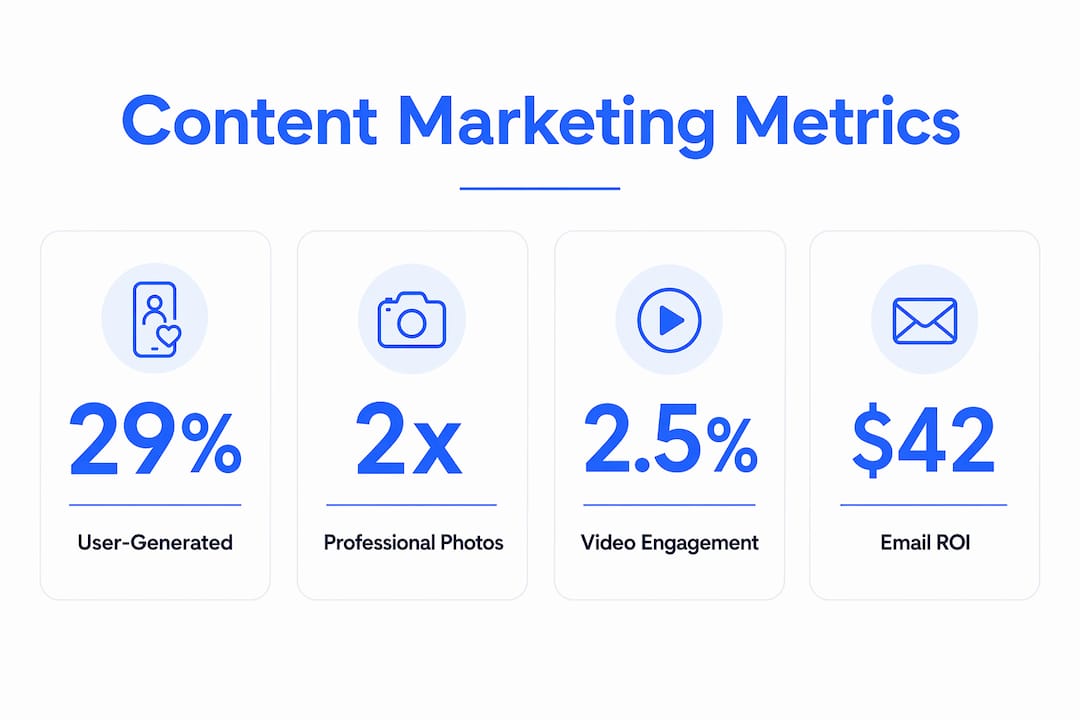
Short-form video produces a 2.5% engagement rate in the food category, which is significantly higher than static image posts. That engagement rate translates directly into table reservations and delivery orders when the content is done right.
The counterintuitive finding is that production quality works against you. Authentic behind-the-scenes videos of a chef plating a dish or a bartender pouring a cocktail consistently outperform studio-produced ads. Diners respond to realness. A shaky phone clip of your kitchen at 6:00 PM on a Friday communicates energy and authenticity that no ad agency can replicate.
61% of diners report being influenced by food content they discovered on short-form video platforms. That influence is not passive. It shapes where people choose to eat that same week.
Effective video series concepts that work across formats include:
- “The dish behind the dish”: the sourcing story and technique behind a signature item
- “30 seconds in the kitchen”: unedited prep clips filmed during actual service
- “Meet the team”: 60-second profiles of your cooks, servers, and bartenders
- “Before and after”: raw ingredients transformed into a finished plate
- “Guest reaction”: candid first-bite moments filmed with guest permission
Profi-Tipp: Film three to five clips every time you pick up your phone in the kitchen. Batch your content creation during prep time, then schedule posts for peak engagement windows: Tuesday through Thursday between 11:00 AM and 1:00 PM.
Stat: 61% of diners say short-form video content directly influenced their dining decision. One well-filmed clip of your signature dish can reach more potential guests than a month of static posts.
How do owned channels and content mix drive repeat business?
Restaurants lose 25–30% of first-time guests every year simply because they never establish a direct communication channel. Social media reach is rented. Email and SMS lists are owned. The difference in long-term value is enormous.
Email marketing returns $42 for every $1 spent, and loyalty programs can deliver up to 7x the return compared to third-party acquisition channels. Those numbers reflect the compounding effect of communicating directly with guests who already like you, without paying a platform for access every time.
The 30/30/30 content rule gives you a practical framework for balancing your output:
- 30% promotional content. Limited-time offers, new menu launches, event announcements, and reservation calls to action. This is the content that drives immediate revenue.
- 30% community content. Staff spotlights, local supplier stories, neighborhood partnerships, and guest milestones. This builds emotional connection and brand identity.
- 30% engaging content. Polls, questions, recipe teasers, and behind-the-scenes clips. This content generates interaction and keeps your audience warm between visits.
The remaining 10% is flexible: seasonal content, press mentions, or anything timely that does not fit neatly into the other categories.
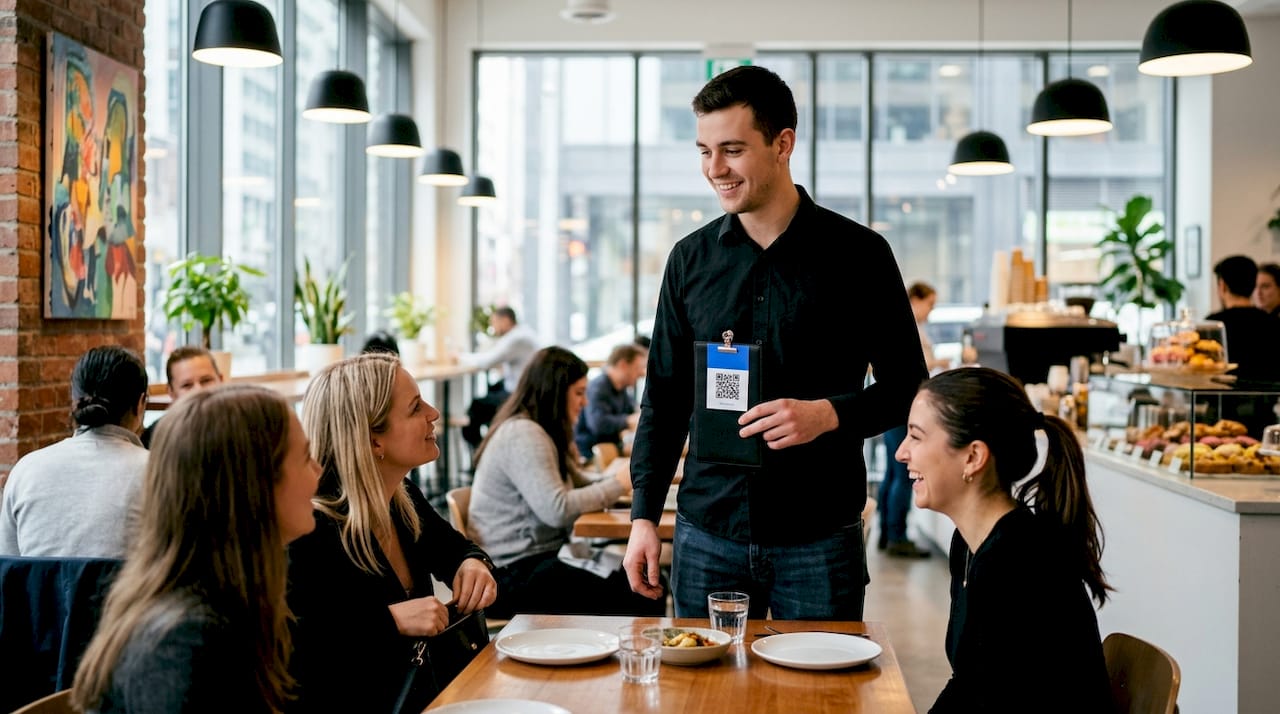
Wallet passes combined with QR codes give you a direct push-notification line to guests at near-zero cost. A guest who installs your loyalty wallet pass receives your daypart promotions directly on their lock screen. No algorithm decides whether they see it. Without the wallet install, QR codes are just links. With it, they become a direct marketing channel.
Profi-Tipp: Place a QR code on your check presenter and train your servers to mention the loyalty pass during payment. A 10% install rate on your monthly covers compounds into a significant owned audience within six months.
How does user-generated content increase restaurant conversion rates?
User-generated content, or UGC, drives 29% higher conversion rates than brand-produced content and costs almost nothing to produce. The reason is trust. A photo posted by a real guest carries more credibility than any image your marketing team creates, because it is unsponsored and unfiltered.
The practical challenge is not getting guests to create content. They already do. The challenge is capturing it, curating it, and resharing it consistently. Restaurants that build a simple UGC system outperform those that rely on their own production volume.
Effective UGC strategies include:
- Create a branded hashtag and print it on menus, table cards, and receipts
- Offer a small incentive, such as a complimentary dessert or loyalty points, for tagged posts
- Reshare guest content to your stories within 24 hours of posting
- Ask permission before reposting to your main feed, then credit the guest by name
- Feature a “guest photo of the week” in your email newsletter to reinforce the behavior
Storytelling amplifies UGC by giving guests a frame for what they are experiencing. When your menu describes a dish as “slow-braised for 14 hours using a recipe from our chef’s grandmother in Oaxaca,” guests are more likely to photograph it and share the story. The narrative creates ritual. Ritual creates repeat visits. Prioritizing UGC curation over high-volume original production consistently produces stronger social proof and higher engagement.
Dishes with professional photos receive twice as many orders on digital menus. Pair that with a guest-generated story and you have both the visual trigger and the social proof working together.
What metrics actually measure content marketing success for restaurants?
Follower counts and impressions tell you almost nothing about revenue. Tracking repeat purchase rates and contribution margin produces better marketing decisions than any social media vanity metric. The goal of content is not reach. It is conversion from first-time visitor to regular guest.
Consistent, well-planned content calendars build topical authority over time, which compounds into search relevance and organic discovery. Sporadic posting resets that momentum. Treat your publishing schedule like your kitchen schedule: non-negotiable and staffed.
| Metric | Why it matters |
|---|---|
| Repeat visit rate | Shows whether content is building loyalty, not just awareness |
| New-to-brand guest count | Measures discovery effectiveness across search and social |
| Email list growth rate | Indicates owned channel health and long-term retention potential |
| Reservation conversion rate | Links content directly to revenue-generating actions |
| Review velocity | Reflects guest satisfaction and boosts local search ranking |
The shift from vanity metrics to revenue metrics requires a mindset change. A post with 200 likes that drove 15 reservations outperforms a post with 2,000 likes that drove none. Measuring new-to-brand buyers alongside repeat purchase rates gives you a complete picture of whether your content is actually growing the business.
Wichtigste Erkenntnisse
Effective restaurant content marketing requires owned channels, consistent local SEO updates, short-form video, and UGC systems working together to convert first-time visitors into repeat guests.
| Point | Details |
|---|---|
| Local SEO is the highest-ROI channel | Update your Google Business Profile weekly with photos, posts, and review responses. |
| Short-form video outperforms polished ads | Authentic behind-the-scenes clips drive a 2.5% engagement rate in the food category. |
| Owned channels compound over time | Email returns $42 per $1 spent; wallet passes deliver direct push notifications at near-zero cost. |
| UGC drives 29% higher conversion | Build a branded hashtag system and reshare guest content consistently to build trust. |
| Track revenue metrics, not vanity metrics | Repeat visit rate and reservation conversion rate reveal actual content performance. |
Why most restaurant content strategies fail before they start
The restaurants I see struggle with content marketing share one pattern: they treat it as a series of individual posts rather than a compound system. A single viral video does not build a business. A system that turns discovery into an email subscriber, then into a loyalty pass holder, then into a regular guest, does.
The biggest practical obstacle is time. Restaurant environments are relentless, and content creation feels like a luxury when you are managing a full house on a Friday night. The solution is documentation, not production. Pull out your phone during prep and film 30 seconds of something real. That clip, posted consistently, builds more trust than a monthly photoshoot.
I have also watched owners invest heavily in social media while ignoring their Google Business Profile for months. Local SEO is not glamorous, but it is where purchase intent lives. Someone searching “Italian restaurant open now” is ready to spend money tonight. Someone scrolling Instagram might be. Prioritize accordingly.
The warning I give every restaurant owner: do not wait until your content is “good enough” to publish consistently. Consistency builds the algorithm relationship and the audience habit. Quality improves with volume. Start with what you have, document your micro-moments during service, and build the system before you refine the craft.
— fan
How Fanspicy supports your restaurant’s content presence
Restaurants that want to grow their digital presence without hiring a full marketing team need tools that handle the operational side of content distribution.
Fanspicy gives restaurant owners and marketers a platform to manage social content, build direct guest relationships, and run promotions that drive real bookings. From scheduling posts to managing your social media content strategy across channels, Fanspicy handles the distribution so you can focus on the food. If you are ready to move from ad hoc posting to a system that compounds over time, explore Fanspicy and see how it fits your operation.
FAQ
What is restaurant content marketing?
Restaurant content marketing is the practice of creating and distributing food, experience, and brand content across digital channels to attract new diners and retain existing ones. It includes social media, email, local SEO, and video.
How often should restaurants post on social media?
Posting three to five times per week on your primary platform produces consistent algorithm engagement without burning out your team. Consistency matters more than frequency.
Does short-form video really drive restaurant visits?
Yes. 61% of diners report that short-form video content directly influenced their dining decision, making it the most effective single format for restaurant social media.
What is the best owned channel for restaurant retention?
Email marketing delivers the strongest measurable return at $42 per $1 spent, but wallet passes with push notifications provide the most direct, cost-free access to guests after their first visit.
How do I measure whether my content is working?
Track repeat visit rate, reservation conversion rate, and email list growth rather than follower counts or impressions. Revenue-linked metrics show whether content is actually building your business.