
جدول المحتويات
Content marketing builds long-term discovery and authority through owned assets like blog posts and guides, while social media marketing amplifies and tests that content in real time across platform feeds. Use content marketing when you want compounding search visibility and credibility; use social media when you need fast feedback and audience reach. Most effective campaigns run both together, with social testing ideas that earn a place in your owned content library.
TL;DR:
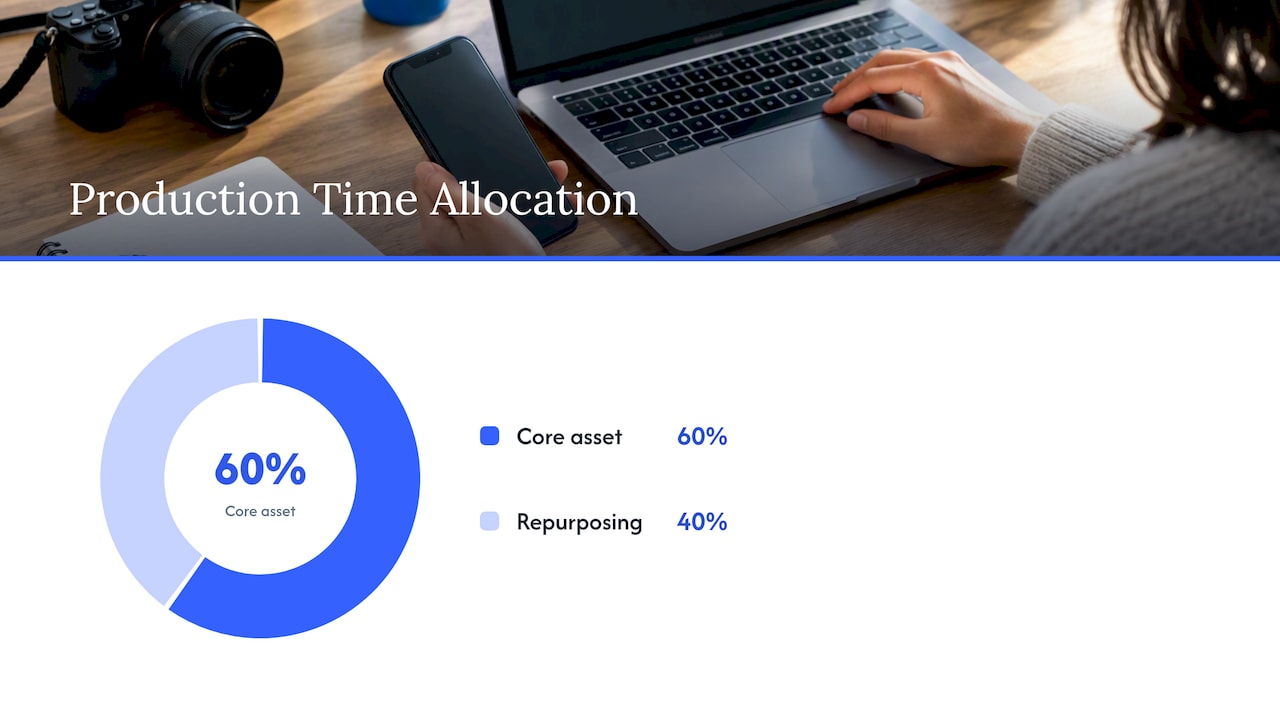
- With limited resources, spend roughly 60% of production time on one core asset and 40% repurposing it into platform native social posts.
- Publish a pillar piece first, test social snippets for three weeks, then put paid spend behind the strongest variant in week four.
- Track organic traffic, keyword rankings, and search conversions for content; measure social reach, engagement, shares, and clicks, since last click attribution can undervalue earlier content.
- Research in Management Science found informative social posts tend to lift sales, while persuasive posts can affect return rates differently by product.
جدول المحتويات
- Why the distinction between strategy and channel matters
- What counts as content marketing versus social media marketing
- Where content and social actually diverge
- Turning one piece of content into a week of social assets
- Tracking the right numbers for each discipline
- A framework for combining both when resources are tight
- What the research says about what actually moves the needle
- A 30/60/90-day view for creators balancing both
- How Fanspicy helps you turn social traffic into paid support
- الأسئلة الشائعة
- Sources
Why the distinction between strategy and channel matters
Content marketing is a strategy, not a format. It means producing owned assets, articles, guides, videos, and tools, designed to rank, convert, and keep working for months or years after publication. Social media marketing is channel-first: you’re renting attention on platforms you don’t control, where posts have a short shelf life and success depends on an algorithm’s mood that week.
This difference shapes who does the work and how fast. Content teams plan in quarters, researching keywords, building outlines, and revising drafts before anything ships. Social teams plan in days, often producing and publishing within the same week to match trending formats or real-time conversations.
- Content marketing: strategic, long-term, owned, slow to produce but durable.
- Social media marketing: tactical, immediate, platform-dependent, fast to produce but short-lived.
- Execution timelines differ enough that most teams assign separate owners, even when the output feeds one strategy.
Knowing which bucket a task falls into keeps expectations realistic. A blog post that takes three weeks to rank is not a failure; a social post that fades after 48 hours is not a bug, it’s how the channel works according to Shopify’s comparison of the two disciplines.
What counts as content marketing versus social media marketing
Content marketing typically includes blog posts, long-form guides, case studies, email newsletters, podcasts, and downloadable tools. These formats are built to be found through search or shared directly, and they tend to stay relevant well past their publish date. A single well-researched guide can keep generating traffic for years with minor updates.
Social media marketing lives inside platform-native formats: short-form video, image carousels, Stories, livestreams, and community posts. Each platform rewards a different shape of content, and what performs on one often falls flat on another.
- Content marketing formats: blog articles, pillar guides, whitepapers, email series, podcasts, downloadable templates.
- Social formats: Reels and TikTok clips, Stories, carousel posts, livestreams, polls, and community replies.
- Workflow difference: content marketing follows an editorial calendar built around research and SEO; social follows a posting calendar built around trends and engagement windows.
Evergreen assets anchor a content strategy because they keep earning traffic without repeated investment. Social posts, by contrast, are built for the moment: they spark a reaction, then get buried under newer posts within hours. Treating both the same way, expecting a tweet to compound like a blog post, is where most strategies go wrong.
Where content and social actually diverge
The two disciplines pull toward different goals, and conflating them leads to the wrong metrics and the wrong content.
- Goals and funnel focus: content marketing targets authority and search visibility, pulling in readers who are actively researching; social media targets awareness and engagement, pushing content to people who weren’t necessarily looking for you.
- Format and attention span: a blog post can hold a reader for several minutes; a social post has seconds to earn a scroll-stopping reaction before the feed moves on.
- Discovery and platform risk: content marketing relies on search engines and owned email lists, channels you control; social media relies on platform algorithms that can change overnight and reshape your reach without warning.
- Cost, speed, and resources: social campaigns can launch and show results within days, while content marketing often needs weeks before search traffic materializes, but that traffic tends to be more durable once it arrives.
نصيحة محترف: Treat social media as your testing ground: whatever format or hook earns the most engagement in a week is a strong candidate to expand into a full content asset.
Academic modeling backs up the idea that testing before committing budget pays off. Research using the OranSim simulation framework found that in a controlled synthetic campaign, doubling the budget roughly doubled reach and raised simulated 14-day response to nearly twice the baseline, but also lowered the average match between content and audience. In plain terms: bigger budgets grow reach fast, but without careful targeting, you dilute relevance just as quickly.
Turning one piece of content into a week of social assets
A single long-form article can fuel days of social content without feeling repetitive. Break a 2,000-word guide into a short video summarizing the main point, three quote graphics highlighting key stats, a carousel walking through the steps, and a poll asking the audience which tip they use already. Each piece links back to the full article for readers who want more.
- Short-form video: use the article’s strongest insight as a 30-second hook, then direct viewers to the full piece in your bio or caption.
- Livestreams: host a Q&A around the topic once it’s published, answering questions the article doesn’t cover.
- User-generated content: invite your audience to share their own experience with the topic and repost the best responses.
- Polls and questions: test which angle of the topic resonates most before writing the next piece.
Tone and calls-to-action shift by platform. A LinkedIn post can be direct and professional, asking readers to comment with their take. A TikTok or Reels caption works better with a casual, curiosity-driven hook that teases the payoff without giving it away.
A practical pattern several marketers follow, according to Shopify, is a three-tier cadence: publish the long-form pillar piece in week zero, release micro-snippets and social tests over the following three weeks, then put paid budget behind whichever variant performed best starting in week four. This turns organic testing into a filter for where paid spend actually works.
Tracking the right numbers for each discipline
Content marketing and social media succeed on different metrics, and reporting them the same way hides what’s actually working.
- Content marketing KPIs: organic traffic, keyword rankings, time on page, email signups, and downstream conversions from search visitors.
- Social media KPIs: reach, engagement rate, shares, comments, follower growth, and click-throughs to owned content.
- Attribution pitfall: a sale rarely comes from a single touchpoint, so crediting it entirely to the last click (often a social ad) undercounts the blog post or email that built trust earlier in the journey.
- Experiments: run small paid boosts on your top-performing organic social posts to confirm the content resonates before scaling spend further.
Research published in Management Science found that firm-generated social posts have uneven effects on sales and returns: informative posts tend to lift sales, while more persuasive posts can shift return rates differently depending on the product. That unevenness is a strong argument for testing tone and format on social before assuming any single style works across your whole catalog.
A framework for combining both when resources are tight
When you can’t run a full content team and a full social team at once, sequence the work instead of splitting it thin.
- Set the objective first: decide whether this cycle is about search visibility, audience growth, or direct conversions, since that choice determines which discipline leads.
- Build the core asset: produce one well-researched piece of content that answers the objective completely, whether that’s a guide, a video, or a case study.
- Test distribution on social: slice the asset into platform-native posts, publish across two or three channels, and watch which version gets the strongest response within the first week.
نصيحة محترف: Allocate roughly 60% of your production time to the core asset and 40% to repurposing it; most teams that flip this ratio end up with thin content and no distribution plan.
Prioritize content marketing when your audience is actively searching for answers, and prioritize social when you need to build awareness among people who don’t yet know they have the problem you solve. A simple repurposing cadence, one pillar piece every two weeks feeding daily social posts in between, keeps both channels fed without requiring a large team.
What the research says about what actually moves the needle
Industry data consistently points to strategy and process, not tools, as the real driver of content performance. Content Marketing Institute research finds that marketers who refine their strategy and adjust team structure report stronger content effectiveness than those who simply adopt new software, and that pacesetters tend to invest more heavily in owned media, thought leadership, and video formats.
Strategy and team alignment, not merely tools, drive content marketing success.
On the social side, global data shows social ad spend and platform adoption continuing to climb, particularly among younger audiences, according to the Digital 2026 global overview, which reinforces why testing creative on social before scaling budget matters more every year, not less.
For creators building a paid audience, the practical version of this research is simple: a post that earns strong engagement for free is the one worth spending money to amplify, and the one worth turning into a longer piece behind a subscription.
A 30/60/90-day view for creators balancing both
In the first 30 days, publish one core piece of content weekly and test three social formats around it to see what earns replies, not just views. By day 60, double down on the format that performed best and start linking your strongest social moments to a paid offer. By day 90, you should have a repeatable cadence: one asset, several social tests, one scaled winner. What tends to work well is pairing a consistent posting rhythm with a clear, low-friction next step for engaged fans, rather than chasing every new platform trend at once.
— fan
How Fanspicy helps you turn social traffic into paid support
Building an audience across platforms only pays off when there’s somewhere for that audience to go deeper, and that’s the gap we built Fanspicy to close. We let you keep a higher share of what your fans pay, and you own your audience relationship directly rather than renting it from an algorithm.
- Sell subscriptions, private messages, and live streams directly to fans who already follow your social content.
- Offer exclusive content, tips, and paid posts as a next step for your most engaged followers.
- Migrate existing content and audiences over easily if you’re moving from another platform.
A typical flow looks like this: tease a clip or photo set on social, then point your bio link to a free preview post that converts curious viewers into paying subscribers. Creators like Sabrina و Codi use exactly this pattern to turn short-lived social attention into recurring income. If you’re ready to put your content strategy to work, become a model on Fanspicy and start building that direct connection today.
الأسئلة الشائعة
What is the main difference between content marketing and social media marketing?
Content marketing creates owned, long-lasting assets like articles and guides built to rank and compound over time, while social media marketing distributes short-lived posts on platforms you don’t control. Most effective strategies use content for authority and search visibility and social for real-time testing and amplification, according to Shopify’s comparison.
Should I focus on content marketing or social media first?
Start with whichever matches your immediate goal: content marketing if you need search visibility and durable traffic, social media if you need fast audience feedback and awareness. Many creators and brands test ideas on social first, then expand the winners into fuller content pieces.
How do I measure success differently for each approach?
Content marketing success is measured through organic traffic, keyword rankings, and conversions from search visitors, while social media success is measured through reach, engagement rate, and shares. Treating a social metric like a content metric, or vice versa, tends to misrepresent what’s actually working.
Can social media alone replace a content marketing strategy?
Social media builds awareness quickly, but its posts fade fast and depend on platforms you don’t own, which makes it an unreliable substitute for durable, search-driven content. Pairing both, using social to test ideas and content to house the lasting version, tends to outperform relying on either alone.
How can creators use social media to drive paid subscriptions?
Creators typically tease free, engaging content on social platforms and use a direct, low-friction link to an exclusive offer, such as a subscription or paid post, to convert interested followers. Keeping that path short, one click from the tease to the offer, tends to convert better than sending fans through multiple steps.
Sources
- Content Marketing vs. Social Media Marketing (2026) – Shopify
- B2B content and marketing trends: Insights for 2026 – Content Marketing Institute
- OranSim: Simulating Consumer Response to Social Media Campaigns Before Launch – arXiv
- Linking firm-generated social media content to sales and returns – Management Science
- Digital 2026 global overview report – DataReportal