

目录
Most creators believe posting consistently on Instagram or TikTok will automatically translate into sustainable income. The reality? Only 2% of OnlyFans creators earn over $1,000 monthly, and algorithm changes can wipe out your reach overnight. Social media remains essential for discovery, but the real money comes from funneling your audience to platforms with better revenue shares and fewer restrictions. This guide reveals how to leverage social media as a discovery engine while building a hybrid monetization strategy that keeps 90% or more of your earnings in your pocket.
目录
- Key takeaways
- How social media drives discovery and funnels audiences for creators
- Comparing monetization platforms: fees, reach, and revenue shares
- Nuances: algorithm impact, creator size, and AI tools for growth
- Practical application: building a hybrid strategy for sustainable creator success
- Explore Fanspicy to amplify your creator journey
- Why use social media for creators? Frequently asked questions
Key Takeaways
| Point | Details |
|---|---|
| Social media funnel | Social platforms act as discovery engines that funnel audiences toward monetization sites with better revenue shares and fewer restrictions. |
| Diversify platforms | Diversifying across TikTok YouTube Instagram and email lists protects income from sudden algorithm changes or policy shifts. |
| Owned email asset | Build an email list as an owned asset to monetize audiences independently of platform policy changes. |
| Better monetization options | Alternative platforms such as Gumroad with ten percent fees and Rupa and Stan with zero fees after subscriptions offer better terms than OnlyFans. |
How social media drives discovery and funnels audiences for creators
Social media platforms function as massive discovery engines where creators can reach millions organically without paid advertising. TikTok’s algorithm pushes content to users based on engagement patterns rather than follower count, meaning a creator with 500 followers can still land a video with 100,000 views. Instagram Reels and YouTube Shorts operate similarly, prioritizing watch time and interaction over existing audience size. This creates unprecedented opportunities for new creators to build visibility fast.
The real power lies in how creators use this visibility. Social media serves as a discovery and funnel platform for creators to build and engage audiences, driving traffic to alternative monetization sites. Smart creators post engaging short-form content on social platforms to capture attention, then direct followers to owned channels where they control revenue and avoid restrictive content policies. This audience building process separates successful creators from those struggling to monetize.
Diversifying your presence across multiple social platforms protects against algorithm changes that can devastate reach overnight. When Instagram adjusted its algorithm in 2024, thousands of creators saw engagement drop 60% within weeks. Those who had built audiences on TikTok, YouTube, and email lists maintained income streams while others scrambled. Platform diversification also helps creators navigate content restrictions that vary wildly between networks.
The funnel model works because social platforms excel at discovery but charge high fees or impose strict rules on direct monetization. By treating social as the top of your funnel, you capture attention where audiences naturally browse, then guide them to platforms optimized for revenue generation. This approach maximizes both reach and earnings potential.
Key elements of an effective social media funnel strategy:
- Create platform-specific content that plays to each algorithm’s strengths
- Include clear calls to action directing followers to your monetization platforms
- Build an email list as an owned asset immune to algorithm changes
- Cross-promote between platforms to accelerate audience growth
- Track which social channels drive the highest quality traffic to your paid offerings
Understanding social media monetization mechanics helps you design content that converts browsers into paying subscribers. The goal is not to monetize on social platforms themselves, but to use their massive reach to build audiences you can monetize elsewhere on your terms.

Comparing monetization platforms: fees, reach, and revenue shares
Once you have built an audience through social media, choosing the right monetization platform dramatically impacts your bottom line. OnlyFans dominates creator conversations, but its fee structure takes 45-55% of creator earnings when factoring in platform fees and payment processing. For a creator earning $5,000 monthly, that is $2,250 to $2,750 lost to fees alone. The platform also maintains strict content policies and has banned creators without warning, leaving them scrambling to rebuild income streams.
Alternative platforms offer significantly better terms. Gumroad charges 10% fees on sales, while platforms like Rupa and Stan offer zero-fee models after monthly subscriptions. These options let creators keep 90-100% of revenue, transforming the economics of content creation. A creator earning $5,000 monthly on Gumroad pays $500 in fees versus $2,500 on OnlyFans, a difference of $24,000 annually.
Decentralized alternatives offer 90-100% revenue versus centralized platforms at 45-55%, though smaller user bases currently limit scale. Decentralized social platforms built on blockchain technology provide censorship resistance and direct creator-to-fan payments without intermediaries. The tradeoff is reach. While OnlyFans has 220 million users, most decentralized platforms have under 500,000 active users, making initial audience building slower.
| Platform type | Fee structure | Revenue retention | Audience size | Censorship risk |
|---|---|---|---|---|
| OnlyFans | 20% + processing | 45-55% | 220M users | 高 |
| Gumroad | 10% flat | 90% | 2M creators | 中型 |
| 赞助 | 5-12% + processing | 85-88% | 8M users | 中型 |
| Decentralized social | 0-10% | 90-100% | <500K users | Very low |
| Stan/Rupa | $29-99/month | 100% after subscription | Growing | 低 |
The platform comparison reveals a clear pattern: lower fees and better creator control come with smaller initial audiences. This is where hybrid monetization benefits become critical. Creators who combine centralized platforms for reach with decentralized or low-fee alternatives for revenue retention see 30-40% higher net income than those relying on a single platform.
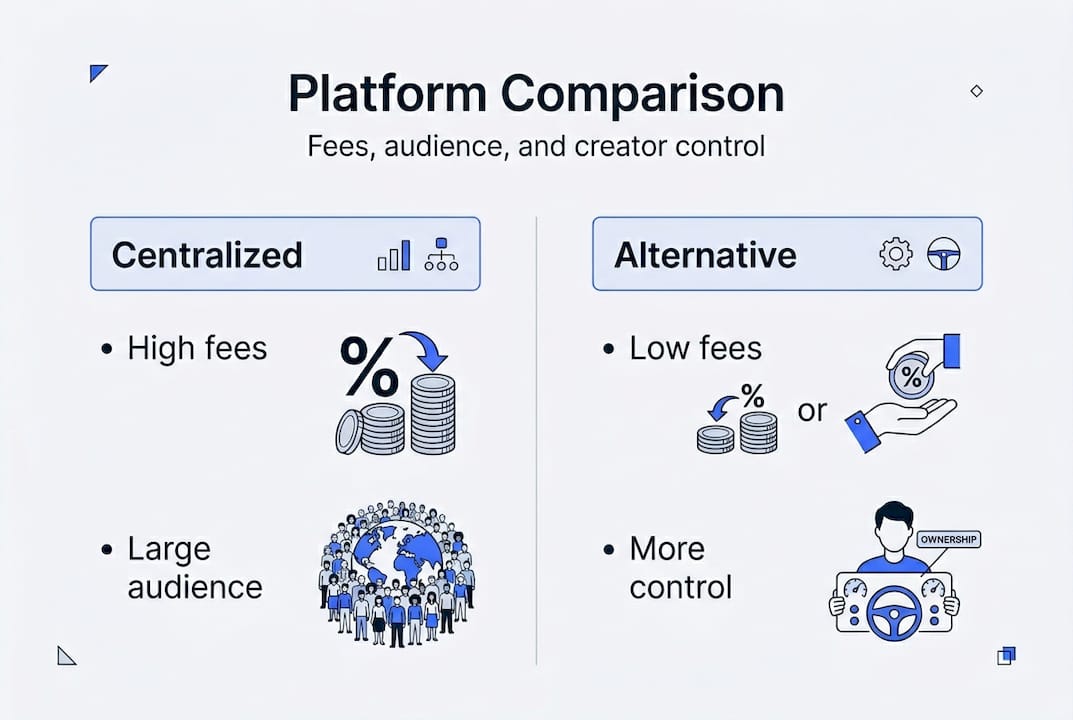
Pro Tip: Start by building your audience on high-reach platforms like OnlyFans or Patreon, then gradually migrate your most engaged fans to lower-fee alternatives. This lets you leverage existing platform audiences while improving your revenue split over time. Offer exclusive content or pricing incentives to encourage the transition.
Understanding creator monetization platforms helps you make strategic decisions based on your content type, audience size, and revenue goals. The right platform mix evolves as your creator business grows, starting with reach-focused platforms and adding revenue-optimized alternatives as your audience matures.
Nuances: algorithm impact, creator size, and AI tools for growth
Algorithm changes represent the biggest threat to creator income stability. Instagram’s 2024 algorithm update prioritized Reels over static posts, causing creators focused on photo content to lose 40-70% of their reach within months. TikTok regularly adjusts how it weights different engagement signals, making previously successful content formats suddenly ineffective. These shifts happen without warning and force creators to constantly adapt their content strategies.
Building owned audience channels protects against algorithm volatility. Email lists, SMS subscribers, and direct messaging platforms give creators communication channels immune to algorithmic changes. When a platform tanks your reach, you can still notify your owned audience about new content or offerings. Algorithm changes can suppress reach, requiring owned lists and email, while nano-influencers earn $50-$500 per post through strategic partnerships.
Creator size dramatically affects monetization strategies and earning potential:
- Nano-influencers (1,000-10,000 followers) earn through affiliate marketing, user-generated content deals, and niche subscriptions
- Micro-influencers (10,000-100,000 followers) command brand partnerships and can support full-time creator income
- Mid-tier creators (100,000-1M followers) diversify across multiple revenue streams and platforms
- Mega-creators (1M+ followers) negotiate custom deals and launch their own products or platforms
Smaller creators often have advantages in engagement rates and audience loyalty. A nano-influencer with 5,000 highly engaged followers can earn more per follower than a mega-creator with millions of passive viewers. This is why focusing on engagement quality over follower count produces better long-term results.
AI tools have transformed content creation efficiency and monetization potential. Creators using AI for video editing, caption writing, thumbnail generation, and content ideation produce 3-5 times more content without sacrificing quality. AI-powered analytics for creators identify which content types drive the most revenue, letting you double down on what works.
“84% of creators now use AI tools to boost content output and monetization potential, with adoption rates climbing to 91% among top-earning creators.”
AI applications transforming creator workflows include automated video editing that cuts production time by 70%, AI-generated captions optimized for platform algorithms, thumbnail testing that identifies high-click designs, and content scheduling tools that post at optimal engagement times. These tools level the playing field, letting solo creators compete with teams.
Pro Tip: Use AI to handle repetitive tasks like editing and scheduling, freeing your time for high-value activities like audience engagement and strategic planning. The creators earning the most are not necessarily producing the most content, but rather the most strategic content delivered consistently.
Understanding these nuances helps you build resilient creator businesses that survive algorithm changes, leverage your specific audience size advantages, and use technology to maximize output without burning out. The goal is sustainable growth that compounds over years, not viral moments that fade in days.
Practical application: building a hybrid strategy for sustainable creator success
Implementing a hybrid monetization strategy requires deliberate planning and execution across multiple platforms. This approach combines social media’s discovery power with alternative platforms’ superior revenue retention, creating a system where each platform serves a specific purpose in your creator business. The strategy works especially well for adult and niche creators seeking OnlyFans alternatives with fewer restrictions and better economics.
Step 1: Build your discovery engine on high-reach social platforms. Create short-form content optimized for TikTok, Instagram Reels, and YouTube Shorts. Post 1-2 times daily, focusing on trending formats and sounds that amplify reach. Your content should tease value while directing viewers to your monetization platforms. Include clear calls to action in captions and pinned comments.
Step 2: Funnel traffic to owned platforms where you monetize with lower fees. Set up profiles on Gumroad, Patreon alternatives like Scrile, or decentralized social platforms that let you retain 90%+ of revenue. Create exclusive content tiers that give fans reasons to subscribe beyond what they see on social media. Price strategically based on the value you deliver and your audience’s willingness to pay.
Step 3: Supplement with decentralized social for revenue share and censorship resistance. Platforms built on blockchain technology offer creator-friendly economics and protection against arbitrary bans. While audiences are smaller, the fans you attract tend to be highly engaged and willing to pay premium prices. This creates a high-value segment of your audience generating disproportionate revenue.
Step 4: Diversify revenue streams beyond subscriptions. Add brand partnerships, affiliate marketing, digital products, physical merchandise, and consulting services. Multiple income sources protect against platform changes and audience fluctuations. Track which streams generate the most revenue relative to time invested, then optimize your mix accordingly.
- Audit your current platform presence and identify gaps in your funnel
- Set up profiles on 2-3 alternative monetization platforms with better fee structures
- Create a content calendar that balances discovery content with conversion-focused posts
- Build an email list as your owned audience asset immune to platform changes
- Test different content formats and calls to action to optimize conversion rates
- Analyze monthly which platforms and revenue streams perform best
- Gradually shift focus toward highest-ROI activities while maintaining social presence
| Revenue stream | Platform options | Typical creator fees | Best for |
|---|---|---|---|
| 订阅 | Patreon, Gumroad, Scrile | 5-20% | Consistent monthly income |
| Tips/donations | Ko-fi, Buy Me a Coffee | 0-5% | Engaged community support |
| Digital products | Gumroad, Stan | 5-10% | Scalable passive income |
| Brand deals | Direct outreach | 0% (negotiate rates) | Mid-tier+ creators |
| Affiliate marketing | Amazon, ShareASale | 3-10% commission | Product-focused content |
| 现场直播 | Twitch, Fanspicy | 30-50% platform cut | Real-time audience engagement |
Adult and niche creators seeking OnlyFans alternatives use platforms like CraveMe, Scrile, and decentralized social for censorship resistance while funneling traffic from mainstream social media. This hybrid approach lets you maintain visibility on major platforms while monetizing on creator-friendly alternatives that do not restrict content or take excessive fees.
The key to sustainable success is treating your creator business like an actual business. Track metrics, test strategies, invest in tools that improve efficiency, and continuously optimize based on data. Creators who approach their work strategically earn 5-10 times more than those posting randomly and hoping for viral success. Your social media content marketing should align with clear business objectives, not just engagement vanity metrics.
Building a hybrid strategy takes 3-6 months to fully implement, but the revenue improvements and platform independence make the effort worthwhile. Start small by adding one alternative monetization platform, then expand as you learn what works for your specific audience and content type.
Explore Fanspicy to amplify your creator journey
Fanspicy offers creators an alternative platform designed specifically for those seeking better revenue shares and fewer content restrictions than mainstream options. The platform combines live streaming, subscription content, and direct fan interaction in one creator-friendly environment. You keep more of what you earn while building genuine connections with your audience.
Explore how successful creators are using Fanspicy to diversify their income and reduce platform dependency. Check out Jackie’s profile to see how established creators structure their content and engagement strategies. This creator demonstrates effective audience building techniques that translate across platforms. MissUnknown shows how niche content can attract highly engaged paying subscribers. These real examples provide actionable insights you can adapt to your own creator journey, whether you are just starting out or looking to expand beyond your current platforms.
Why use social media for creators? Frequently asked questions
Why can’t creators just monetize directly on social media platforms?
Social platforms like Instagram and TikTok prioritize advertising revenue over creator monetization. Their built-in monetization features take 30-50% cuts and impose strict content restrictions. Using social for discovery while monetizing on alternative platforms lets you keep 80-95% of earnings and avoid arbitrary content bans.
What is the biggest mistake new creators make with monetization?
Putting all their audience and income on a single platform. When that platform changes its algorithm, policies, or fee structure, creators lose everything overnight. Building owned audience channels like email lists and diversifying across multiple monetization platforms protects your income and gives you leverage.
How long does it take to build a sustainable creator income?
Most creators need 12-18 months of consistent content creation and audience building before reaching $2,000+ monthly income. The timeline accelerates with strategic platform choices, content quality, and audience engagement. Creators using hybrid strategies typically reach income goals 30-40% faster than those relying on single platforms.
Should adult creators use mainstream social media for audience building?
Yes, but carefully. Platforms like Twitter/X, Reddit, and some Instagram content allow adult creators to build audiences while staying within guidelines. The key is using these platforms for discovery and funneling traffic to adult-friendly monetization sites like Fanspicy, Scrile, or decentralized alternatives where you can post without restrictions.
What AI tools provide the best ROI for creator content production?
Video editing AI like Descript or Opus Clip cuts production time by 60-70%. Caption generators like Copy.ai optimize for platform algorithms. Thumbnail testers like ThumbsUp identify high-click designs. Analytics platforms like CreatorIQ track which content drives revenue. The best ROI comes from tools that automate repetitive tasks, freeing time for strategy and engagement.
How do I know which alternative monetization platform is right for me?
Start by identifying your priorities: content freedom, fee structure, audience size, or payment options. Test 2-3 platforms simultaneously with different content tiers or offerings. Track conversion rates, engagement, and net revenue after fees. Double down on whichever platform delivers the best economics and audience experience for your specific content type and creator goals.