

Оглавление
Every OnlyFans creator knows that what happens on camera does not always stay private. The instant, unfiltered nature of live streaming turns small slip-ups into permanent records visible worldwide. Balancing openness with genuine privacy protection is not easy when broadcast mistakes, uncontrolled audiences, and even bystanders can expose details you intended to keep safe. This guide reveals practical ways to own your digital boundaries and protect your content before, during, and after you go live.
Оглавление
- Defining Privacy In Live Streaming Contexts
- Methods To Protect Identity And Personal Data
- Legal Privacy Rights And Compliance Obligations
- Risks Of Exposure And How To Prevent Them
- Effective Strategies For Controlling Content Distribution
Key Takeaways
| Point | Details |
|---|---|
| Privacy Risks Are Unique | Live streaming involves real-time interactions where privacy challenges are immediate and often irreversible. |
| Bystander Consent Is Crucial | It’s essential to consider the privacy of involuntary participants in your streams, as their personal information may unintentionally be exposed. |
| Legal Obligations Are Mandatory | Creators must comply with various privacy laws like GDPR and CCPA, as violations can lead to significant financial penalties. |
| Content Distribution Control Is Key | Managing who accesses and retains your content is vital for protecting your intellectual property and maintaining viewer trust. |
Defining Privacy in Live Streaming Contexts
Privacy in live streaming isn’t a simple concept. Unlike traditional social media where you control what gets posted, live streaming happens in real-time with minimal room for edits or take-backs.
When you’re broadcasting live, you’re creating a synchronous performance where audiences watch and interact simultaneously. This real-time nature means privacy risks unfold instantly, without a buffer to catch mistakes before they reach thousands of viewers.
What Makes Live Streaming Privacy Different
Several factors create unique privacy challenges for creators:
- Permanent records: Streams get archived, clipped, and shared across platforms long after you’ve gone offline
- Uncontrolled audience: You can’t always predict who’s watching or what they’ll do with your content
- Involuntary participants: People in your physical space—roommates, family, background objects—become part of the broadcast without consent
- Real-time reactions: Mistakes happen live, and you can’t delete them from viewers’ memories
Research on live streaming privacy management shows that creators face distinct challenges compared to other content platforms. The combination of being on-camera, performing for strangers, and broadcasting live creates a complex privacy landscape.
Here’s a quick comparison of privacy challenges between live streaming and traditional social media:
| Aspect | Прямая трансляция | Традиционные социальные медиа |
|---|---|---|
| Content Control | Real-time, little editing | Full edit before posting |
| Audience Dynamics | Unpredictable, global | Often limited to followers |
| Privacy Risks | Instant, hard to retract | Can delete or edit posts |
| Presence of Bystanders | Frequent, hard to avoid | Usually only direct posts |
The Bystander Privacy Problem
Here’s something many creators don’t consider: bystander privacy. Your roommate, delivery person, or someone walking past your window didn’t consent to being filmed, yet they’re now part of your broadcast.
Bystanders’ personal information—their appearance, voice, location, routines—gets exposed without their knowledge. Research shows that streamers actively employ strategies to manage these risks—blurring backgrounds, warning housemates before streams, and adjusting camera angles.
Yet many platforms don’t provide built-in tools to handle this seamlessly, leaving it entirely on your shoulders.
Your Privacy Versus Audience Access
There’s a tension here. Your audience expects authenticity and access—that’s part of what draws them to live content. But sharing too much exposes your location, daily schedule, personal relationships, and financial situation.
This balance matters. The more accessible you appear, the higher your engagement. But accessibility without boundaries creates security and privacy risks.
Your privacy isn’t just about protecting your identity—it’s about controlling what information leaves your life and who can access it.
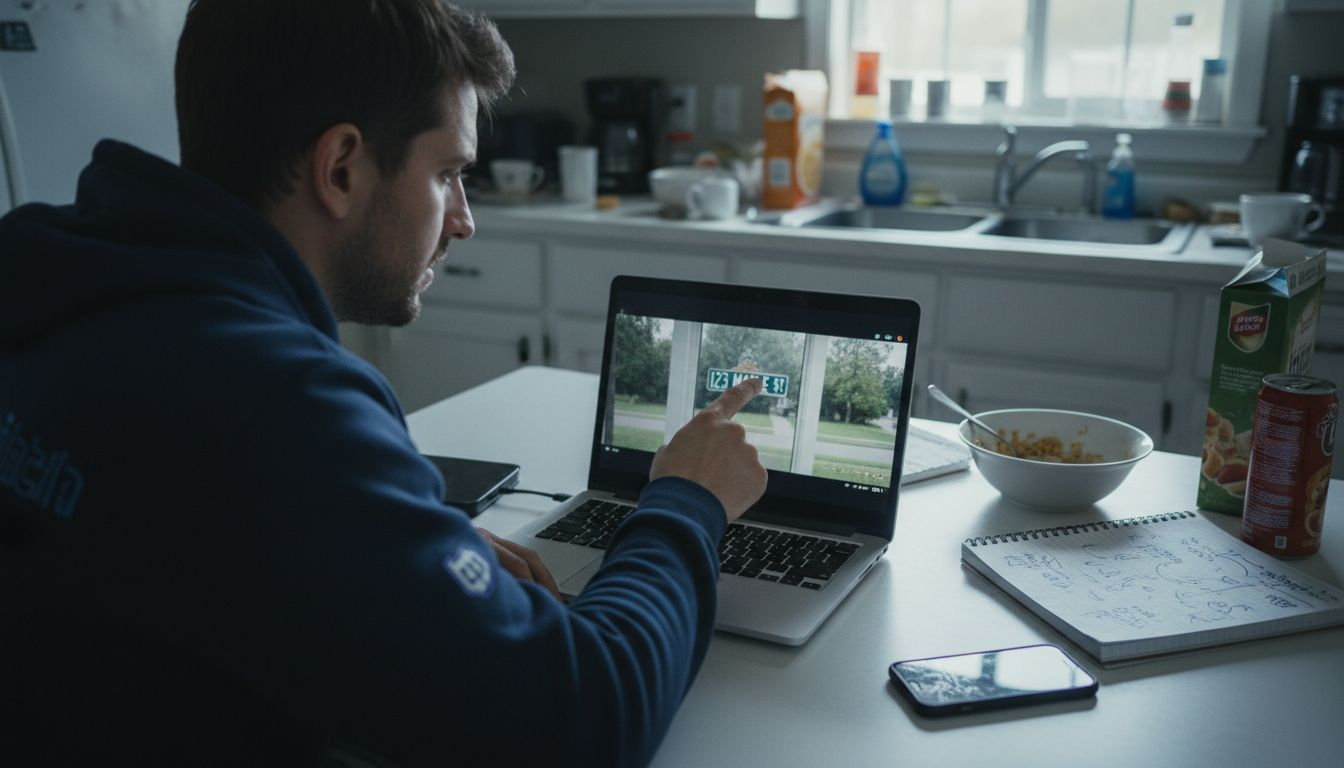
Pro tip: Start by auditing what’s visible in your broadcast space before your first stream—check windows, whiteboards, mail, visible addresses, and anything that reveals your location or personal details.
Methods to Protect Identity and Personal Data
Protecting your identity during live streams requires intentional action. This isn’t about being paranoid—it’s about controlling what information exists about you and who can access it.
The good news? You have concrete tools and strategies that work right now. Let’s walk through the most effective ones.
Technical Protections
Start with the foundation: your account security.
- Multi-factor authentication: Enable this on every account. Multi-factor authentication prevents someone from accessing your account even if they get your password
- Strong, unique passwords: Use a password manager to generate and store complex passwords
- VPN or secure connection: Broadcast from a secure network, not public WiFi
- Two-step verification codes: Use authenticator apps instead of SMS when possible
These layers make it exponentially harder for someone to compromise your account or steal your identity.
What You Show On Camera
Your broadcast space reveals more than you think. Before going live, audit what’s visible:
- Remove identifying information: Hide addresses on mail, whiteboards, or visible documents
- Blur or position camera carefully: Avoid showing windows with recognizable landmarks
- Turn off location sharing: Disable location data in app settings
- Use a virtual background: Many platforms let you use generic backdrops instead of your real space
- Control lighting strategically: Shadows can hide details you don’t want viewers analyzing
Many creators think they’re being careful until they review clips and notice street signs, apartment numbers, or other giveaways in the background.
Recording and Access Controls
You should control who can record your stream and access your content afterward.
Privacy best practices emphasize disabling recordings without your explicit consent and restricting who can access archives. Check your platform settings for:
- Disabling automatic recording
- Limiting replay access to subscribers only
- Removing clips from public discovery
- Managing VOD (video-on-demand) retention settings
You can’t control what viewers record on their devices, but you can control what the platform preserves and makes discoverable.
Data Leakage from Third Parties
Many creators connect outside tools—payment processors, social media integrations, analytics—without realizing what data flows through them.
Before connecting anything, ask: What information does this tool receive? Does it store my stream data? Can viewers access this data? Disconnect integrations you don’t actively use.
Pro tip: Create a separate email address specifically for your creator account, use it nowhere else, and check your platform’s privacy settings monthly to catch new data-sharing defaults.
Legal Privacy Rights and Compliance Obligations
You might think privacy protection is just a personal choice. But the law requires it. Depending on where you stream and where your audience lives, you face real legal obligations that carry financial and legal consequences if violated.
Understanding these requirements protects both you and your viewers.
Which Laws Apply to You
The regulatory landscape varies by geography. Your obligations depend on your location and your audience’s location.
- GDPR (European Union and UK): Applies if you have viewers or subscribers in Europe, regardless of where you’re based
- CCPA (California): Applies if you have California residents as viewers
- State-level privacy laws: Many U.S. states now have their own privacy statutes
- International agreements: If you operate across borders, you may face multiple compliance requirements
You don’t get to ignore laws just because you’re streaming from elsewhere. If your audience includes people in regulated regions, those laws apply to you.
Consent and Data Collection
Legally, you can’t just collect data from viewers without their knowledge or permission. Privacy laws emphasize consent prior to capturing personal data, including names, email addresses, payment information, and viewing habits.
This means you need clear, transparent policies that explain:
- What data you collect during streams
- How you use that data
- Who has access to it
- How long you keep it
- Whether viewers can request deletion
Vague privacy policies don’t cut it. Viewers need plain language explanations before they subscribe or provide information.
GDPR Compliance Basics
If you have European viewers, GDPR likely applies to you. GDPR requirements include lawful bases for processing data, transparent consent mechanisms, data security measures, and respecting data subject rights like access and deletion requests.
Key obligations include:
- Obtaining explicit consent before processing personal data
- Documenting your lawful basis for data processing
- Implementing security measures to protect data
- Notifying regulators if you experience a data breach
- Responding to user requests to access or delete their data within 30 days
Violations can result in fines up to 4 percent of your global annual revenue. That’s not a slap on the wrist—that’s serious money.
Recording and Publicity Rights
Before you record viewers during streams or use their content in clips, you need consent. Some jurisdictions require explicit written permission before recording someone’s likeness or voice.
This extends beyond legal compliance. Viewers trust you to respect their privacy. Violating that trust damages your reputation and your business.
Legal compliance isn’t optional—it’s the foundation of sustainable creator business.
Pro tip: Write a clear, one-page privacy policy specific to your streaming activities, have a lawyer review it for your region, and update it whenever you change how you collect or use viewer data.
Risks of Exposure and How to Prevent Them
Live streaming exposes you to specific, real threats. Unlike pre-recorded content, you can’t edit out mistakes or take back what you’ve said. Understanding these risks helps you protect yourself before something goes wrong.
The threats are concrete. The defenses are practical.
Common Exposure Risks
You face multiple categories of exposure during live streams:
- Accidental personal information: Visible addresses, phone numbers, names, or identifiable landmarks in your background
- Account compromise: Hackers gaining access to your creator account and impersonating you
- Deepfake impersonation: Fraudsters using AI to create fake videos of you
- Doxxing: Malicious viewers publicly releasing your personal information
- Phishing attacks: Scammers tricking you into revealing credentials or payment details
- DDoS attacks: Criminals flooding your stream with traffic to take it offline
- Chat harassment: Coordinated abuse in your live chat that reveals personal information
Each threat requires a different prevention strategy. Fortunately, you can defend against most of them.
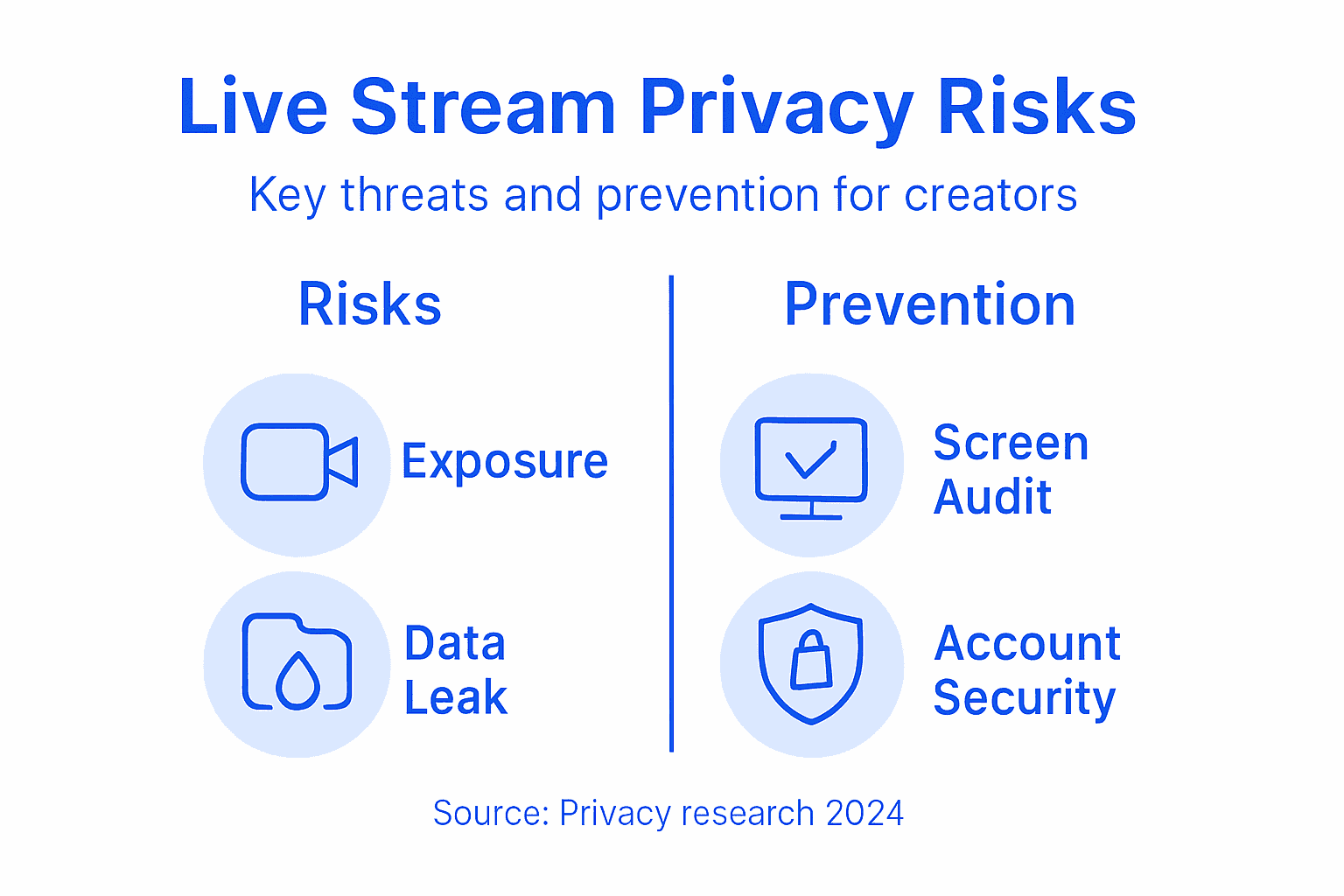
Refer to this summary for the main types of live streaming exposure risks and recommended prevention actions:
| Risk Type | Пример | Prevention Action |
|---|---|---|
| Personal Info Leakage | Visible mail address | Conduct visual background audit |
| Account Compromise | Unauthorized access | Enable multi-factor authentication |
| Deepfake Impersonation | Fake video of streamer | Secure identity, monitor content |
| Doxxing | Info shared publicly | Moderate chat, report incidents |
Technical Account Security
Cybersecurity risks in live streaming include identity theft, account hijacking, and impersonation attacks. Protecting your account means layering defenses.
Priority actions:
- Enable multi-factor authentication on every account
- Use unique passwords managed through a password manager
- Never share login credentials, even with trusted people
- Monitor login activity and sign out unknown sessions
- Enable account recovery options (backup email, phone number)
If someone gains access to your account, they can broadcast as you, steal subscriber data, and damage your reputation in minutes.
Environmental and Behavioral Prevention
Exposure prevention requires careful preparation of your streaming environment and monitoring during broadcasts.
Before streaming:
- Scan your entire background for visible personal information
- Close tabs on shared screens containing sensitive data
- Disable notifications that might reveal personal messages
- Position cameras to avoid windows showing recognizable landmarks
During streaming:
- Moderate your chat actively—remove doxxing attempts immediately
- Avoid sharing personal details that viewers can use to track you
- Don’t click links viewers share in chat
- Keep backup plans if your stream gets attacked
- Report coordinated harassment to your platform
Exposure prevention works best when it’s routine, not reactive.
What to Do If Exposed
If your personal information gets shared publicly, act fast. Change passwords immediately, alert your platform’s support team, document the incident, and consider reporting to law enforcement if threats become serious.
Pro tip: Do a monthly “exposure audit” by reviewing recent stream clips and VODs from a viewer’s perspective, specifically looking for personal details you might have missed during the live broadcast.
Effective Strategies for Controlling Content Distribution
Controlling where your content goes matters more than you might think. Once your stream is live, copies spread across the internet. You can’t stop that entirely, but you can control which platforms officially distribute your content and set boundaries around how it’s used.
This is about protecting your revenue and your brand.
Understanding Content Distribution Control
Content distribution isn’t just about reach. It’s about managing where authorized versions live, preventing unauthorized copies, and ensuring you benefit from your own work.
You have more control than creators realize. The key is using platform features strategically and understanding your rights.
Set Clear Platform Restrictions
Most streaming platforms let you control who accesses your content. Use these settings:
- Restrict replay access: Limit VOD viewing to subscribers or members only
- Disable public clips: Prevent automated clip creation and sharing
- Control social media auto-sharing: Don’t let clips automatically post to TikTok or Instagram
- Manage archive visibility: Keep streams private, unlisted, or subscriber-only
- Set download restrictions: Prevent viewers from easily saving your content
These aren’t small details. They directly impact whether unauthorized copies spread and whether you retain control over your intellectual property.
Understand Platform Delivery Systems
Content distribution optimization increasingly uses intelligent systems to control how content reaches viewers. Modern platforms employ dynamic adaptation based on user behavior and network conditions, which helps maintain quality and prevents unauthorized leaks.
When you understand how platforms deliver content, you can make better decisions about:
- Which platform features protect your content best
- How to identify when unauthorized distribution happens
- What platform-level controls actually matter for your privacy
Address Unauthorized Distribution
Despite your best efforts, viewers will record and share your streams. Here’s what actually works:
- Monitor where your content appears outside your official channels
- Report unauthorized copies to the platforms hosting them
- Use DMCA takedown notices for significant infringements
- Document repeated offenders for potential legal action
- Educate subscribers about respecting your content boundaries
You can’t prevent every repost, but you can make it clear that unauthorized distribution violates your terms.
Controlling distribution means setting boundaries, communicating them clearly, and enforcing them consistently.
Build Direct Relationships with Your Audience
The strongest content control comes from direct fan relationships. When subscribers feel they have exclusive access to you, they’re less likely to leak your content elsewhere.
Pro tip: Create a separate private community (Discord, Telegram, or a membership forum) where you share exclusive content that never goes live publicly—this gives fans genuine exclusive access and reduces incentive to leak official streams.
Take Control of Your Privacy and Content on Live Streams Today
Live streaming brings unique privacy challenges that can leave creators vulnerable to exposure and unauthorized distribution of their content. If you are concerned about protecting your identity, managing bystander privacy, and controlling who accesses your streams, you are not alone. Many creators struggle with balancing audience engagement and privacy safety in real-time broadcasts. Key strategies like multi-factor authentication, background audits, and limiting replay access matter now more than ever.
Join a platform that understands these critical issues and empowers creators like you with robust privacy protections and direct audience control. At FanSpicy, we provide a secure, paid social media and live cam platform designed as an OnlyFans alternative focused on your safety and content rights. Start protecting your streams with tools that minimize risks related to account compromise, deepfake impersonation, and unauthorized clip sharing. Explore how you can build authentic connections without sacrificing your privacy by visiting FanSpicy. Protect your digital presence now and stream with confidence.
Часто задаваемые вопросы
What unique privacy challenges do live streamers face?
Live streamers contend with unique privacy challenges such as permanent records of broadcasts, unpredictable audience dynamics, involuntary participation of bystanders, and the difficulty in retracting live mistakes.
How can content creators protect their personal information during live streams?
Creators can protect their personal information by using multi-factor authentication, securely positioning their camera, removing identifying information from their surroundings, and using virtual backgrounds when possible.
What legal obligations do live streamers have regarding viewer privacy?
Live streamers must comply with privacy laws that require obtaining viewer consent for data collection, establishing clear privacy policies, and ensuring compliance with regulations like GDPR if they have viewers in regulated regions.
What should I do if my personal information is exposed during a live stream?
If your personal information is exposed, change your passwords immediately, report the incident to your streaming platform, document everything, and consider alerting law enforcement if you feel threatened.