

Índice
Every creator on platforms like OnlyFans or Fansly quickly learns that adult content success means much more than uploading the occasional video or photo. You are running your own business, balancing personal brand, direct audience relationships, and algorithmic rules—all while pursuing meaningful income. In this environment, defining content creation for adult platforms is not just about what you post, but about understanding how unique platform dynamics, evolving technology like AI, and multiple monetization channels combine to power sustainable growth and engagement that actually pays the bills.
Índice
- Defining Content Creation For Adult Platforms
- Core Content Types And Unique Variations
- Tech-Driven Trends Shaping 2026 Content
- Monetization Models And Real-World Examples
- Legal, Privacy, And Safety Risks For Creators
Principais conclusões
| Point | Details |
|---|---|
| Content Creation Model | Adult platforms allow creators to retain control over pricing and relationships, requiring a business-oriented strategy for content production. |
| Monetization Diversity | Successful creators utilize various monetization models, such as subscriptions and pay-per-view content, to maximize income and reduce risks associated with platform changes. |
| Legal and Privacy Responsibilities | Creators must navigate strict legal frameworks and ensure compliance with age verification, data protection laws, and consent agreements to mitigate risks. |
| Embracing Technology | Utilizing AI and data analytics enhances content quality and optimizes audience engagement, setting creators apart in a competitive landscape. |
Defining Content Creation for Adult Platforms
Content creation on adult platforms operates in a fundamentally different ecosystem than mainstream social media. You’re not just recording a video or writing a post. You’re building a sustainable business model where every piece of content serves a strategic purpose, contributes to audience loyalty, and directly impacts your revenue streams. Adult platforms like OnlyFans and Fansly function as direct creator economies, meaning you retain significant control over pricing, distribution, and audience relationships. This is the core advantage: no traditional gatekeepers deciding whether your content gets recommended or buried in an algorithm. However, this freedom comes with a crucial responsibility. You must understand exactly what content creation means in this context, because the strategies that work here are completely different from what influencers use on Instagram or TikTok.
O contemporary adult content ecosystem has evolved dramatically with AI-driven platforms reshaping how creators commission, produce, and monetize synthetic media. This means your definition of content creation now extends beyond traditional photography and video. You might offer custom content requests where subscribers pay for personalized videos. You might use AI tools to generate customizable content experiences. You might create interactive content through live streaming or messaging. The range of what qualifies as monetizable content has expanded significantly, but with that expansion comes complexity around governance, authenticity verification, and platform compliance. Understanding these nuances matters because your monetization strategy depends on knowing exactly what type of content generates revenue on your specific platform.
What makes adult platform content creation unique is how algorithmic control and revenue sharing policies shape what you can produce and how much you earn. The platform’s algorithm decides which creators appear in recommendations, which posts get highlighted to existing subscribers, and which new content attracts fresh audiences. You’re constantly managing a paradox: you need to produce what the algorithm favors while maintaining authenticity that keeps your existing audience engaged. Revenue sharing structures vary dramatically between platforms. Some take 20 percent, others take up to 50 percent. Some charge creators fees for specific features. Understanding your platform’s exact monetization model is foundational to calculating what revenue you actually generate from each content piece. A video that seems successful might generate significantly less profit than you expected once you account for platform fees, payment processor fees, and any subscription discount offers you’ve extended to subscribers.
The practical reality is that content creation on adult platforms requires you to think like a business operator, not just a performer. You need to segment your content strategy: what goes on your feed to attract subscribers, what goes behind paywalls to retain them, what goes in direct messages to deepen relationships, and what goes in exclusive live streams to generate spike revenue. Different content types perform differently depending on your audience demographics, your niche within adult entertainment, your posting consistency, and your engagement rate. Someone building an audience in the fitness creator space has completely different content requirements than someone in roleplay or couples content. The definition of content creation here is ultimately about creating multiple revenue streams from multiple content formats, delivered across multiple channels within a single platform, all while managing the tension between algorithmic visibility and audience authenticity.
Pro tip: Start by auditing your top 10 performing posts across whatever platform you’re using right now, then document the specific content type, posting time, subscription tier requirement, and engagement metrics for each one to identify your actual monetization patterns before restructuring your content strategy.
Core Content Types and Unique Variations
On adult platforms, your content inventory breaks down into distinct categories, but what separates successful creators from struggling ones is understanding which types generate different revenue patterns and audience loyalty. The core formats available to you include videos, images, audio content, written posts, and live streams. However, platform affordances shape how these formats evolve into specialized variations that maximize engagement within each platform’s specific ecosystem. A video on Fansly doesn’t perform the same way as the identical video on OnlyFans because the audience expectations, algorithm priorities, and monetization mechanics differ fundamentally. You’re not just choosing a format; you’re choosing how that format interacts with your platform’s specific rules and culture.

Your primary content types serve different strategic purposes in your revenue model. Subscription feed content acts as your marketing engine, attracting new subscribers and giving existing ones a reason to stay subscribed. This typically includes shorter videos, teaser images, behind-the-scenes photos, or written updates that provide value without requiring additional payment. Conteúdo de pay-per-view (PPV) generates spike revenue from individual posts that unlock only when subscribers pay extra. These are usually your highest-quality, most explicit, or most specialized content pieces. Direct message (DM) content includes custom videos, sexting sessions, or personalized photos that you create on request for individual subscribers at premium prices. Live stream content creates real-time interaction opportunities where subscribers pay to watch you live, and many platforms allow additional tipping during streams. Exclusive tier content exists behind higher subscription tiers, rewarding your most loyal supporters with access to material that free-tier or basic-tier subscribers never see. Each type generates different revenue per unit of effort, so understanding which types align with your strengths matters enormously.
Within these core types, variations emerge based on how you combine elements and tailor content to specific audience segments. Creators adapt formats through combinations of AI-generated content with human creativity to serve increasingly diverse audience preferences. You might produce traditional filmed content, or you might use AI tools to generate customizable fantasy scenarios. You might create highly niche content targeting specific fetishes or interests. You might produce couple content if you have a partner. You might focus on lifestyle content blended with adult elements. You might create educational sexual health content. The variation comes from understanding your specific audience’s desires and your own comfort boundaries. Someone with an audience interested in roleplay creates completely different content than someone whose audience wants fitness and sexuality content. A creator serving an international audience might produce multilingual content or culturally adapted variations of similar themes. The key is recognizing that variation is a strength. Your unique combination of content type, niche focus, production style, and audience segment creates your competitive advantage.
Think about your content ecosystem as layers of monetization rather than competing formats. Your free subscription feed attracts viewers who then become paying subscribers. Your paying subscribers see better quality content on their feed. Those subscribers might purchase PPV content if something exceptional appeals to them. They might request custom content through DM, which generates premium per-minute rates. They might tip during your live streams. An individual subscriber might spend twenty dollars per month on the base subscription but spend fifty dollars total when you factor in PPV purchases and DM interactions. Your job is understanding how each content type feeds into this layered system. Someone focused only on producing PPV content might make more per piece than someone focused on feed content, but they sacrifice the consistent revenue of subscription dollars. Someone focused entirely on live streaming might build extraordinary community but miss the passive revenue of feed content. The successful creators balance multiple types, using each to strengthen the others. A cryptic post on the feed generates curiosity that drives PPV purchases. A successful live stream builds relationship capital that increases DM request volume. Custom DM content creates superfans who become your most dedicated subscribers.
Here’s a summary of the main adult platform content types and how each contributes to your business strategy:
| Tipo de conteúdo | Strategic Purpose | Example Revenue Source |
|---|---|---|
| Subscription Feed | Attract and retain subscribers | Monthly recurring income |
| Pay-Per-View (PPV) | Spike revenue, exclusive offers | Individual post payments |
| Mensagens diretas | Personalized audience engagement | Custom content at premium rate |
| Transmissões ao vivo | Community building, real-time tips | Tipping and event access |
| Exclusive Tiers | Reward most loyal supporters | Higher-tier subscriber offers |
Pro tip: Test each content type at small scale for one week (feed posts only, then PPV only, then live streams only) and track which generates the highest revenue per hour of effort invested, then allocate 60 percent of your time to your highest-performing type while maintaining the other types at minimum levels to maintain audience diversity.
Tech-Driven Trends Shaping 2026 Content
The adult content creation landscape in 2026 is being fundamentally reshaped by technology in ways that directly impact your revenue potential and competitive advantage. Unlike previous years where content creation meant filming and uploading, today you’re competing in an environment where AI, data analytics, and interactive media enhance content quality to drive engagement and retention. This isn’t about replacing human creators with artificial intelligence. It’s about understanding how technology amplifies your creative output, helps you understand audience behavior at granular levels, and enables you to create more personalized experiences that keep subscribers engaged longer. The creators who ignore these trends will find themselves increasingly invisible, while those who embrace them strategically will see measurable improvements in retention rates, subscription growth, and income diversification.
Artificial intelligence has moved beyond theoretical possibility into practical daily tools for content creators on adult platforms. You can use AI-powered editing software to enhance video quality without expensive equipment or spending hours in post-production. You can use AI analytics to understand which content types generate the highest subscriber retention, which pieces drive the most PPV purchases, and which audience segments are most likely to upgrade to premium tiers. You can use AI chatbots to handle routine subscriber inquiries, freeing your time to create content instead of managing messages. You can use AI-assisted content generation to create custom variations of scenarios, helping you personalize experiences for subscribers without reinventing content from scratch each time. Some platforms now support AI tools that let subscribers request personalized fantasy content generated in your likeness, opening entirely new revenue streams. The key is recognizing that these tools are enhancers of your human creativity, not replacements for it. The authentication and authenticity that your audience values comes from your genuine interactions, your real personality, and your actual creative vision. Technology handles the execution and optimization layers while you focus on the creative direction and personal connection.
Data analytics in 2026 gives creators unprecedented visibility into what actually drives revenue versus what merely generates likes or comments. You can track specific metrics that matter: which post types generate the most new subscriptions, which subscriber segments spend the most money beyond their base subscription, which posting times generate the highest engagement for your specific audience, which content variations drive the most PPV purchases, and which subscriber interactions eventually convert to DM requests. Instead of guessing whether to post more videos or more photos, you have actual data showing which format generates better revenue per production hour for your specific audience. You can identify your whale subscribers (the small percentage who spend the most) and understand what content they engage with most heavily, then create more of that. You can see which free subscribers are most likely to convert to paid subscribers based on their engagement patterns, then craft content specifically designed to move them toward conversion. This audience engagement data allows creators to develop more authentic content that actually resonates with subscriber preferences rather than relying on instinct.
Interactive and immersive technologies are creating entirely new content categories that didn’t exist five years ago. Live streaming with real-time audience participation and tipping. Virtual reality content experiences. Interactive polls and quizzes that subscribers engage with during streams. Behind-the-scenes footage delivered in real-time. Direct messaging with AI-assisted response systems that maintain your personality while increasing your responsiveness. These formats create deeper parasocial relationships with subscribers because they reduce the distance between creator and audience. A subscriber who watches a 20-minute pre-recorded video feels engaged. A subscriber who participates in a live stream where the creator acknowledges their tips, responds to their comments, and makes decisions based on their votes feels personally connected. That connection drives subscription retention because they’re not just paying for content, they’re paying for access to you specifically. The creators using multiple formats report higher subscriber lifetime value because their audiences feel more invested in them as individuals.
The practical implementation in 2026 means understanding which technologies align with your strengths and which ones feel forced. You don’t need to use every available tool. Start with analytics tools that give you clarity on your revenue metrics. Then experiment with AI editing software to reduce your production time. Then explore interactive formats if your audience demographics support them. Build gradually instead of trying to become a tech-forward creator overnight. Your authenticity matters more than perfect technical execution. A video shot on your phone with genuine personality generates more subscriber retention than a technically perfect video that feels manufactured. Technology should reduce friction and enable you to spend more time on what you do best: creating content that your specific audience wants to see.
Pro tip: Start by pulling your analytics for the past month and identifying your top 5 revenue-generating posts, then reverse-engineer exactly what made them successful (time posted, content type, length, subscriber tier) and use that data to guide your next two weeks of content creation rather than making decisions based on intuition.
Monetization Models and Real-World Examples
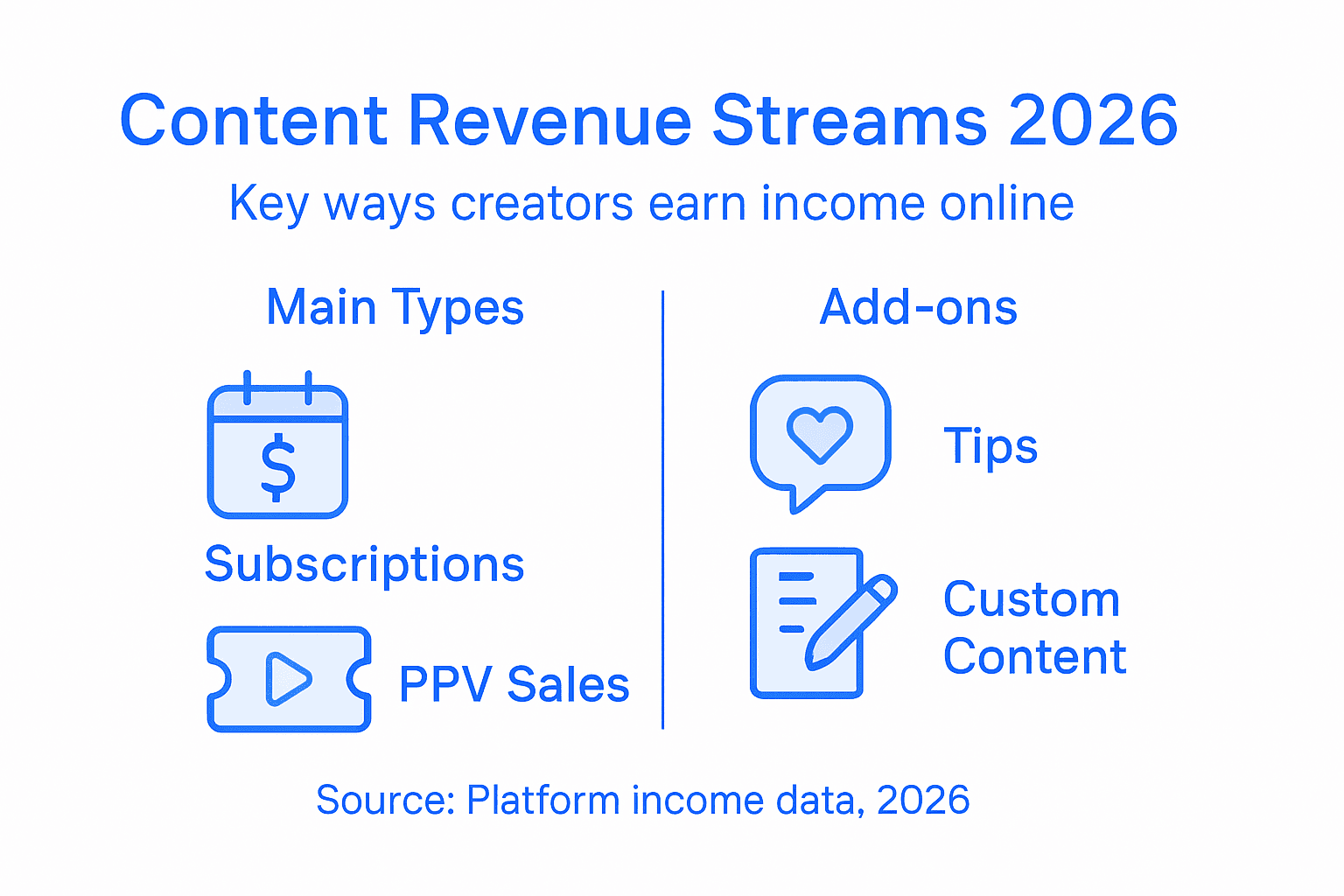
Successful creators on adult platforms rarely rely on a single revenue stream. The creators building sustainable six-figure incomes operate multiple monetization models simultaneously, each designed to capture different types of value from their audience. Diverse monetization strategies incorporating subscriptions, direct payments, and platform revenue sharing represent the current industry standard because no single model captures all possible revenue. Your base subscription model generates predictable recurring revenue. Your pay-per-view content captures impulse purchases from subscribers who want your highest-quality or most niche content. Your direct messaging services generate premium per-minute rates for personalized interactions. Your live stream tipping creates bonus income during real-time engagement. Your tip menu during streams lets subscribers contribute without purchasing full content. Your merchandise sales add profit margins beyond digital content. Your affiliate partnerships with adult product companies generate commissions. This layered approach means a subscriber who costs you nothing to acquire might generate fifteen to fifty dollars across multiple revenue streams over their lifetime. Understanding how these models interact is essential because they feed each other. A strong feed builds subscribers who eventually try PPV content who eventually become regular tippers during streams who eventually request custom DM content.
The subscription model forms the foundation of most creator income on these platforms. You set a monthly price, and subscribers pay recurring fees for access to your content feed. The platform takes its cut (typically 20 to 50 percent depending on your agreement and tier), you keep the rest. This generates predictable recurring revenue. If you have 500 subscribers at ten dollars monthly with the platform taking 20 percent, you earn four thousand dollars monthly before any other revenue sources. The strength of this model is consistency. The weakness is that it caps your income at your subscriber count multiplied by your price point. Someone with a ten dollar subscription price point earning four thousand dollars monthly from 500 subscribers would need to reach 5,000 subscribers to earn forty thousand dollars, a tenfold growth requirement. This is why successful creators add supplementary monetization. Direct user payments and platform revenue sharing frameworks balance creator autonomy with income maximization by allowing creators to pursue multiple income channels simultaneously. A pay-per-view post might cost five dollars and generate revenue from 50 to 200 of your subscribers who don’t purchase every single PPV but convert on the ones that appeal to them. That same 500-subscriber base could generate an additional one thousand dollars monthly through strategic PPV content. Add live stream tipping, merchandise sales, and custom content requests, and the total income potential doubles or triples.
Real-World Income Architecture
Consider this realistic example of how a successful creator structures income across multiple channels. Creator A has built an audience of 1,200 active subscribers on a platform like OnlyFans. Their base subscription is set at twelve dollars monthly. After the platform takes 20 percent, they earn nine thousand six hundred dollars monthly from subscriptions alone. They post five PPV videos monthly at eight dollars each. On average, 15 percent of their subscriber base purchases each PPV. That generates 7,200 dollars monthly. They do two live streams weekly where they enable tipping. Subscribers tip an average of three dollars per stream. Two streams weekly over four weeks equals 4,800 dollars monthly in tips. They receive approximately ten custom video requests per week at seventy-five dollars each. That generates three thousand dollars monthly. Total: monthly income of 24,600 dollars. This creator isn’t exceptional. Their subscriber count is modest compared to top earners. Their prices are reasonable, not premium. Their conversion rates reflect typical audience behavior. But by operating all four revenue channels simultaneously, they’ve built a sustainable income that actually approaches what a full-time professional salary would provide in many countries. The critical insight is that no single channel would generate this income independently. The subscription alone wouldn’t sustain that lifestyle. The PPV alone would barely cover expenses. The combination creates the financial reality.
Diversification Reduces Risk
Why does diversification matter so much? Because platform changes, algorithm shifts, and audience fluctuations are constant. If your income depends entirely on subscription revenue, a platform algorithm change that reduces your visibility could cut your income by 30 to 50 percent overnight. If you’ve built multiple revenue streams, a subscriber decrease might reduce your total income by 10 to 15 percent because you’re generating revenue from multiple channels. Creator B who relies 80 percent on subscriptions and 20 percent on everything else gets destroyed by algorithm changes. Creator A who generates 40 percent from subscriptions, 30 percent from PPV, 20 percent from tips, and 10 percent from custom content survives algorithm changes because they’re insulated by diversification. The real-world lesson that successful long-term creators understand is that you should always be experimenting with new revenue channels. If you’ve never done live streams, test one. Track the income. If it works, add it to your regular rotation. If you’ve never offered custom content, create a test price and see if anyone requests it. Many creators discover that custom content or tips generate significantly higher revenue than they anticipated because they’d never bothered testing. Your income potential isn’t fixed. It’s constrained only by how many different monetization channels you’re actively pursuing and how effectively you’re converting audience segments across those channels.
Pro tip: For the next month, track income separately by revenue source (subscriptions, PPV, tips, custom content, merchandise) and identify which channels generate the most profit per hour of effort, then allocate additional focus to your top two performing channels while maintaining the others at baseline levels.
Legal, Privacy, and Safety Risks for Creators
Working on adult platforms comes with legal and privacy obligations that many creators underestimate until they face consequences. The regulatory environment in 2026 is fundamentally different from even three years ago. Governments worldwide are implementing stricter age verification requirements, data protection laws, and content authenticity standards. These regulations exist for legitimate reasons—protecting minors, preventing non-consensual content, ensuring fair labor practices—but they create operational complexity and risk exposure that you need to understand. Unlike mainstream creators who worry about copyright strikes or sponsorship disclosures, you’re navigating a legal landscape where mistakes can result in account termination, payment processing complications, civil lawsuits, or criminal liability depending on your jurisdiction. Understanding these risks isn’t paranoia. It’s professional necessity.
Age verification requirements and data protection mandates create significant privacy challenges for creators operating on adult platforms. Many platforms now require identity verification, which means storing sensitive personal information like government-issued identification, Social Security numbers, or passport data. This creates vulnerability. If the platform experiences a data breach, your personal information is compromised. Criminals use stolen identity documents from creators specifically because they target adult platform users knowing personal financial information is accessible. You also face the reality that your identity might be involuntarily exposed if you operate anonymously but later face legal proceedings. Someone suing you for alleged copyright infringement on your content, or a platform dispute requiring court involvement, forces disclosure of your real identity. Many creators operate pseudonymously specifically to maintain privacy from family, employers, or communities where being an adult content creator carries social or professional consequences. This creates a genuine paradox: you must verify your identity to work legally, but identity verification creates risks. The solution is understanding what information platforms actually need, using privacy-focused verification services when available, and maintaining separate financial accounts specifically for your creator income.
The intellectual property and consent landscape is becoming increasingly strict, particularly around AI-generated content and deepfakes. Emerging regulations address content authenticity and consent in AI-generated media, meaning you need to disclose which content features AI elements and ensure you have proper consent from any real people appearing in your content. If you use AI to generate a video that looks like a real person, you’re potentially violating laws in multiple jurisdictions. If you use someone else’s likeness without permission to create content, you’re exposing yourself to lawsuits. If you post content featuring another person without their explicit consent, you’re violating both privacy laws and potentially non-consensual pornography statutes in some jurisdictions. The practical reality is that you need documented consent from anyone appearing in your content. Text messages aren’t sufficient. You need written agreements clearly stating that the person consents to the content being created, distributed, and monetized. If you collaborate with other creators, you need formal agreements about content rights, revenue sharing, and what happens if the relationship ends. These agreements protect both you and your collaborators.
Platform Liability and Your Responsibility
Understand that platforms like OnlyFans and Fansly maintain legal frameworks that shift certain liability to creators. You’re typically considered an independent contractor, not an employee. This means you’re responsible for tax reporting, business licensing, compliance with local regulations, and ensuring your content doesn’t violate laws. The platform isn’t responsible if you upload non-consensual content, content featuring minors, or content that violates copyright. You are. If someone reports your content as non-consensual and the platform removes it, you might lose subscribers and income. If law enforcement investigates and determines you violated laws, the platform will cooperate fully and provide all data about you to authorities. If you fail to pay taxes on platform income, tax authorities can pursue you for penalties and interest. The platform won’t protect you. Many creators operate in a gray area because their content might violate laws in their jurisdiction but not in others. This creates genuine risk. A creator in a country with restrictive adult content laws could theoretically face legal liability for content that’s perfectly legal where the platform is based. Additionally, payment processors and banks are increasingly scrutinizing adult content creators, sometimes freezing accounts or refusing service based on reputational concerns.
Practical Risk Mitigation
You need systems in place to manage these risks. Maintain detailed records of all consent agreements, collaboration contracts, and business documentation. Use separate business accounts for creator income and personal finances. Understand your local tax obligations and file accurately and on time. Keep identity verification documents secure and use strong passwords and two-factor authentication on all platform accounts. Regularly audit your content to ensure everything complies with platform rules and local laws. Consider legal consultation if you operate in a jurisdiction with strict adult content regulations. Many creators spend five hundred to two thousand dollars annually on legal review to ensure compliance, which is far cheaper than facing legal liability. Understand that your audience includes minors who might find your public-facing profiles through search engines. While you’re not responsible for preventing access from minors entirely, you are responsible for not intentionally marketing to minors. Don’t use platforms popular with teenagers to promote your content. Don’t use marketing language designed to appeal to younger audiences. Don’t create content specifically marketed to or depicting minors. These distinctions matter legally. Finally, understand that your content exists permanently. Once you post something, assume it will exist forever even if you delete it. Screenshots, recordings, and archives preserve content indefinitely. Create content assuming it will eventually be seen by people you know—family, employers, future partners. This isn’t about shame. It’s about making intentional decisions rather than discovering later that consequences exist.
Below is a comparison of key legal, privacy, and safety risks creators face on adult platforms, along with proactive mitigation strategies:
| Risk Area | Common Challenge | Recommended Action |
|---|---|---|
| Verificação de idade | Identity data exposure | Use privacy-focused verification services |
| Data Protection | Risk from platform data breaches | Separate business accounts, strong authentication |
| IP and Consent | Potential legal claims | Written agreements for all collaborations |
| Tax Compliance | Unreported income liabilities | Consult tax professionals, file accurately |
| Platform Liability | Shifting responsibility to creator | Regularly review rules, maintain legal records |
Pro tip: Consult with a tax professional in your jurisdiction before you earn your first dollar from platform income to understand filing requirements, deductible business expenses, and whether you need business licensing, then set up a separate business checking account and track all income and expenses from day one.
Unlock Your Full Revenue Potential with Fanspicy
Mastering content creation on adult platforms means more than just posting regularly. You need a platform that supports your diverse revenue streams like subscriptions, pay-per-view, live streams, and custom direct messaging content. The challenges of balancing algorithm visibility, audience authenticity, and monetization models require flexibility and control that traditional sites might not provide. With Fanspicy, an innovative paid social media and live cam platform, you gain the freedom to build your unique business model while maximizing income across multiple content types.
Take charge of your content strategy today by joining Fanspicy. Benefit from robust tools designed for creators who want to diversify earnings and engage their audience authentically with live streams and personalized content. Don’t settle for platforms that limit your growth. Explore how Fanspicy can empower you to turn your passion into a thriving revenue engine. Start now and experience adult content creation for 2026 and beyond at Fanspicy.
Perguntas frequentes
What are the main types of content that can be created for adult platforms?
The primary types of content for adult platforms include subscription feed content, pay-per-view (PPV) content, direct messaging (DM) content, live streams, and exclusive tier content. Each type serves a unique purpose, from attracting subscribers to generating immediate revenue.
How can I use AI tools to enhance my content creation process?
AI tools can assist in various ways, such as enhancing video quality, analyzing audience engagement data, generating custom content scenarios, and automating routine subscriber interactions. Utilizing these tools can make your content stand out without consuming too much of your creative time.
What strategies can I implement to diversify my revenue streams on adult platforms?
You can diversify your revenue by combining multiple monetization models, such as subscriptions, PPV content, live streaming with tips, and custom content requests. By balancing these channels, you can insulate your income against platform changes and maximize overall revenue.
Why is understanding platform algorithms important for content creators?
Platform algorithms dictate which creators are recommended and which content gets visibility. Knowing how to produce content that aligns with algorithm preferences while maintaining authenticity can significantly affect your audience growth and income potential.