

Índice
TL;DR:
- Paid messaging significantly boosts creator income by delivering response rates four times higher than email.
- Using richer formats like RCS and transactional messages increases engagement, trust, and long-term revenue potential.
- Effective workflows, segmentation, and structured access are essential for maximizing paid messaging profitability and sustainability.
Most creators underestimate how much their messaging channel shapes their income. The advantages of paid messaging go far beyond just “charging for a chat.” SMS response rates average 34.7% compared to 8.5% for email, a 4:1 difference that translates directly into more conversations, more sales, and stronger fan relationships. If you are still treating your DMs as a free-for-all inbox, this guide will show you why that approach is leaving serious money on the table.
Índice
- How paid messaging boosts engagement and monetization
- Understanding paid messaging as a privacy and experience upgrade
- Why interactive and transactional messaging matter for creators
- Operational best practices to maximize paid messaging success
- Rethinking paid messaging: what creators often overlook
- Explore Fanspicy tools to supercharge your paid messaging
- Frequently asked questions
Principais conclusões
| Point | Details |
|---|---|
| Paid messaging drives higher engagement | SMS and rich messaging platforms outperform free messaging by significantly increasing response and conversion rates. |
| Premium tiers enhance experience | Paid messaging offers ad-free interfaces, improved privacy, and advanced features that users value. |
| Interactive formats boost performance | Rich communication services (RCS) and transactional updates increase trust, click-through, and conversions. |
| Operational tactics are crucial | Segmenting audiences and limiting access optimizes monetization and sustains trust in paid messaging. |
| Speed and workflow matter | Integrating messaging with CRM systems improves reply speed and conversation quality, enhancing revenue potential. |
How paid messaging boosts engagement and monetization
The numbers are not subtle. Average 1:1 SMS response rates hit 34.7%, roughly four times what email delivers at 8.5%. For creators, this gap is the difference between a fan who reads your message and disappears versus one who responds, engages, and buys.
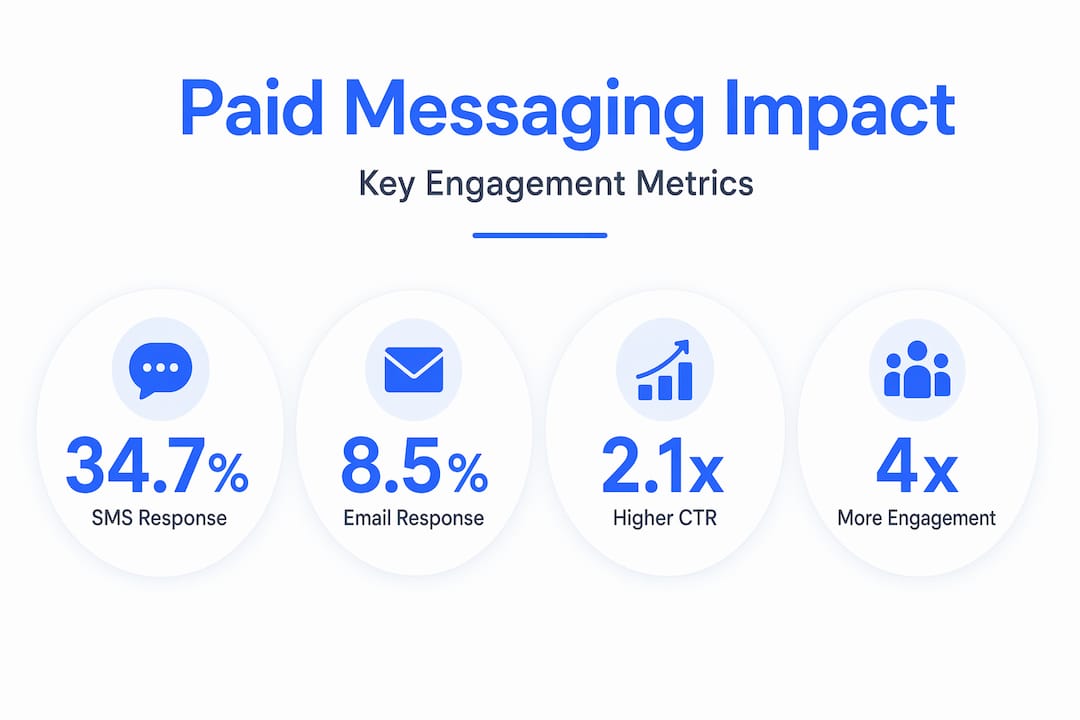
The benefits of paid messaging multiply when you layer in richer message formats. Brands using RCS (Rich Communication Services) messaging saw customer lifetime value increase by 187% and acquisition costs drop by 34%. RCS allows you to send images, carousels, buttons, and videos inside a single message thread — the kind of experience that feels personal, not promotional. Understanding the interactive messaging benefits here is critical for any creator serious about monetization.
Here is what the data tells us about paid messaging advantages versus free channels:
| Metric | Free email | Paid/SMS messaging |
|---|---|---|
| Average response rate | 8.5% | 34.7% |
| Click-through rate (standard) | ~2–3% | 6.1–23.7% |
| Customer lifetime value impact | Baseline | +187% with RCS |
| Acquisition cost change | Baseline | -34% with RCS |
The monetization logic follows naturally. When fans are actually reading and responding to your messages, you have a real conversation happening, not a broadcast. A solid messaging monetization guide can help you structure those conversations into reliable income. The key is treating each message thread as a relationship, not a transaction.
Key paid messaging advantages for creators:
- Higher open and response rates create more natural opportunities to present paid offers
- Rich media formats let you preview content and drive click-through before a fan commits
- Targeted delivery means your messages reach fans most likely to engage and buy
- Paid platforms typically offer better spam filtering, so your messages land in front of real people
- Segmentation tools let you customize offers by fan spending history or engagement level
Pro Tip: Do not blast the same message to every subscriber. Segment your audience by purchase history or engagement frequency and personalize the offer. Even basic segmentation can double your conversion rate on paid offers.
“Paid messaging is not a premium version of your free inbox. It is a fundamentally different relationship with your audience — one where scarcity and intentional access create the conditions for real monetization.” — Creator growth insight
Exploring paid messaging income streams shows how many creators are layering multiple revenue sources inside a single messaging workflow.
Understanding paid messaging as a privacy and experience upgrade
Beyond engagement, there is a deeper reason fans gravitate toward paid messaging platforms. Paid tiers often have fewer or no ads and provide premium features like expanded storage limits and advanced spam filtering. For your fans, that cleaner experience signals something important: you take their time seriously.

Free, ad-funded platforms monetize your fans’ attention. Paid platforms monetize your relationship with them directly. That distinction matters more than most creators realize. When a fan pays to access your messages, they are already pre-qualifying themselves as someone who values what you offer. The effectiveness of paid messaging is partially baked into the psychology of the transaction.
What paid messaging features improve for fans:
- No ads interrupting the conversation thread
- Advanced spam and bot filtering keeps the space feeling private
- Larger file and media limits for richer content sharing
- Priority delivery so messages are seen faster
- End-to-end encryption options and stronger data controls
Privacy is also a real concern for fans of adult content creators. Protecting your audience through digital privacy practices is not just a nice gesture; it builds trust that converts into long-term subscribers. Fans who feel safe in a paid space stay longer and spend more.
Pro Tip: Mention your platform’s privacy protections when onboarding new subscribers. A single sentence — “Your messages here are private and ad-free” — can meaningfully increase a fan’s confidence in opening up and spending more. The direct messaging advantages of a trusted, private space are hard to replicate on free platforms.
Why interactive and transactional messaging matter for creators
Not all paid messaging is the same. The format of your messages shapes how fans respond. Rich messaging formats like RCS show dramatically better results: RCS campaigns average a 23.7% click-through rate compared to 6.1% for standard SMS, with conversion rates climbing from 2.3% to 11.8%. Those are not incremental gains. That is a 5x improvement in conversions.
Transactional messaging adds another layer of value. When a fan purchases a custom video or unlocks a paid chat session, a real-time confirmation message does more than confirm the order. Transactional messaging builds trust through timely confirmations, delivery updates, and reminders, which reinforce that the creator runs a professional, reliable operation.
A comparison of messaging format performance:
| Format | Click-through rate | Conversion rate | Best use case |
|---|---|---|---|
| Standard SMS | 6.1% | 2.3% | Basic alerts, reminders |
| RCS rich messaging | 23.7% | 11.8% | Content previews, offers |
| Transactional SMS | High open rate | Trust-building | Purchase confirmations |
How to use interactive messaging as a creator:
- Send a short teaser image or clip inside the message before revealing the full paid offer
- Use reply buttons (available in RCS) to let fans choose their own experience (“Send me more” vs. “Not right now”)
- Follow up any purchase with an automatic confirmation that includes a bonus teaser for the next paid drop
- Use reminder messages 24 hours before a live session or limited content release
- Send re-engagement messages to fans who have gone quiet, with a clear, low-cost entry point back in
Understanding interactive messaging advantages in this context means designing conversations that guide fans toward a decision rather than simply informing them.
“The moment a fan can tap a button inside a message rather than having to navigate elsewhere, you have removed the friction that kills most conversions.” — Messaging UX insight
Pairing interactive formats with promotional tactics for chat creates a messaging strategy where every send has a clear purpose and a measurable outcome.
Operational best practices to maximize paid messaging success
Knowing why paid messaging works is only half the job. How you structure and operate your messaging workflow determines whether you actually capture the value it offers.
Sending paid offers only to fans demonstrating purchase intent yields 3 to 5 times higher conversions than sending broadly. Purchase intent is not mysterious — it shows up as fans who have bought before, fans who engage with your free posts consistently, and fans who click on paid content previews without converting. These are your highest-priority paid messaging targets.
Best practices for structuring paid messaging as a creator:
- Treat paid DM access as a product with a defined price, not an open door
- Set response windows (example: “I reply to paid messages within 6 hours”) to create urgency and set clear expectations
- Use message tagging or labels to track which campaigns drove which revenue
- Automate confirmations and welcome sequences so fans feel attended to immediately after purchase
- Never make fans feel like they are in a queue; personal acknowledgment, even a quick voice note, drives repeat purchases
Multi-channel messaging with SMS as a fallback ensures higher deliverability and engagement. If a fan is not reachable via one channel, an SMS backup ensures the message still lands. This is particularly important for time-sensitive offers like limited content drops or live session invites.
Pro Tip: Build a simple “paid messaging tier” separate from your standard DMs. Label it clearly — “Priority chat” or “Direct access” — with a specific price and defined benefits. Fans value clarity. Vague “message me” offers convert poorly; structured access products convert consistently.
The combination of messaging monetization strategies, subscriber growth tactics, and income streams through messaging gives you a complete framework for running paid messaging as a real business, not a side experiment.
Rethinking paid messaging: what creators often overlook
Here is something most guides will not tell you: the biggest gains in paid messaging ROI rarely come from better content. They come from better workflows.
Integrating SMS with a CRM nearly triples performance by improving response speed and conversation depth. For creators, the equivalent is knowing your fan’s purchase history before you start typing. When you can see that a specific fan has bought twice in the last month, your opening message writes itself. That context turns a cold pitch into a warm continuation of an ongoing relationship.
The second overlooked issue is pricing structure. Most creators either underprice access (giving too much for too little) or make it too vague (fans do not know what they are paying for). Creators should package paid messaging as bounded products rather than “unlimited access” offers, which are harder to price, harder to sustain operationally, and paradoxically less trusted by fans. When everything is included, nothing feels special.
Unlimited access sounds generous. It often destroys the paid messaging value proposition. Fans who pay for “unlimited chats” quickly set expectations you cannot realistically meet. When you miss a message or respond slowly, trust erodes. But when a fan buys a defined “5-message priority response pack,” they know exactly what they get, and you know exactly what you owe them. That clarity is what sustains a monetization guide built for long-term revenue.
The pros of paid messaging are real and substantial. But they only materialize when your operational structure matches the promise of the platform. Creative content keeps fans interested. Structure and workflow keep them spending.
Explore Fanspicy tools to supercharge your paid messaging
Everything covered in this guide — segmentation, interactive formats, structured access tiers, and privacy-first experiences — is built into Fanspicy’s creator platform. If you are ready to move from scattered DMs to a real paid messaging system, Fanspicy gives you the tools to do it without patching together a dozen separate apps.
Fanspicy’s platform includes limited-access chat rooms, audience segmentation by engagement level, and interactive messaging formats that make your offers land harder. Creators like Jackie Pott, this creatore Miss Unknown are already using Fanspicy to turn their conversations into consistent income. If you want to apply the paid messaging strategies in this guide with a platform built specifically for creators, Fanspicy is the place to start.
Frequently asked questions
What makes paid messaging more effective than free messaging?
Paid messaging delivers richer features, fewer ads, and better targeted delivery that prompts faster and more meaningful responses. SMS response rates average 34.7% versus 8.5% for email, a 4:1 engagement gap that makes a real difference in how much revenue a creator can drive per message sent.
How does transactional messaging build trust with audiences?
Transactional messages like real-time purchase confirmations keep fans informed immediately after they spend money, which signals professionalism and care. Transactional SMS builds trust through timely order confirmations, shipping updates, and reminders that show fans their investment is being handled seriously.
Why should creators avoid offering unlimited access in paid messaging?
Unlimited access dilutes perceived value, creates unsustainable response expectations, and makes pricing confusing for both you and your fans. Packaging paid messaging as bounded products rather than unlimited access makes offers clearer to price and easier to trust over time.
What role does message speed play in paid messaging success?
Speed signals that a fan’s investment is being honored, which drives repeat purchases and loyalty. CRM integration nearly triples SMS response rates from 10.1% to over 33%, showing that faster, more informed replies directly improve the effectiveness of paid messaging at scale.