

Spis treści
TL;DR:
- Adult content is driven by psychological needs such as sexual curiosity, emotional regulation, and habit formation, making it highly resilient in digital media. Social normalization, privacy tools, and technological advancements like AI personalize and prolong engagement across diverse demographics, including women and older adults. Early exposure during adolescence increases the likelihood of habitual adult consumption and associated mental health risks.
Adult content is one of the most consumed digital media categories on earth, driven by a convergence of psychological need, social normalization, and technological access that no other entertainment format replicates at scale. A 2026 study of 300+ college students identified five core drivers behind consumption: sexual curiosity, habit, learning, social influence, and emotional escape. These are not fringe motivations. They reflect fundamental human behavior. Understanding why adult content is popular requires looking past surface assumptions and into the psychology, culture, and market forces shaping one of the internet’s most persistent industries.
Why adult content is popular: the psychological core
Sexual curiosity is the most direct and universal reason people watch adult films, but the neurological mechanics behind that curiosity make the behavior far stickier than most realize. Sexual stimuli trigger dopamine release in the brain’s reward system, and crucially, dopamine governs motivation and anticipation rather than pleasure itself. This means the act of seeking content produces a neurochemical reward before any viewing even begins, creating a self-reinforcing loop that keeps users returning.
Beyond arousal, adult content functions as a genuine emotional regulation tool. Viewers report using it to decompress from stress, manage loneliness, and reduce anxiety. This positions it alongside other comfort media like social scrolling or binge-watching television, except the dopamine response is significantly more intense. The emotional escape function explains why consumption does not correlate neatly with relationship status or sexual activity levels.
Habit formation is the third psychological pillar. Regular use patterns often begin in adolescence and calcify into adulthood through repetition and reward conditioning. The psychology of adult content consumption is not fundamentally different from other habitual digital behaviors. What distinguishes it is the intensity of the neurological signal and the speed at which casual viewing can become routine.
Key psychological drivers behind adult content appeal include:
- Sexual curiosity and gratification: The most cited primary motivation across demographic groups, particularly among younger viewers.
- Dopamine-driven novelty seeking: Algorithms and infinite scroll mechanics exploit the brain’s preference for new stimuli over familiar ones.
- Emotional regulation: Viewers use content to manage negative emotional states, not exclusively to pursue pleasure.
- Social learning: Some viewers report consuming content to understand sexual behavior, norms, or communication.
- Personality factors: Individuals with higher openness to experience and lower relationship exclusivity tend to consume more frequently.
Pro Tip: If you are researching adult content consumption patterns for professional or academic purposes, the distinction between dopamine-driven novelty seeking and genuine sexual gratification is the most analytically useful frame. Most behavioral data clusters around novelty, not satisfaction.
How do social and cultural factors influence adult content appeal?
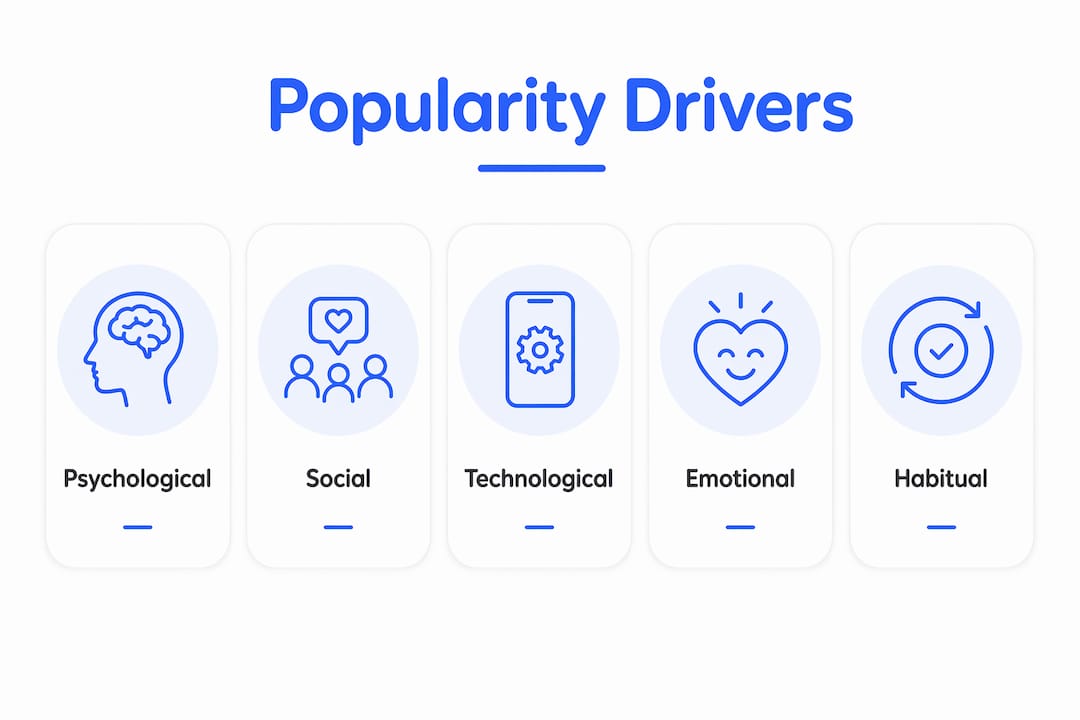
Social influence is a documented driver of adult content consumption, not a speculation. Peer conversations, shared references in popular culture, and the normalization of discussing adult entertainment in casual settings all reduce the psychological barrier to first-time and continued viewing. When a behavior moves from taboo to conversational, consumption rates follow.
The cultural shift toward authenticity has reshaped what viewers actually want. Modern viewers prefer mature, authentic content featuring genuine interaction and empathy over exaggerated performances. This preference mirrors broader media trends: the same audiences choosing documentary-style content on Netflix over scripted drama are choosing creator-driven adult content over studio productions. Authenticity is not a niche preference. It is the dominant consumer value of the 2020s.
Anonymity has been the single biggest structural enabler of this cultural shift. Digital privacy tools, private browsing, and subscription platforms have decoupled consumption from social exposure. The sociological shift toward private, personalized consumption reflects a broader cultural individualization where entertainment is increasingly a solo, curated experience rather than a shared one.
Here is how the social normalization process typically unfolds for new viewers:
- Initial exposure through peer reference or accidental discovery reduces the novelty barrier and frames adult content as a normal part of digital life.
- Private consumption enabled by anonymity tools removes social accountability, making repeat viewing psychologically easier.
- Platform personalization delivers content aligned with individual preferences, increasing satisfaction and reducing the friction that might otherwise prompt disengagement.
- Community and creator interaction on subscription platforms creates a parasocial connection that sustains long-term engagement beyond pure content consumption.
- Reduced stigma through cultural normalization allows viewers to integrate consumption into their self-concept without significant cognitive dissonance.
The demographics of adult content viewers have broadened substantially as a result of these shifts. Women, older adults, and LGBTQ+ audiences now represent growing segments of the consumer base, driven by content that reflects their identities and preferences rather than defaulting to a narrow historical template.
What technological and market trends sustain adult content popularity?
Technology is not just a delivery mechanism for adult content. It is an active driver of consumption growth. High-speed mobile internet converted adult content from a desktop-bound, planned activity into an on-demand behavior accessible anywhere. This single infrastructure shift expanded both the frequency and the demographic reach of consumption more than any content trend.

The creator economy transformed the supply side with equal force. New creator sign-ups grew 60% year over year in Q1 2026, reflecting a market where individuals can monetize content directly without studio intermediaries. This supply explosion increases content diversity, which in turn expands the addressable audience. More variety means more people find content that matches their specific preferences.
AI-driven personalization is the current frontier. AI personalization boosts session duration by 30%, a figure that represents a structural engagement advantage over non-personalized platforms. Algorithmic hyper-personalization engineers novelty loops that keep users engaged far longer than manual browsing would. The platform is doing the seeking on the user’s behalf, which removes the friction that might otherwise end a session.
| Technology driver | Impact on consumption |
|---|---|
| Mobile high-speed internet | Converts adult content from planned to on-demand behavior |
| Creator subscription platforms | Increases content diversity and parasocial engagement |
| AI personalization algorithms | Extends session duration by approximately 30% |
| Private payment infrastructure | Removes financial friction and identity exposure risk |
| Live streaming and real-time interaction | Deepens emotional connection between viewer and creator |
Pro Tip: For anyone analyzing adult entertainment trends professionally, the session duration metric is the most telling indicator of platform stickiness. A 30% increase from AI personalization outperforms most engagement interventions seen in mainstream streaming.
The industry’s pioneering role in monetization is worth noting. Frictionless payment systems, creator revenue sharing, and subscription models were standard in adult platforms years before Substack, Patreon, or Spotify adopted them. The adult content industry did not follow the creator economy. It built the template.
How does early exposure and habit formation impact long-term usage?
Early exposure to adult content is one of the strongest predictors of adult consumption patterns, and the data is specific. Adolescents exposed to pornography are 3.34 times more likely to continue use into adulthood, a finding with 95% confidence intervals that removes statistical ambiguity. This is not a correlation between curious teenagers and curious adults. It is a documented risk ratio with clinical implications.
The mechanism is habit formation accelerated by neurological sensitivity. Adolescent brains are more responsive to dopamine signals than adult brains, meaning the reward loop established during early exposure is neurologically deeper and harder to interrupt. The rapid transition from accidental exposure to habitual viewing in youth is linked to higher psychological risks and behavioral challenges in adulthood.
Key findings on early exposure and long-term impact:
- Adolescents who transition quickly from first exposure to regular viewing show higher rates of behavioral impairment in adulthood than those with longer gaps between initial and habitual use.
- Early viewers often escalate to more extreme or niche content over time due to desensitization and tolerance effects similar to those seen in other habitual behaviors.
- The mental health outcomes associated with adult content use diverge sharply based on whether consumption began as a deliberate choice in adulthood or as an accidental exposure in adolescence.
- Habitual use established in adolescence is significantly harder to modify than habits formed in adulthood, regardless of motivation to change.
The distinction between initial curiosity and established habit matters enormously for mental health outcomes. Curiosity-driven adult consumption in adulthood carries different psychological weight than compulsive use rooted in adolescent conditioning. Conflating the two produces inaccurate assessments of both the population and the risk.
What are the emerging social implications of adult content in 2026?
The social context around adult content consumption shifted meaningfully in 2026, and two trends define the current moment. First, ethical and inclusive content has moved from a niche preference to a mainstream demand signal. Audiences actively seek content that reflects diverse bodies, identities, and relationship structures. Platforms and creators in adult content who respond to this demand are capturing the fastest-growing viewer segments.
Second, adult content consumption spikes during economic downturns and social disruption, functioning as comfort media. This pattern, documented through Similarweb analytics during periods of social instability, reframes the reasons for adult content popularity beyond sexual motivation. When people are financially stressed or socially isolated, they turn to accessible, private, low-cost entertainment that delivers immediate neurological reward. Adult content fits that profile precisely.
| Consumption context | Primary driver | Audience behavior |
|---|---|---|
| Stable economic conditions | Sexual curiosity and novelty | Regular, preference-driven viewing |
| Economic or social stress | Emotional regulation and comfort | Increased frequency, shorter sessions |
| Cultural normalization periods | Social influence and reduced stigma | Broader demographic adoption |
| Platform innovation cycles | Personalization and creator diversity | Higher session duration and retention |
The paradox of widespread consumption and secretive support for creators persists. Most viewers consume adult content privately but do not openly support creators financially or socially. This gap between consumption and acknowledgment creates economic pressure on creators even as overall viewership grows. The adult content business models that close this gap through subscription intimacy and direct creator-to-viewer connection are the ones generating sustainable revenue in 2026.
Key takeaways
Adult content is popular because it satisfies psychological, social, and technological needs simultaneously, making it one of the most structurally resilient entertainment categories in digital media.
| Point | Details |
|---|---|
| Psychological drivers dominate | Sexual curiosity, dopamine reward loops, and emotional regulation are the three primary consumption motivators. |
| Social normalization accelerates growth | Anonymity tools and cultural individualization have expanded the demographics of adult content viewers significantly. |
| Technology amplifies engagement | AI personalization increases session duration by 30%, making platform design as important as content quality. |
| Early exposure predicts adult habits | Adolescent viewers are 3.34 times more likely to become habitual adult consumers, with measurable mental health implications. |
| Ethical content is the growth frontier | Inclusive, authentic content is capturing the fastest-growing audience segments in 2026. |
What I’ve learned from watching this industry evolve
The conversation about why adult content is popular almost always starts in the wrong place. People focus on the explicit nature of the content and miss the infrastructure underneath it. What actually drives sustained consumption is not the content itself. It is the combination of neurological reward, platform design, and social permission that makes the behavior feel natural and low-risk.
I have watched the adult content industry pioneer creator monetization, privacy infrastructure, and personalized recommendation systems years before mainstream platforms caught up. The subscription model that Substack and Patreon built their businesses on was standard practice in adult platforms a decade earlier. That is not a coincidence. It reflects an industry forced by stigma and payment processor restrictions to innovate faster than anyone else.
The emotional regulation function is the most underappreciated factor in this entire discussion. Viewing spikes during economic stress are not anomalies. They are evidence that adult content occupies the same psychological space as comfort food, social media scrolling, and alcohol. The difference is that adult content delivers a more intense neurological response with less social acceptability, which creates a consumption pattern that is simultaneously widespread and invisible.
Reducing stigma around this topic does not mean ignoring the risks associated with early exposure or compulsive use. It means having an accurate picture of who is consuming, why, and what that means for mental health, creator economics, and platform design. The industry is more sophisticated than the public conversation about it, and that gap is worth closing.
— fan
Explore adult content on your own terms with Fanspicy
Fanspicy is a creator-first platform built for the way adult content consumption actually works in 2026: private, personalized, and direct. The platform supports diverse creators across content styles and audience preferences, with subscription models that give viewers genuine connection rather than anonymous browsing. Whether you are exploring for the first time or looking for a platform that matches your specific interests, Fanspicy prioritizes your privacy and delivers content from real creators who invest in their craft. Browse featured creators on Fanspicy or discover more creator profiles to find content that reflects what you are actually looking for.
FAQ
What are the main reasons adult content is popular?
The primary drivers are sexual curiosity, dopamine-based reward loops, emotional regulation, social influence, and habit formation. A 2026 study of 300+ college students confirmed these five factors as the core motivators across demographic groups.
Why do people watch adult films during stressful periods?
Adult content consumption spikes during economic downturns and social disruption because it functions as comfort media, delivering immediate neurological reward at low cost and in complete privacy. This pattern mirrors other stress-driven comfort behaviors rather than reflecting purely sexual motivation.
How does technology contribute to adult content popularity?
High-speed mobile internet converted adult content into an on-demand behavior, while AI-driven personalization increases session duration by approximately 30%. Creator subscription platforms further sustain engagement by building direct viewer-to-creator relationships.
Does early exposure to adult content affect long-term behavior?
Adolescents exposed to pornography are 3.34 times more likely to become habitual adult consumers in adulthood, with higher psychological risks linked to rapid transitions from accidental exposure to regular viewing.
Who watches adult content in 2026?
The demographics of adult content viewers have broadened significantly. Women, older adults, and LGBTQ+ audiences represent growing segments, driven by the rise of inclusive, authentic content that reflects diverse identities and preferences rather than a narrow historical template.