
Indice dei contenuti
Over 80 percent of American creators say their biggest challenge is staying organized throughout the content production process. Without a clear workflow, even the best ideas can get lost in endless revisions, miscommunication, and missed deadlines. Whether you are a solo creator or managing a growing team, understanding how a content creation workflow operates will help you simplify tasks, keep projects on track, and deliver stronger results every time.
Indice dei contenuti
- What A Content Creation Workflow Is
- Variations In Workflow Structures
- Mapping Workflow Stages And Roles
- Production, Review And Publishing Workflow
- Monitoring, Optimization And Evolution
Punti di forza
| Point | Details |
|---|---|
| Establish a Consistent Content Workflow | A structured content workflow enhances efficiency and maintains quality throughout the content creation process. |
| Tailor Workflows to Individual Needs | Adapt workflow structures based on personal style, platform requirements, and audience engagement. |
| Incorporate Technology for Optimization | Utilize advanced tools for collaborative editing, performance tracking, and analytics to improve content production. |
| Engage in Post-Publication Monitoring | Regularly analyze content performance to refine future strategies and adapt to audience preferences. |
What A Content Creation Workflow Is
A content creation workflow is a strategic roadmap that transforms creative ideas into polished, professional content. It provides creators with a structured approach to producing, managing, and publishing content across various platforms. Content workflows are systematic processes that break down complex creative tasks into manageable, repeatable steps.
At its core, a content workflow consists of several critical stages that guide content from initial concept to final publication. These typically include idea generation, research, drafting, editing, reviewing, optimizing, and publishing. By implementing a consistent workflow, creators can significantly improve their efficiency, maintain high-quality standards, and reduce potential bottlenecks in their creative process. This systematic approach allows streamers and content creators to develop a predictable rhythm in their content production.
For streaming creators specifically, a robust content workflow becomes even more crucial. It helps manage multiple content types across different platforms, ensuring consistent branding, quality, and audience engagement. Whether you’re producing short video clips, long-form streams, or supplementary social media content, a well-designed workflow acts as a strategic blueprint that keeps your creative efforts organized and purposeful.
Pro Creator Tip: Design a flexible workflow template that allows for spontaneity while maintaining core structural elements. Review and adjust your workflow quarterly to optimize your content creation strategy and adapt to changing platform dynamics.
Next Pro Insight: Content Marketing Checklist for Fan Platforms Success can provide additional strategic guidance for refining your workflow approach.
Variations In Workflow Structures
Workflow structures are not one-size-fits-all solutions. Different industries and applications feature unique workflow patterns that adapt to specific creative and operational needs. For content creators, this means developing a workflow that matches their individual style, platform requirements, and audience engagement strategies.
In the realm of digital content creation, workflow variations emerge across multiple dimensions. Some creators prefer linear workflows with strict sequential steps, while others adopt more flexible, iterative approaches that allow for real-time adjustments. Specialized workflows might include dedicated phases for audience research, platform-specific optimization, engagement tracking, and content performance analysis. Streaming creators, for instance, often require more dynamic workflows that can quickly pivot based on audience interaction and trending topics.
Technological advancements have further complicated workflow structures. Computational workflow standards like the Common Workflow Language demonstrate the growing complexity of process management across digital platforms. For content creators, this means leveraging tools and technologies that can seamlessly integrate different stages of content production, from ideation to distribution and analytics tracking.
To help differentiate workflow models, here’s a comparison of linear, iterative, and hybrid content workflows:
| Workflow Model | Structure Focus | Il migliore per | Potential Drawbacks |
|---|---|---|---|
| Linear | Sequential, step-by-step | Predictable projects | Less adaptable to changes |
| Iterative | Flexible, cyclical | Rapid experimentation | Can become disorganized |
| Hybrid | Mix of planned and flexible steps | Complex, multi-platform needs | May require more coordination |
Pro Creator Tip: Experiment with hybrid workflow models that combine structured planning with creative flexibility. Document your workflow processes and regularly audit them to identify bottlenecks and optimization opportunities.
Next Pro Insight: Content Creation Process for Paid Social Platforms can provide additional insights into advanced workflow strategies.
Mapping Workflow Stages And Roles
Workflow stages and role assignment represent the critical infrastructure that transforms creative concepts into polished content. Each stage requires specific responsibilities and clear communication channels to ensure seamless progression from initial idea to final publication. Understanding these stages helps content creators develop more efficient and structured production processes.
Typical workflow roles often include several key participants: content commissioners who define project objectives, content creators responsible for actual production, subject matter experts who provide technical insights, and approvers who ensure quality and alignment with brand standards. Topic-based authoring approaches further enhance this process by structuring content into discrete, focused units that can be efficiently assigned and managed across different team members.
For streaming creators, workflow mapping becomes particularly nuanced. Each content piece might require multiple specialized roles such as researcher, scriptwriter, video editor, graphic designer, and performance analyst. The interconnected nature of these roles demands clear communication protocols, shared digital workspaces, and well-defined handoff points to maintain momentum and quality throughout the content creation journey.

Here’s a summary of key workflow roles and their main responsibilities:
| Role | Primary Responsibility | Example Output |
|---|---|---|
| Content Commissioner | Defines objectives and scope | Project brief |
| Content Creator | Produces and develops content | Drafted video or article |
| Subject Matter Expert | Provides technical insights | Fact-checked materials |
| Approver | Reviews and approves for quality | Final sign-off |
| Performance Analyst | Tracks metrics and recommends changes | Performance report |
Pro Creator Tip: Create a visual workflow diagram that clearly outlines each stage, role responsibility, and expected output. Update this diagram quarterly to reflect evolving platform dynamics and team capabilities.
Next Pro Insight: 10 consigli essenziali per la creazione di contenuti nel 2025 can provide additional strategies for optimizing your workflow roles.
Production, Review And Publishing Workflow
Content development requires a structured workflow that transforms raw creative ideas into polished, platform-ready content. The production process involves multiple interconnected stages that demand precision, creativity, and strategic thinking. Each stage serves a critical purpose in ensuring the final content meets both creator and audience expectations.
Workflow stages at professional institutions like Newcastle University typically encompass several key phases: initial content creation, comprehensive editing, expert review, final approval, and strategic publishing. For streaming creators, this translates into a dynamic process that includes concept development, scripting, recording, post-production editing, platform-specific optimization, and audience-targeted distribution. The review stage becomes particularly crucial, serving as a quality control checkpoint where content is evaluated for technical quality, brand alignment, audience relevance, and potential engagement metrics.
Modern content workflows increasingly integrate technological tools and analytics to streamline production. Creators now leverage advanced software for collaborative editing, real-time feedback collection, performance tracking, and automated distribution across multiple platforms. This technological integration allows for more agile workflows that can quickly adapt to changing audience preferences, platform algorithms, and emerging content trends. The goal is to create a seamless, efficient production pipeline that maximizes creative output while maintaining consistently high-quality standards.
Pro Creator Tip: Develop a standardized content review checklist that covers technical quality, brand voice, audience alignment, and potential engagement metrics. Regularly update this checklist to reflect evolving platform requirements and audience expectations.
Next Pro Insight: Content Marketing Checklist for Fan Platforms Success can provide additional strategies for refining your production workflow.
Monitoring, Optimization And Evolution
Post-publication content monitoring represents a critical phase in the content creation lifecycle where creators transition from production to continuous improvement. This stage involves systematic tracking of content performance, audience engagement, and strategic refinement to maintain relevance and impact. Understanding how your content resonates with viewers becomes the foundation for future creative decisions.
Content evolution is driven by multiple interconnected metrics that go beyond simple view counts. Creators must analyze audience retention rates, interaction patterns, comment sentiment, sharing behaviors, and platform-specific algorithmic performance. The concept of produsage highlights the collaborative nature of modern content development, where audience feedback becomes an integral part of the content refinement process. This means transforming passive consumption into an active, participatory experience where viewers contribute to content direction and quality.
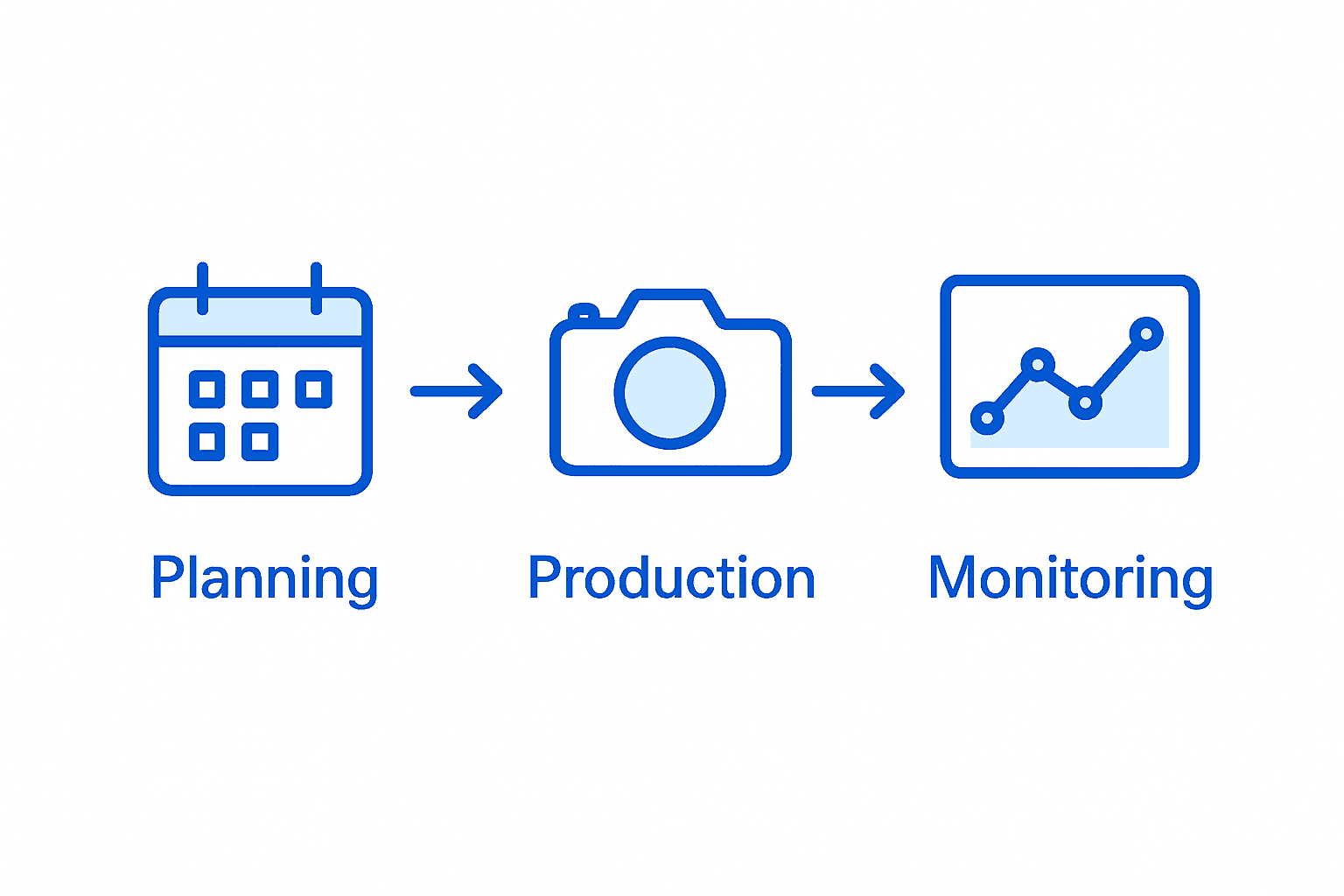
Technological tools now enable unprecedented levels of content analytics and optimization. Advanced tracking systems provide granular insights into viewer demographics, engagement windows, drop-off points, and emotional responses. Streaming creators can leverage these insights to make data-driven adjustments to content style, format, length, and presentation. The goal shifts from simply creating content to developing a dynamic, responsive content ecosystem that continuously adapts to audience preferences and platform dynamics.
Pro Creator Tip: Implement a quarterly content performance audit that compares your content metrics against platform benchmarks. Use data visualization tools to track performance trends and identify actionable improvement strategies.
Next Pro Insight: 10 Essential Content Creation Tips for 2025 can provide additional strategies for content optimization.
Supercharge Your Streaming Workflow with FanSpicy
The article highlights the challenge of managing complex content creation workflows to maintain quality and audience engagement in streaming. If you struggle to keep your streaming content organized while adapting to dynamic audience preferences and platform demands FanSpicy offers a powerful solution tailored for creators like you. By integrating seamless content production tools with real-time audience interaction on a dedicated paid social platform you can streamline your workflow stages from ideation to publishing and beyond.
Take control of your content creation process today and boost your streaming impact by joining FanSpicy. Experience how our live cam platform and paid social media environment support flexible workflow models and detailed performance analytics designed to evolve with your creative needs. Don’t wait to transform your streaming brand with a supportive ecosystem that understands the importance of workflow optimization and audience-driven content evolution. Get started now at FanSpicy and explore our insights on Content Marketing Checklist for Fan Platforms Success and 10 Essential Content Creation Tips for 2025 to refine your strategy further.
Domande frequenti
What is a content creation workflow?
A content creation workflow is a strategic roadmap that transforms creative ideas into polished content. It involves structured processes that guide content from initial concept to final publication, improving efficiency and quality.
Why is a workflow important for streaming creators?
A workflow is crucial for streaming creators as it helps manage multiple content types across different platforms, ensuring consistent branding, quality, and audience engagement, while also streamlining the creative process.
How can I improve my content creation workflow?
To improve your content creation workflow, design a flexible template that allows for spontaneity while maintaining core structural elements. Regularly reviewing and adjusting your workflow can help optimize your content strategy.
What are common stages in a content creation workflow?
Common stages in a content creation workflow include idea generation, research, drafting, editing, reviewing, optimizing, and publishing, each playing a vital role in delivering high-quality content.