

Indice dei contenuti
You grow an audience on YouTube by making videos a specific group of people wants to watch, packaging each one honestly with a clear title and thumbnail, keeping viewers watching with a strong opening, and then using Analytics to repeat what works. There is no secret trick. YouTube itself advises making videos that resonate rather than trying to decode an algorithm. The rest of this guide turns that principle into steps you can act on this week.
TL;DR
- Define who the channel is for and what viewers can expect, then publish on a schedule you can actually keep.
- Treat the title, thumbnail and first seconds as one promise, and deliver on it immediately.
- Build repeatable formats and series so new viewers become regular ones.
- Check Analytics for click-through rate, traffic sources and retention, and compare groups of videos, not single hits.
- Views rent you attention. Plan to own your audience elsewhere too, through an email list or a platform where fans can support you directly.
Indice dei contenuti
- Start with a channel that has a clear reason to exist
- Make videos people search for or want to share
- Package every video as one promise
- Keep viewers watching, then turn them into regulars
- Build community in the comments
- Use YouTube Analytics like a decision tool
- Working toward 1,000 subscribers without shortcuts
- We think the audience you own matters most
- Turn your YouTube audience into a business you own
- A 30-day starting plan
- FAQ
- Sources
Start with a channel that has a clear reason to exist
Most channels stall because nobody can say in one sentence what they are for. YouTube Help recommends writing a short channel “elevator pitch” covering why the channel exists, its goals, the type of content you make and what viewers can expect. Write yours before you film anything else.
A workable pitch has three parts:
- Who it is for. “Home cooks who have 30 minutes on a weeknight” beats “people who like food.”
- What they get. A repeatable outcome, such as a recipe, a skill or a laugh.
- How it feels. Your style, pacing and personality, which is what makes a viewer pick you over ten similar channels.
Then choose a format. The YouTube team’s starter guidance says to publish videos viewers want to watch, in a format such as Shorts or long-form, and to present each one accurately through its title, description and thumbnail. Shorts can introduce you to many new people quickly. Longer videos tend to give people more reason to settle in. Many creators test both and let their numbers decide.
Pick a schedule you can sustain
YouTube Help suggests an upload schedule that works for both you and your audience, and advises telling viewers in advance when it changes, which builds trust. One strong video every week or two that you can keep up for a year will do more than a burst of daily uploads that ends in burnout.
Make videos people search for or want to share
Discovery comes from two directions: people looking for something, and people being shown something. Plan for both.
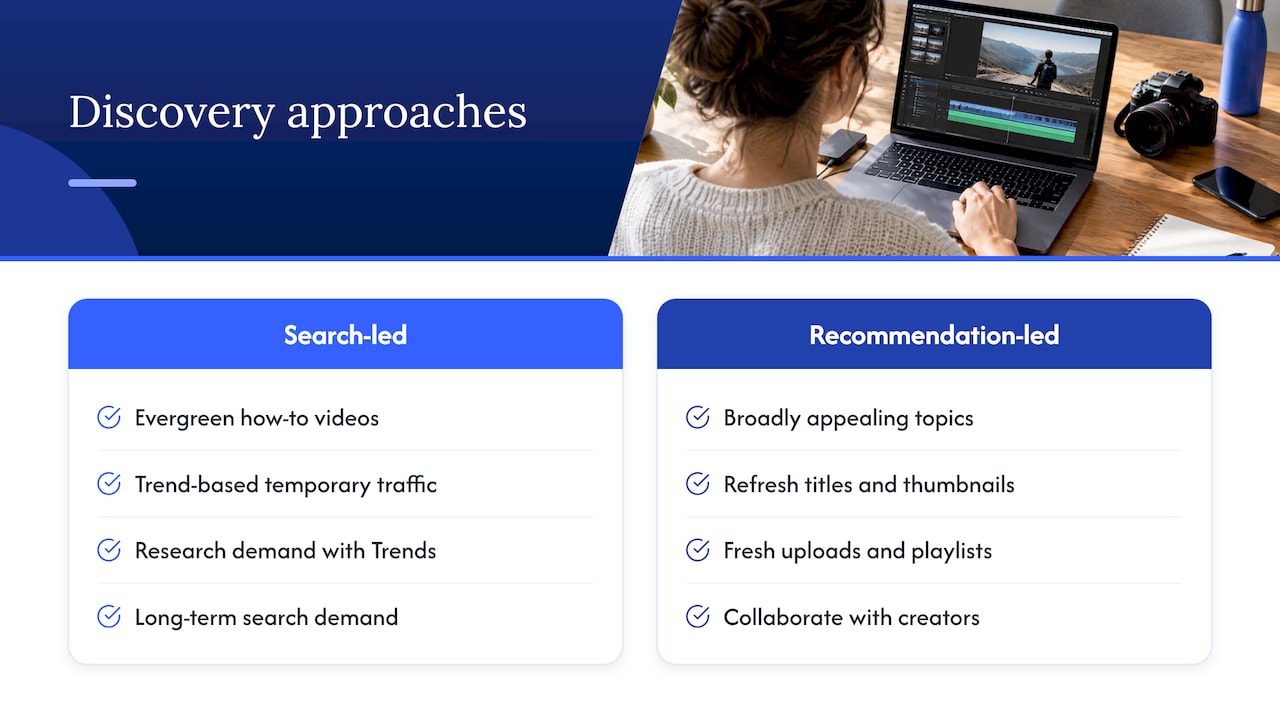
Search-led videos. Google’s YouTube playbook recommends making evergreen how-to videos for long-term search demand and trend-based videos for temporary traffic, using Google Trends and YouTube Trends to research demand. Evergreen videos keep working months after upload, which is what makes a small channel compound.
Recommendation-led videos. To reach new viewers, YouTube recommends experimenting with broadly appealing topics, improving titles and thumbnails, keeping uploads and playlists fresh, collaborating with other creators, and using trends or seasonal events. The platform’s discovery systems look at signals such as what viewers watch or skip, watch time, likes and dislikes, “Not interested” feedback and satisfaction surveys, so the goal is to make something a viewer is glad they watched.
Chase formats, not trends
Trends bring a spike and then nothing. YouTube Help says sustainable, distinctive content is preferable to constantly chasing trends, and recommends developing repeatable formats rather than relying on one-off hits. A format is a structure you can reuse: a weekly teardown, a “I tried X for 7 days” series, a three-minute explainer. It makes production faster and gives viewers a reason to come back.
Content features matter too. A peer-reviewed 2021 study of more than 11,000 videos from 150 digital influencers found that language, style, emotion, category, video length and posting timing were all associated with views, likes, dislikes and comments. The takeaway is not a magic length or time slot, but that these choices are worth testing deliberately.
Package every video as one promise
A video that nobody clicks cannot grow your channel. YouTube says titles and thumbnails communicate value, spark intrigue and set expectations, and that the opening seconds should immediately deliver on that promise. Think of the thumbnail, title and intro as a single sentence spread over three places.
A quick packaging checklist:
- Title: specific and honest. Name the outcome or the curiosity, and keep the main idea near the start.
- Thumbnail: one clear subject, readable on a phone, and a visual that matches what the video really contains.
- First 15 seconds: confirm the promise, say what the viewer will get, and start delivering. Skip the long logo animation and the three-minute backstory.
- Description and hashtags: plain language about the topic, since they help with search and context.
In 2025, YouTube announced that eligible creators can test up to three thumbnails and three titles on a single video, with the platform picking a winner based on watch-time percentage. If you have access, use it on videos that are underperforming and learn which promise lands.
Keep viewers watching, then turn them into regulars
Clicks start the process. Retention decides whether YouTube shows the video to more people. YouTube recommends keeping interest through storytelling, anticipation and curiosity, varying structures and editing styles, and then checking retention in Analytics to see how viewers react.
Try these in your next edit:
- Cut anything that repeats a point already made.
- Open a question early and answer it later, so there is a reason to stay.
- Change something every so often, such as the shot, the pace, a graphic or the topic beat.
- Point viewers to the next video with cards, playlists and end screens. YouTube notes that hashtags, playlists, cards and end screens can redirect viewers to more of your content after they begin watching.
Understand the three kinds of viewer
YouTube defines new viewers as people watching your channel for the first time in the selected period, casual viewers as occasional watchers, and regular viewers as people who watch consistently over a long time. The company’s guidance for each group points the same way for loyalty: consistent topics or formats, series based on subjects that already proved popular, and interaction with the community, including replying to comments.
A practical version: make a handful of videos that are easy for newcomers to enter, then link them to a series that rewards people who stay.
Build community in the comments
Talking with viewers is not extra work. It is how a casual viewer becomes a fan. YouTube Help suggests you ask for feedback, respond to comments, be authentic, keep a regular schedule and develop recognizable traditions, and that you invite viewers to subscribe, comment, like or share.
Some simple habits:
- Reply to comments in the first hours after upload, when engagement is most active.
- End videos with one specific question instead of a generic “let me know below.”
- Turn good comments into future video topics and say who suggested them.
- Use a recurring catchphrase, segment or intro so viewers recognize your channel at a glance.
An engaged audience is also the one most willing to follow you elsewhere later, which matters for the last section of this guide.
Use YouTube Analytics like a decision tool
Analytics can overwhelm beginners, so start with four numbers. In YouTube Studio, compare impressions and click-through rate, traffic sources, retention and average view duration. Each answers a different question:
| Metric | Question it answers | What to do with it |
|---|---|---|
| Impressions click-through rate | Is the packaging earning clicks? | Rework titles and thumbnails on low performers |
| Traffic sources | Where do viewers find you: search, suggested, browse? | Make more of whatever source is growing |
| Mantenimento del pubblico | Where do people leave? | Tighten the intro and cut the dips |
| Durata media della visualizzazione | Is the video holding attention overall? | Compare against similar videos, not against other channels |
YouTube Help also recommends grouping videos by format, series, style, intended audience, topic longevity or production cost so you can compare patterns rather than react to a single upload. A tutorial group that consistently beats your vlogs tells you more than one viral video ever will.
The Audience tab goes further. YouTube’s 2024 creator guidance says to use it to see the formats, channels, videos and times your viewers watch, then use “Videos growing your audience” to plan follow-up content. If you serve viewers worldwide, the same reports show top geographies, caption languages, age and gender, and watch time from subscribers versus non-subscribers.
Learn from a channel that changed its approach
Envato’s case study of its Tuts+ channel reports growth from 100,000 to more than 1.5 million subscribers after it shifted from frequent course trailers to less frequent, substantial how-to courses, guided by audience metrics. It is one company’s account, but the logic transfers: fewer, better videos built around what the data says viewers value.
Working toward 1,000 subscribers without shortcuts
People search for how to get 1,000 subscribers fast, and that is a milestone worth aiming for, because YouTube’s Partner Program has historically set 1,000 subscribers plus 4,000 public watch hours or a Shorts view threshold as one route to eligibility. Thresholds can change, so check the current requirements in the Earn area of YouTube Studio before you plan around them.
No one can promise a timeline. What you can control is the cycle that moves a channel forward:
- Publish a batch of videos around one clear audience and idea.
- Review click-through rate and retention after the first week.
- Make the next three videos better on whichever number was weakest.
- Repeat for a few months without changing the whole concept every time.
Skip purchased subscribers and sub-for-sub swaps. They add numbers without viewers, which drags down the signals that actually drive recommendations and leaves you with an audience that never watches.
We think the audience you own matters most
Views are the start of an audience, not the end. A subscriber count on any single platform is something you rent, because the rules, recommendations and payouts can change.
That is why we built Fanspicy around direct audience ownership. Creators on our platform can sell subscriptions, exclusive content, paid posts, private messages, bundles and live streams, and receive tips from fans, while keeping a higher percentage of what they earn. Creators do not pay fees to join or use the platform, and a commission applies per transaction.
If you are growing on YouTube, think of it as your discovery engine. The fans who love your work most deserve a home where they can support you directly, and where moving your content over from other platforms is easy. The creators who treat reach and ownership as two halves of the same plan are the ones best placed to build a lasting creator economy business.
fan
Turn your YouTube audience into a business you own
Once viewers trust you, give them a way to go deeper. For a creator, that can mean paid subscriptions, exclusive posts, live streams, private messages and tips, the monetization methods fans already understand. On Fanspicy, creators can offer all of these in one place, and you can see how it works by becoming a model on Fanspicy.
We designed Fanspicy for independent creators who want flexible ways to earn and a direct relationship with their fans. You can also browse the platform at fanspicy.com to see how subscriptions, live streams and private messages work from the fan side. Our creator guides on promoting paid content e boosting subscriber growth cover the next step, and if your work is adult-oriented, the guides on attracting viewers e audience retention are written for you. Keep in mind that YouTube has its own content policies, so adult content belongs on platforms built for it, while YouTube works as the place for safe-for-work previews and personality-led videos.
A 30-day starting plan
If you want a concrete way to begin, use this outline.
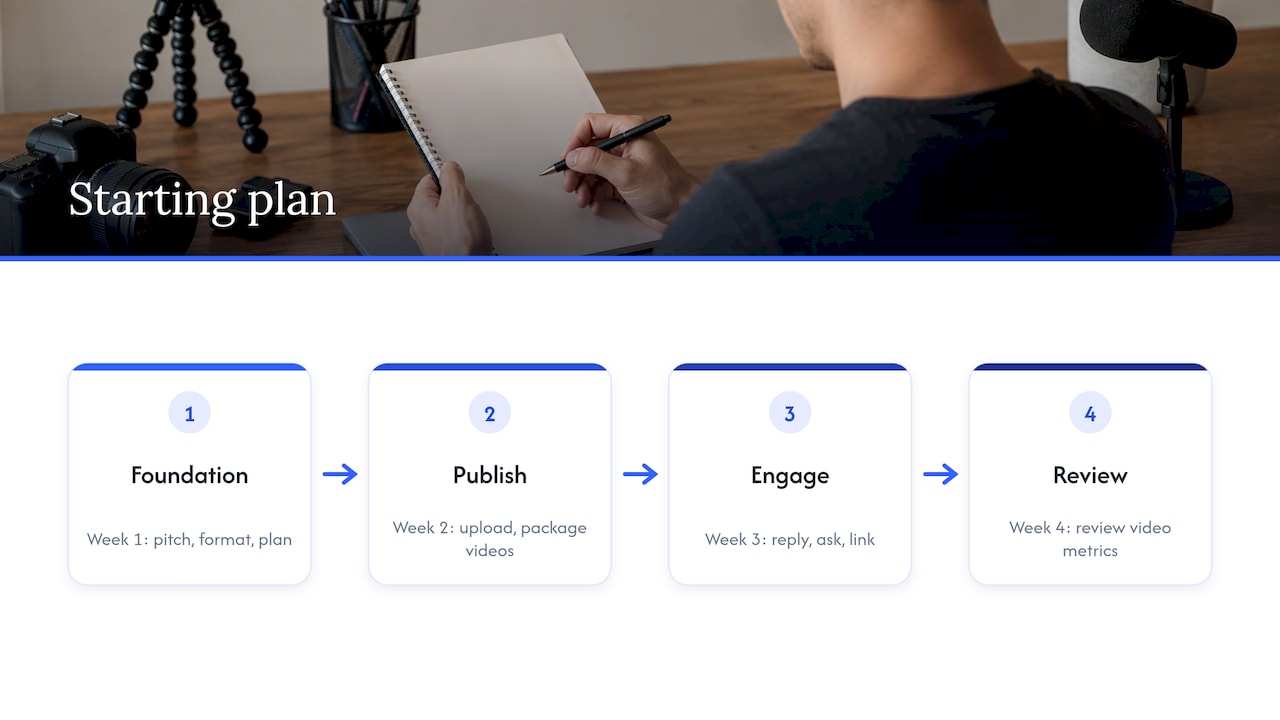
Week 1: Foundation. Write your elevator pitch, choose one format and plan four videos around a single audience. Research search demand with Google Trends and YouTube Trends.
Week 2: Publish and package. Upload your first videos with accurate titles and thumbnails. Rewrite each intro so it confirms the promise in the first seconds.
Week 3: Engage. Reply to every comment, ask one specific question per video and add an end screen pointing to your best-performing upload.
Week 4: Review. Open Analytics. Compare click-through rate, traffic sources and retention across your videos, group them by format and decide which to repeat. Then plan the next month on what the numbers showed.
FAQ
How long does it take to grow an audience on YouTube?
There is no fixed timeline, and anyone who promises one is guessing. Growth depends on your topic, how often you publish and how well each video holds viewers. A steadier approach is to review your numbers after each batch of videos and improve one weak area at a time.
Do I need to post every day?
No. YouTube Help recommends a schedule that works for you and your audience, not the highest possible frequency. Pick a rhythm you can maintain, tell viewers when it changes, and put your effort into making each video better.
Should I focus on Shorts or long videos?
YouTube lists both formats as a valid starting point. Shorts can bring quick exposure, while long-form videos give viewers more time with you. Test both, then use Analytics to compare which one brings subscribers and returning viewers.
Is subscriber count the best measure of success?
It is useful, but it is not the whole picture. Click-through rate, retention and the share of regular viewers say more about whether people actually enjoy your content. YouTube’s Content Analytics also shows which content types generate subscribers, so you can see what converts.
Sources
- How to get started as a YouTube creator, YouTube Blog
- Tips to establish your fanbase, YouTube Help
- Tips to learn what content to create, YouTube Help
- New, casual and regular viewers tips, YouTube Help
- Understand your content performance, YouTube Help
- YouTube Analytics basics, YouTube Help
- 6 ways to grow your YouTube channel in 2024, YouTube Blog
- Made On YouTube 2025 updates, YouTube Blog
- YouTube Partner Program overview and eligibility, YouTube Help
- YouTube playbook, Think with Google
- To engage or not engage? The features of video content, Journal of Consumer Behaviour
- How to build a successful YouTube channel, Envato