

Indice dei contenuti
Getting your content noticed on platforms like Instagram or TikTok can feel almost impossible when organic reach keeps shrinking. For creators on live cam and adult subscription sites, paid social media offers targeted exposure that organic posts simply cannot match. With smart audience targeting, flexible ad formats, and clear campaign objectives, you can reach new fans across the United States, Canada, Europe, and beyond, turning paid ads into a reliable path for audience growth and higher earnings.
Indice dei contenuti
- Paid Social Media Defined And Debunked
- Types Of Paid Social Media Campaigns
- How Paid Social Advertising Works Today
- Legal, Ethical, And Safety Concerns Worldwide
- Key Risks, Costs, And Mistakes To Avoid
- Choosing The Right Platforms For Creators
Punti di forza
| Point | Details |
|---|---|
| Targeted Advertising | Paid social media allows precise audience targeting, enhancing the effectiveness of campaigns. |
| Diverse Ad Formats | Utilizing various ad formats can maximize audience engagement and conversion potential. |
| Continuous Optimization | Regularly track performance metrics to refine strategies and improve campaign outcomes. |
| Conformità legale | Understanding local regulations is crucial for ethical and effective advertising practices. |
Paid Social Media Defined and Debunked
Paid social media represents a strategic digital marketing approach where businesses invest directly in social platform advertising to enhance their visibility and reach. Unlike traditional organic content strategies, paid social campaigns guarantee targeted exposure by leveraging sophisticated demographic and behavioral targeting technologies.
The fundamental mechanics of paid social media involve precise audience segmentation through advanced platform tools. Advertisers can pinpoint potential consumers based on multiple sophisticated parameters:
- Geographic location
- Age and gender demographics
- Specific professional interests
- Online behavioral patterns
- Purchasing history and consumer preferences
These targeted advertising strategies amplify content reach beyond traditional organic limitations. Social platforms provide comprehensive advertising solutions that transform marketing approaches by offering granular control over audience interactions.
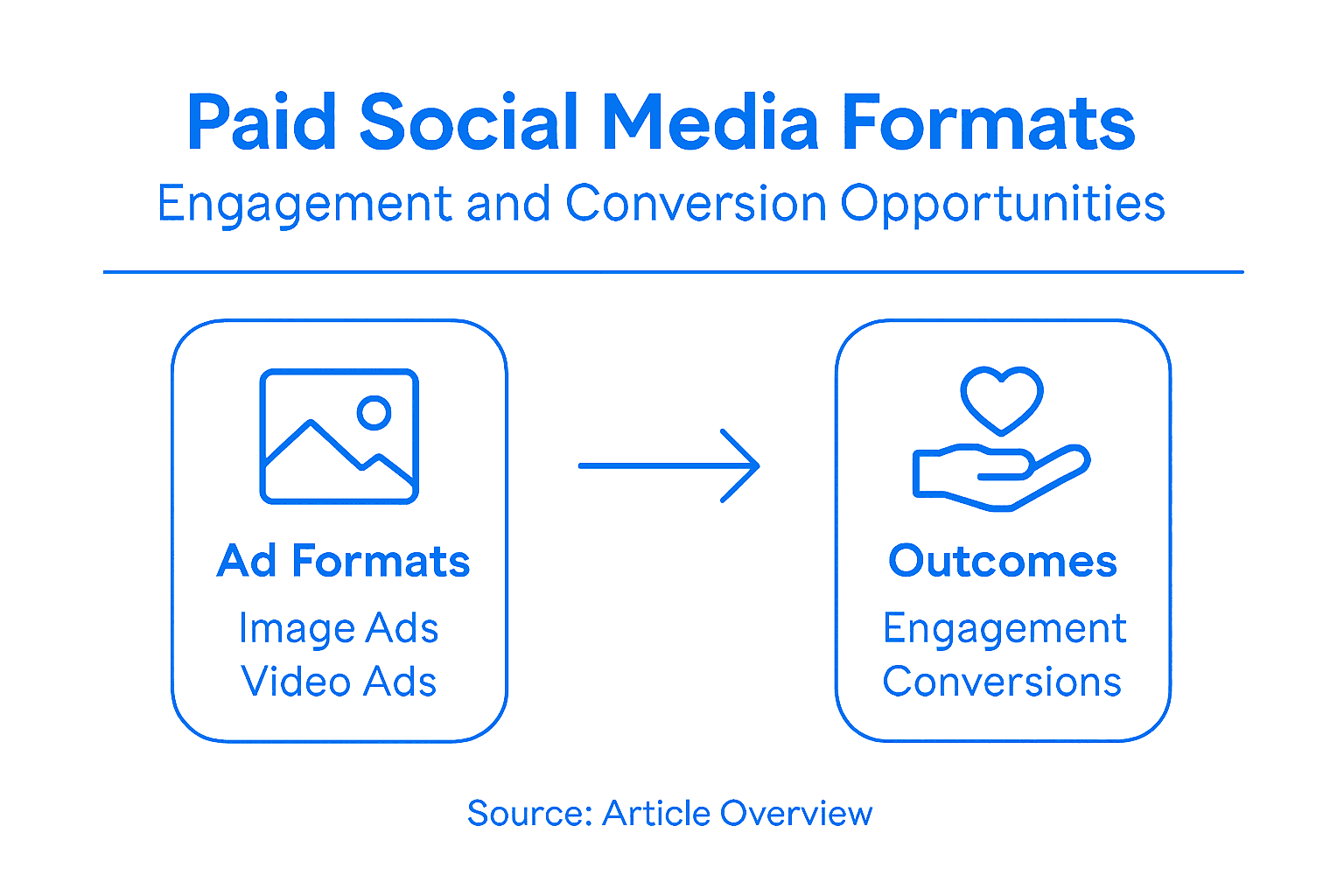
Social Media Advertising Formats include dynamic options like:
- Image advertisements
- Video promotional content
- Carousel product displays
- Sponsored post boosts
- Interactive rich media campaigns
Each format provides unique engagement opportunities designed to maximize audience connection and conversion potential. Marketers can strategically select presentation styles that align most effectively with their specific promotional objectives.

Here’s a quick comparison of the main paid social media advertising formats and their typical business impact:
| Ad Format | Best Use Case | Audience Engagement Style | Conversion Potential |
|---|---|---|---|
| Image Advertisement | Product awareness | Visual interest | Moderato |
| Video Promotion | Storytelling, demos | Dynamic, interactive | Alto |
| Carousel Display | Multiple products/services | Browsable, choice-driven | High for e-commerce |
| Sponsored Post Boost | Promote existing organic | Familiar, native feel | Variable |
| Rich Media Campaign | Games, quizzes | Highly interactive, memorable | Strong data collection |
Pro tip: Always start with small budget experiments to test different targeting strategies and advertisement formats before committing significant marketing resources.
Types of Paid Social Media Campaigns
Paid social media campaigns represent strategic marketing approaches designed to achieve specific business objectives through targeted platform advertising. Multiple campaign types exist tailored to different stages of audience engagement and business goals.
The primary categories of paid social media campaigns include:
- Brand Awareness Campaigns: Focused on increasing visibility and reach
- Engagement Campaigns: Designed to foster audience interaction and community building
- Lead Generation Campaigns: Targeting direct customer acquisition
- Conversion Campaigns: Aimed at driving immediate sales and revenue
- Retargeting Campaigns: Re-engaging previous website visitors or potential customers
Ad Format Diversity plays a critical role in campaign effectiveness. Social platforms offer multiple advertising strategies that creators can leverage:
- Image-based advertisements
- Video promotional content
- Interactive carousel displays
- Story-based short-form ads
- Influencer branded content partnerships
Each advertising format provides unique opportunities to connect with specific audience segments. Successful campaigns require strategic audience targeting, creative content development, and continuous performance monitoring.
Effective paid social campaigns blend creativity with data-driven targeting, adapting to platform-specific user behaviors and engagement patterns.
Campaign Objectives typically align with different stages of the consumer journey:
- Awareness Stage: Introducing brand or content to new audiences
- Consideration Stage: Encouraging deeper audience exploration
- Conversion Stage: Motivating direct action or purchase
- Loyalty Stage: Maintaining and deepening existing audience relationships
Pro tip: Experiment with small budget allocations across different campaign types to identify the most effective strategies for your specific audience and content niche.
How Paid Social Advertising Works Today
Paid social advertising represents a sophisticated digital marketing mechanism where businesses strategically place targeted advertisements across social media platforms. Precise targeting capabilities enable advertisers to reach specific audience segments with unprecedented accuracy and efficiency.
The core mechanics of paid social advertising involve several critical components:
- Segmentazione del pubblico: Defining precise demographic parameters
- Budget Allocation: Setting financial limits for campaign spending
- Ad Creation: Developing compelling visual and textual content
- Targeting Parameters: Selecting demographic, geographic, and interest-based filters
- Performance Tracking: Monitoring real-time engagement metrics
Payment Models in paid social advertising typically include:
- Cost Per Click (CPC)
- Cost Per Impression (CPM)
- Cost Per Acquisition (CPA)
- Cost Per Engagement (CPE)
Social media platforms provide sophisticated advertising tools that allow creators to customize their targeting approach. These advanced systems enable granular audience selection based on multiple sophisticated parameters:
- Age and gender
- Geographic location
- Specific interests
- Online behavior patterns
- Previous interaction history
Successful paid social campaigns require continuous optimization, creative content development, and data-driven strategy adjustments.
Key Performance Indicators (KPIs) creators should track include:
- Total reach
- Engagement rate
- Click-through rate
- Conversion rate
- Return on ad spend
Pro tip: Start with small budget experiments and incrementally increase spending as you identify which audience segments and content types generate the most consistent engagement.
Legal, Ethical, and Safety Concerns Worldwide
Ethical complexities in social media advertising demand rigorous attention from creators and platforms alike. The global landscape of digital marketing requires comprehensive understanding of legal frameworks, privacy considerations, and user protection strategies that vary significantly across different jurisdictions.
Key Legal Considerations includono:
- Data privacy regulations
- Consent requirements
- Intellectual property protections
- Content moderation standards
- Cross-border advertising restrictions
The primary legal challenges creators must navigate involve:
- Compliance with international data protection laws
- Respecting user consent mechanisms
- Preventing unauthorized data collection
- Maintaining transparency in advertising practices
- Protecting user identities and personal information
Research highlights complex ethical dimensions surrounding digital content usage and user data management. Different global regions enforce varying standards for digital privacy and content regulation.
Regulatory Frameworks typically address:
- General Data Protection Regulation (GDPR)
- California Consumer Privacy Act (CCPA)
- Children’s Online Privacy Protection Act (COPPA)
- Digital advertising consent requirements
- Platform-specific content guidelines
Responsible digital marketing requires continuous adaptation to evolving legal landscapes and ethical standards.
Potential Legal Risks creators must consider include:
- Unauthorized data usage
- Misrepresentation of sponsored content
- Violation of platform-specific guidelines
- Potential financial penalties
- Reputational damage from non-compliance
Pro tip: Consult with a digital law specialist to develop comprehensive compliance strategies specific to your target geographic markets and content type.
Key Risks, Costs, and Mistakes to Avoid
Paid social media campaigns involve significant potential pitfalls that creators must strategically navigate to protect their investment and maximize returns. Understanding these risks is crucial for developing effective, efficient advertising strategies that deliver meaningful audience engagement.
Primary Risk Categories includono:
- Budget inefficiency
- Poor audience targeting
- Inadequate performance tracking
- Inconsistent creative quality
- Platform policy violations
The most critical mistakes creators commonly encounter involve:
- Unfocused campaign objectives
- Neglecting audience segmentation
- Overlooking conversion tracking
- Inconsistent brand messaging
- Failing to optimize ad performance
Effective campaign management requires comprehensive strategic planning that addresses potential operational challenges. Creators must develop sophisticated approaches to mitigate financial and reputational risks.
Financial Risk Indicators:
- Excessive ad spend without proportional returns
- Uncontrolled customer acquisition costs
- Inefficient budget allocation across campaign stages
- Lack of performance measurement infrastructure
- Minimal return on investment metrics
Successful paid social strategies demand continuous monitoring, strategic adjustments, and data-driven decision making.
Critical Performance Metrics creators should track include:
- Cost per acquisition
- Tassi di conversione
- Engagement percentages
- Audience growth
- Revenue attribution
Pro tip: Implement a systematic monthly review process that critically examines campaign performance, comparing actual results against predefined key performance indicators.
Choosing the Right Platforms for Creators
Platform selection represents a critical strategic decision for digital content creators seeking sustainable audience growth and revenue generation. Each platform offers unique features, audience demographics, and monetization opportunities that require careful evaluation and strategic alignment.
Platform Types creators should consider include:
- Growth-Focused Platforms: Prioritize audience discovery
- Piattaforme di monetizzazione: Enable direct revenue generation
- Hybrid Platforms: Combine growth and income opportunities
- Niche Specific Platforms: Target specialized audience segments
- Comprehensive Creator Ecosystems: Offer multiple engagement tools
The primary platforms offering distinct content opportunities are:
- YouTube (Long-form video content)
- TikTok (Short-form viral videos)
- Instagram (Visual storytelling)
- LinkedIn (Professional networking)
- Twitch (Live streaming)
Successful creators understand platform trade-offs involving audience reach, revenue share, and content control. Strategic platform selection requires comprehensive analysis of multiple factors:
This table summarizes social media platforms and compares key features relevant for creators:
| Piattaforma | Content Format | Monetization Method | Audience Demographic |
|---|---|---|---|
| YouTube | Long-form video | Ad revenue, membership | Broad, global reach |
| TikTok | Short viral video | Creator Fund, gifts | Young, creative audience |
| Visual/story | Partnerships, shopping | Fashion, lifestyle focus | |
| Professional posts | Lead gen, ads | Business professionals | |
| Twitch | Streaming in diretta | Subscriptions, bits | Gaming, tech enthusiasts |
Key Evaluation Criteria:
- Audience demographic alignment
- Content format compatibility
- Monetization potential
- Platform commission rates
- Growth and discoverability features
Creator success emerges from matching platform capabilities with personal content strengths and business objectives.
Recommended Platform Selection Strategy:
- Start with one primary platform
- Master platform-specific content strategies
- Gradually expand to complementary platforms
- Maintain consistent brand messaging
- Analyze performance metrics regularly
Pro tip: Create a detailed comparison spreadsheet evaluating each platform’s unique features, audience demographics, and monetization potential before making your final selection.
Unlock the Full Potential of Paid Social Media for Creators
Struggling to turn your social media presence into steady income can be frustrating. The article highlights key challenges like precise audience targeting, creative ad formats, and managing campaign budgets that often stand between creators and sustainable revenue. At FanSpicy, we understand these obstacles and offer a dedicated platform that combines the power of paid social media strategies with live cam interaction and a supportive creator-friendly environment.
Take control of your content monetization today by joining FanSpicy, a leading paid social media and OnlyFans alternative platform designed to help creators grow their audience, optimize engagement, and maximize earnings. Whether you aim to boost brand awareness or drive conversions, FanSpicy provides the tools and features you need to succeed. Don’t let missed opportunities hold you back – explore how our platform matches your goals by visiting FanSpicy now and start building your creator revenue with confidence.
Domande frequenti
What is paid social media advertising?
Paid social media advertising is a digital marketing strategy where businesses invest in social platform advertising to boost visibility and reach by targeting specific audiences using demographic and behavioral data.
What are the different formats of paid social media ads?
Paid social media ads come in various formats, including image advertisements, video promotional content, carousel displays, sponsored post boosts, and interactive rich media campaigns, each designed for specific engagement and conversion goals.
How do I choose the right platform for paid social media campaigns?
Choosing the right platform involves evaluating factors such as audience demographics, content format compatibility, monetization potential, and platform-specific features to align with your marketing objectives and content strengths.
What are the common risks associated with paid social media campaigns?
Common risks include budget inefficiency, poor audience targeting, inadequate performance tracking, inconsistent creative quality, and potential policy violations, which can hinder campaign effectiveness and return on investment.