

Indice dei contenuti
Juggling creativity with consistent audience growth keeps even the most seasoned creators searching for new ways to stand out. As digital platforms evolve, competition grows and so do the options for engaging followers and monetizing your unique talents. Digital content now includes everything from interactive games to live performances, offering endless possibilities for those willing to experiment. Discover how understanding today’s content formats and strategies will help you capture attention and build lasting success as an independent creator.
Indice dei contenuti
- Defining Digital Content For Creators
- Core Types Of Digital Content Formats
- Innovative Engagement Strategies And Trends
- Legal Considerations: Copyright And Safety Online
- Maximizing Revenue With Different Content Types
Punti di forza
| Point | Details |
|---|---|
| Digital Content Empowerment | Digital content enables creators to build personal brands and generate income, reducing reliance on traditional media. |
| Diverse Content Formats | Creators can engage audiences through various formats like text, video, and interactive content, maximizing their reach. |
| Innovative Engagement Strategies | Successful creators use personalized and interactive content strategies to enhance audience connection and participation. |
| Monetization Approaches | A strategic mix of revenue models, including subscriptions and sponsorships, is essential for sustainable income in the creator economy. |
Defining Digital Content for Creators
Digital content represents the lifeblood of modern creative entrepreneurship. At its core, digital content refers to any media produced and distributed through digital platforms, enabling creators to connect directly with audiences worldwide. Emerging digital technologies have transformed content creation by eliminating traditional gatekeeping barriers and providing unprecedented opportunities for individual creators.
Creators across multiple domains now leverage digital platforms to produce diverse content types including videos, podcasts, blog posts, social media updates, live streams, digital art, and interactive experiences. These digital products allow performers, musicians, writers, artists, and educators to monetize their unique skills and perspectives without relying on traditional media intermediaries. The digital landscape empowers creators to build personal brands, engage audiences authentically, and generate sustainable income streams.
The creator ecosystem involves complex interactions between content producers, digital platforms, and audience engagement strategies. Online content creation requires navigating algorithmic challenges and audience expectations while maintaining creative integrity. Successful creators understand that digital content is not just about producing media, but creating meaningful connections, building communities, and delivering value through their specialized knowledge and entertainment.
Pro tip: Develop a consistent content strategy that balances authenticity with audience preferences to maximize engagement and monetization potential.
Core Types of Digital Content Formats
Creators have an expansive toolkit of digital content formats to engage audiences and generate revenue. Digital content encompasses text, visuals, audio, video, and interactive experiences, each offering unique opportunities for creative expression and audience connection. Modern digital platforms support multiple content types, enabling creators to diversify their offerings and reach broader audiences.
The primary digital content formats include:
- Text-Based Content: Blog posts, articles, social media captions, newsletters, and written tutorials
- Visual Content: Photographs, digital art, infographics, memes, design portfolios, and graphic illustrations
- Video Content: Short-form videos, tutorials, documentaries, livestreams, interviews, and recorded performances
- Audio Content: Podcasts, music tracks, audiobooks, sound effects, and voice recordings
- Contenuto interattivo: Quizzes, surveys, interactive videos, games, digital workshops, and live Q&A sessions
Digital content marketing strategies integrate multiple formats to create comprehensive audience experiences. Each format offers distinct advantages, allowing creators to showcase their expertise, personality, and value proposition through varied mediums. Successful digital creators understand how to leverage these formats strategically, adapting their approach to audience preferences and platform dynamics.

Here’s a summary of how various digital content formats support creator goals:
| Content Format | Best Use Case | Typical Audience Preference |
|---|---|---|
| Text-Based | Detailed explanations | Readers, learners |
| Visual | Quick impact, inspiration | Scrollers, visual thinkers |
| Video | Tutorials, entertainment | Viewers, entertainment seekers |
| Audio | On-the-go consumption | Commuters, multitaskers |
| Interactive | Active engagement, feedback | Gamers, participatory users |
Pro tip: Experiment with multiple content formats to discover which resonates most effectively with your specific audience and generates the highest engagement.
Innovative Engagement Strategies and Trends
Interactive content strategies have become crucial for digital creators seeking to build stronger audience connections. Modern creators are moving beyond traditional content delivery, focusing on immersive experiences that transform passive viewers into active participants. This shift requires understanding emerging digital engagement techniques that blend technology, creativity, and audience interaction.
Key innovative engagement strategies include:
- Contenuto personalizzato: Tailoring experiences to individual audience preferences
- Real-Time Interaction: Live streams, immediate Q&A sessions, and direct audience communication
- Sfide per la comunità: Interactive events that encourage audience participation
- Collaborative Content Creation: Involving audiences in content development process
- Gamification: Adding competitive or reward-based elements to content experiences
Digital content trends now emphasize multi-platform strategies that integrate emerging technologies like AI and virtual reality. Creators are developing hybrid monetization models that combine sponsorships, subscriptions, and merchandise sales. The most successful digital performers understand that engagement is no longer about broadcasting content, but creating dynamic, interactive experiences that make audiences feel personally connected and valued.
Pro tip: Develop a consistent cross-platform engagement strategy that maintains your unique brand voice while adapting to each platform’s specific audience dynamics.
Legal Considerations: Copyright and Safety Online
Online content creators face complex legal challenges involving intellectual property protection and digital safety. Understanding the legal landscape is crucial for creators who want to protect their work, respect others’ rights, and maintain a professional online presence. Copyright laws, platform policies, and digital safety guidelines form the critical framework within which digital content creators must operate.
Key legal considerations for digital creators include:
- Proprietà dei contenuti: Establishing clear rights to original content
- Protezione del copyright: Registering and defending intellectual property
- Licensing: Understanding usage rights and permissions
- Platform Compliance: Adhering to specific platform guidelines
- Protezione della privacy: Safeguarding personal and audience information
Intellectual property rights are increasingly complex in digital ecosystems, with user-generated content blurring traditional ownership boundaries. Creators must navigate intricate legal frameworks that balance protection of original work with the collaborative nature of digital platforms. This requires ongoing education about copyright laws, understanding fair use principles, and implementing proactive strategies to protect creative assets.
Pro tip: Document and timestamp all original content, and maintain clear records of your creative process to strengthen potential copyright claims.
Maximizing Revenue With Different Content Types
Creators must develop strategic monetization approaches that leverage diverse digital content formats effectively. Understanding the unique revenue potential of each content type is crucial for building sustainable income streams in the digital creator economy. Successful monetization requires a nuanced approach that goes beyond traditional advertising models.
Key revenue strategies for different content types include:
- Subscription Models: Paywalled premium content
- Sponsorship Opportunities: Brand collaborations tailored to specific content formats
- Direct Audience Support: Tips, donations, and membership tiers
- Digital Product Sales: Merchandise, downloadable content, and digital resources
- Marketing di affiliazione: Strategic product recommendations within content
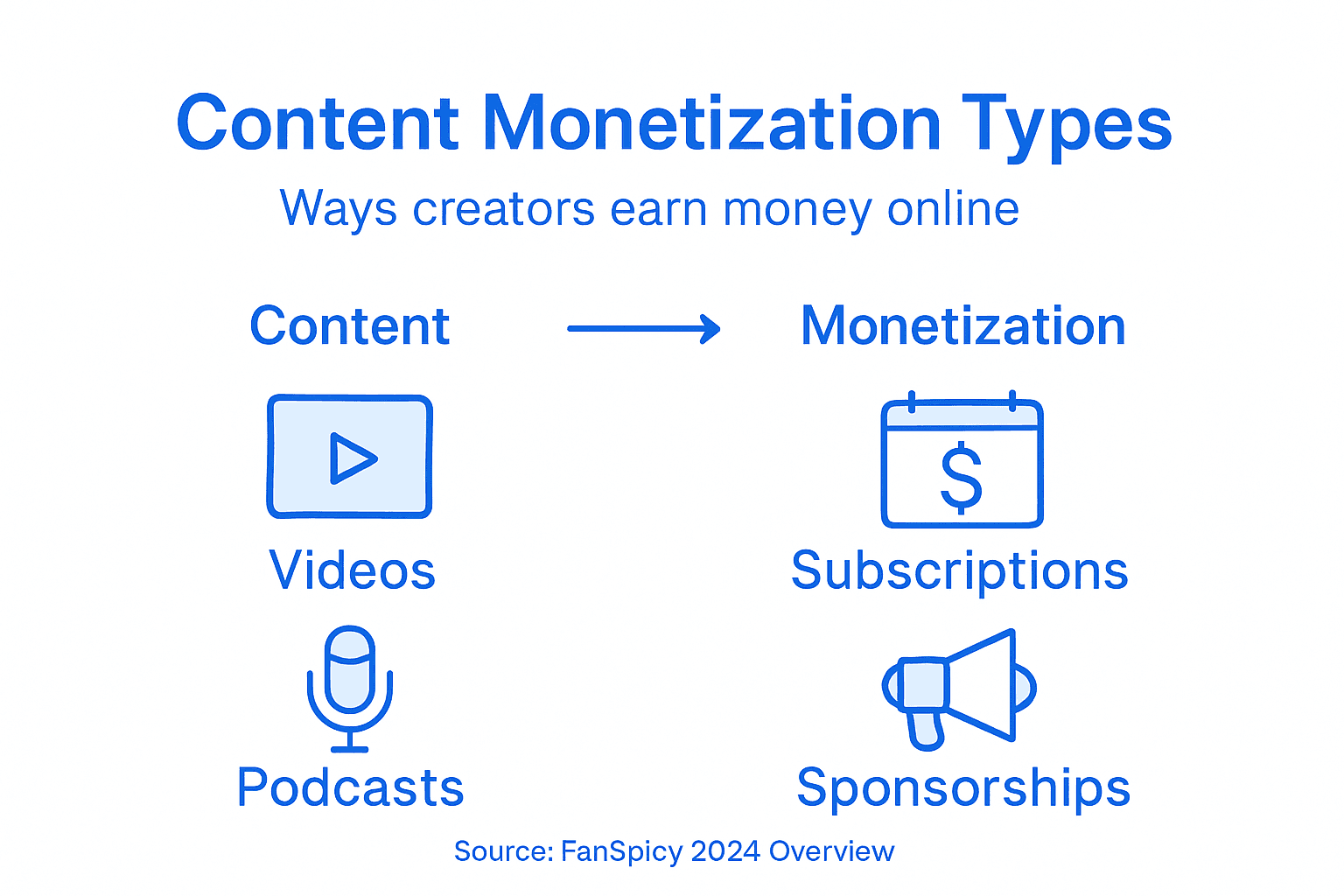
Hybrid monetization methods are transforming digital content economics, enabling creators to combine multiple revenue streams across platforms. The most successful creators diversify their income by matching content types with appropriate monetization strategies. This approach allows for flexibility, resilience, and the ability to adapt to changing audience preferences and platform dynamics.
Compare leading monetization strategies for creators by sustainability and time investment:
| Monetization Method | Income Sustainability | Time Investment |
|---|---|---|
| Abbonamenti | High, recurring | Medium, ongoing content |
| Sponsorships | Moderate, varies | High, brand partnerships |
| Audience Support | Unpredictable | Low to moderate, direct asks |
| Digital Product Sales | Potentially scalable | High upfront, less ongoing |
| Marketing di affiliazione | Variable, passive | Low, regular recommendations |
Pro tip: Create a revenue diversification plan that maps multiple monetization strategies across your different content types, ensuring no single income stream becomes your sole financial dependency.
Unlock Your Full Digital Content Potential with FanSpicy
Creators face challenges turning diverse digital content into sustainable income streams while engaging their audiences across formats like video audio and interactive experiences FanSpicy offers a dynamic live cam platform that serves as a powerful alternative to OnlyFans enabling you to monetize with more freedom and control This platform is designed to help you leverage subscription models sponsorships and direct audience support seamlessly so you can diversify your revenue effectively without the usual limitations
Discover how FanSpicy empowers you to build authentic connections and boost your monetization potential through personalized live streams and an engaged community Don’t settle for unpredictable income or restrictive platforms Start maximizing your earnings today by exploring everything FanSpicy has to offer at FanSpicy and take control of your creator journey now
Domande frequenti
What are the core types of digital content formats?
Creators use a variety of digital content formats, including text-based content (blog posts, articles), visual content (photographs, infographics), video content (tutorials, livestreams), audio content (podcasts, music), and interactive content (quizzes, games). Each format serves different audience engagement and monetization strategies.
How can creators monetize their digital content effectively?
Creatives can maximize monetization by utilizing strategies such as subscription models, sponsorship opportunities, direct audience support, digital product sales, and affiliate marketing. Combining multiple revenue streams is key to building sustainable income.
What are innovative engagement strategies for digital content creators?
Innovative engagement strategies include personalized content, real-time interaction through live streams, community challenges, collaborative content creation, and gamification elements to enhance audience participation and connection.
Why is understanding copyright important for digital creators?
Understanding copyright is crucial for protecting original works, ensuring compliance with digital platform guidelines, and safeguarding both creators’ and audience’s rights. This knowledge helps navigate complex legal frameworks surrounding intellectual property in the digital space.