
Table des matières
Struggling to maintain steady income when one platform changes the rules overnight is a common headache for creators. The need to protect your business and unlock new sources of revenue is more urgent than ever on sites like OnlyFans and Fansly. By mastering content platform diversification, you not only protect your brand from sudden shocks but also tap into new global audiences and income streams tailored to your strengths.
Table des matières
- Defining Content Platform Diversification
- Types of Platforms and Monetization Models
- How Diversification Expands Global Reach
- Reducing Risks With Multi-Platform Strategy
- Common Pitfalls When Expanding Platforms
Principaux enseignements
| Point | Details |
|---|---|
| Content Platform Diversification | Spreading your presence across multiple platforms minimizes risk and stabilizes income. Engage simultaneously with different audience segments to enhance reach. |
| Monetization Models | Utilize a mix of monetization strategies, such as subscriptions, advertising, and direct payments, to ensure diverse income streams. This approach protects against fluctuations from a single model. |
| Understanding Platforms | Each platform has unique rules and audience expectations; adapt your content rather than simply copy it across platforms. Invest time in mastering one platform before expanding. |
| Avoiding Common Pitfalls | Prevent burnout by focusing on 1-2 platforms initially. Research community norms and engage with audiences to increase success in each unique environment. |
Defining Content Platform Diversification
Content platform diversification means spreading your creator presence across multiple platforms rather than relying on a single one. Instead of putting all your energy into one site, you build a strategy that includes 2, 3, or even more platforms where your audience can find and support you. This isn’t about splitting your focus thin or creating entirely different content for each site. It’s about strategic placement.
Think of it like having multiple income streams. A creator earning 80% of revenue from one platform faces serious risk. When that platform changes its algorithm, payment structure, or content policies, your entire income fluctuates. Digital platforms function as drivers of innovation that reshape how creators distribute their value and reach audiences. Diversification protects you from these shifts.
Real diversification involves understanding how each platform works and what your audience expects there. Creators expand across multiple platforms by negotiating algorithmic demands and meeting stakeholder expectations on each one. Your content might be similar, but how you present it, how often you post, and which formats you prioritize changes based on the platform’s unique environment.
The practical difference between having a backup plan and true diversification matters. A backup platform sits dormant until you need it, generating zero income. True diversification means all your platforms are active, earning, and building audience relationships simultaneously. Some creators maintain a main platform where they focus 60% of effort, with secondary platforms at 25% and 15%. Others distribute more evenly.
When you build a stronger monetization strategy across platforms, you’re not just spreading risk. You’re accessing different audience segments, testing new content formats, and building redundancy into your creator business. Each platform has its own user base with different spending patterns, engagement styles, and content preferences.
Pro tip: Start with two platforms only, master both, then add a third once you have sustainable systems in place for content adaptation and posting schedules.
Types of Platforms and Monetization Models
Not all platforms work the same way, and that’s exactly why diversification matters. Each platform operates with different monetization structures, audience expectations, and earning potential. Understanding these differences lets you choose where to focus your energy and how to tailor your approach on each one.

Subscription-based platforms let your audience pay a recurring fee for exclusive content. These work like a membership where fans pay monthly to access behind-the-scenes material, custom videos, or premium posts. The beauty here is predictable income. You know roughly what you’ll earn each month because the payments are recurring. Fan-only platforms are built entirely around this model, making it straightforward to implement without competing against algorithms designed to prioritize advertising.
Advertising revenue platforms take a different approach. They generate money by showing ads to your viewers or readers, then splitting that revenue with you. Social media sites typically use this model. Your earnings depend on views, clicks, and engagement metrics. The downside is you have zero control over how much money flows in, and when platforms change their ad policies or audience demand drops, your income shifts immediately.
Direct creator monetization includes tipping, tips, and one-time payments where fans support you outside a subscription structure. Some creators also earn through various monetization strategies like sponsorships and brand collaborations. This gives you flexibility and multiple revenue streams from the same audience.
The smartest creators don’t rely on just one monetization model. They might earn 40% from subscriptions on one platform, 30% from direct payments on another, and 30% from sponsorships across both. This mixed approach protects you when a single income stream fluctuates. When you understand how each platform functions as a transactional space with unique earning mechanisms, you can strategically position yourself across multiple revenue sources.
Choosing platforms means aligning them with your content strength and audience preferences. A visual creator thrives on different platforms than a writer or podcaster. Your diversification strategy should match where your audience naturally congregates and how they prefer to support creators.
Here’s a quick comparison of major content platform monetization models:
| Modèle de monétisation | Typical Platforms | Stability of Income | Control Over Revenue |
|---|---|---|---|
| Sur abonnement | Patreon, OnlyFans | Predictable monthly income | High—your audience pays you |
| Advertising revenue | YouTube, Facebook | Fluctuates with ad demand | Low—platform controls rates |
| Direct payments/tips | Buy Me a Coffee, Ko-fi | Varies based on engagement | High—direct from supporters |
| Sponsorships/collabs | Instagram, TikTok | Project-based, less stable | Shared with brand partners |
Pro tip: Map out your current earning breakdown by platform and income type, then identify which platform or monetization method you’re neglecting, and test adding it to your routine this month.
How Diversification Expands Global Reach
One platform rarely reaches the entire world. Each has different user demographics, geographic concentrations, and preferred content types. When you diversify across multiple platforms, you’re not just copying your content to new spaces. You’re accessing entirely different audience segments in different countries, time zones, and cultural contexts.
Consider geographic distribution. A platform popular in North America might have minimal presence in Southeast Asia or Europe. By building on multiple platforms, you tap into regional audiences you’d never reach on a single site. Your subscriber base in one country might prefer video, while fans in another prefer written or audio content. Diversification lets you serve these preferences simultaneously.
Language barriers disappear when you think multi-platform. Some platforms have better translation features or stronger presences in non-English-speaking countries. You don’t need to speak 10 languages to reach global audiences. Strategic platform placement means your content naturally finds speakers of different languages where they already gather.
Diversification strategies help creators overcome engagement challenges across multicultural audiences by allowing you to produce novel content variations that resonate with different cultural preferences. When you test what works on Platform A versus Platform B, you discover which content styles and themes connect best with different groups.
Strategic diversification across platforms extends your reach to broader and more diverse audiences, which directly translates to longer platform longevity and stronger growth. A creator earning from five platforms in five countries has far less vulnerability than one earning from a single location’s favorite site.
Global reach also means global income. Different countries have different spending power and payment systems. Some regions have higher disposable income for fan support. Others have lower costs but higher user volume. Spreading across platforms lets you benefit from multiple economic markets simultaneously, stabilizing your overall earnings regardless of economic changes in any single region.
Pro tip: Research where your current audience is located, identify one platform with strong presence in a geography where you’re underrepresented, and launch there within 30 days.
Reducing Risks With Multi-Platform Strategy
Put all your eggs in one basket and you’re vulnerable. A single algorithm change, policy update, or platform decline can devastate your income overnight. Multi-platform strategies exist specifically to protect you from these scenarios. When you’re present across multiple platforms, no single change affects your entire business.
Algorithm volatility is real. Platforms constantly tweak how content gets distributed, which posts gain visibility, and how much creators earn. One day your content reaches millions. Next month, the algorithm shifts and your reach drops by 60%. This happens frequently. Creators on single platforms experience these swings helplessly. With multiple platforms, you weather these shifts because other platforms compensate for the one platform’s downturn.
Multi-platform strategies reduce dependency risks and algorithm volatility, which directly stabilizes your income and audience engagement. Your earnings don’t spike and crash unpredictably. Instead, they stabilize across multiple revenue sources that don’t all respond to the same algorithm changes simultaneously.
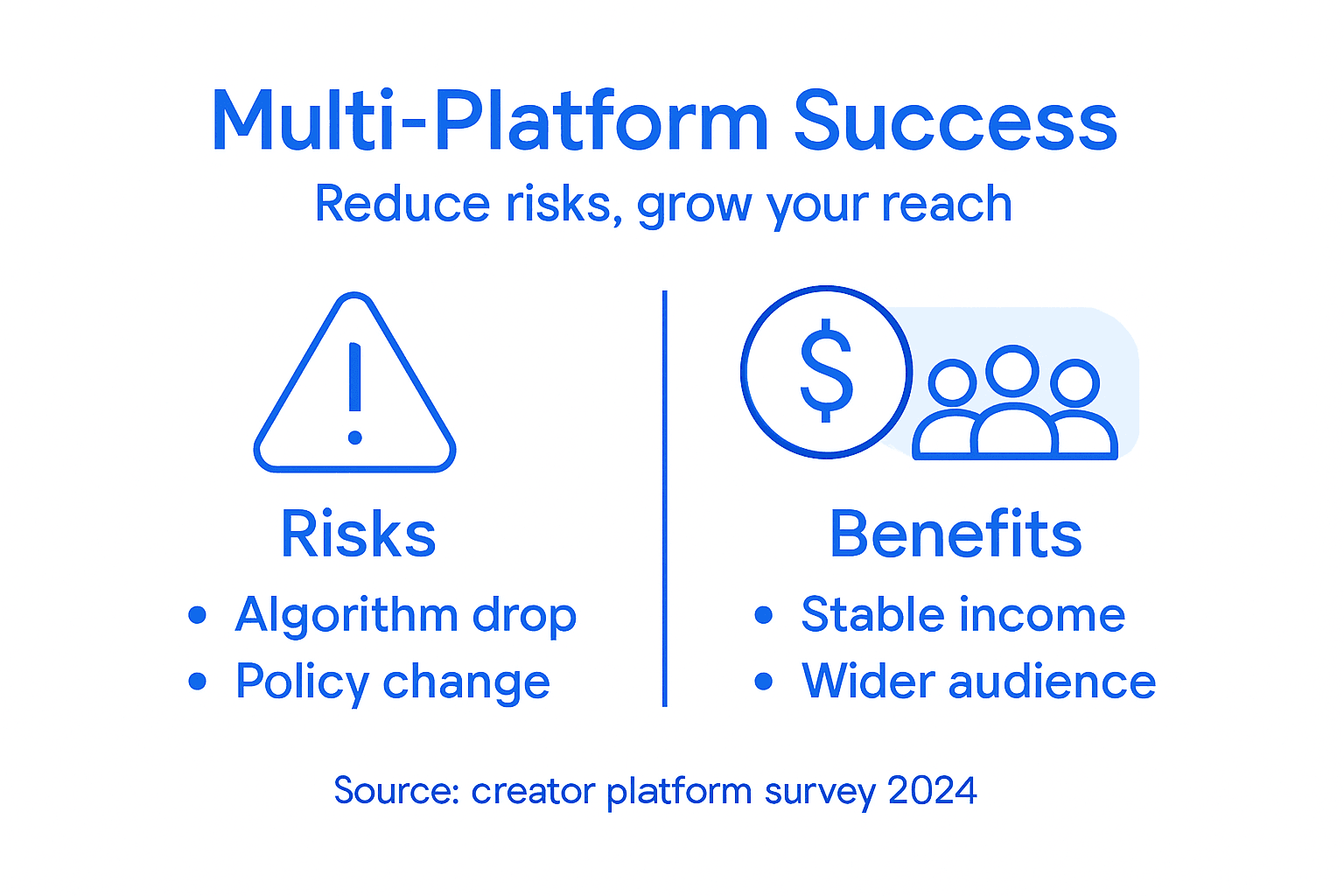
Policy changes pose another serious risk. A platform might suddenly restrict content types, change monetization rules, or modify payment structures. Creators dependent on that single platform have no alternatives. They either adapt to new rules or lose their income. Multi-platform creators simply continue earning elsewhere while adjusting to new requirements on the affected platform.
Transnational creators employ multi-platform strategies to mitigate risks from visibility changes and algorithmic shifts by developing cross-platform sensitivity. This means understanding how each platform works differently and adapting your content accordingly. You’re not just copying posts. You’re building a resilient system where platform-specific volatility doesn’t threaten your entire income.
Audience loyalty also matters. When you’re only on one platform, your audience is trapped there too. If that platform declines or shuts down, you lose contact with everyone. Multiple platforms give your audience choices and give you redundancy. They can follow you elsewhere if their preferred platform fails.
Pro tip: Identify your top revenue-generating platform, then build one secondary platform to 30 percent of that revenue within 90 days, creating real income backup.
Common Pitfalls When Expanding Platforms
Expanding to new platforms sounds simple. Launch your content on Platform B, repeat what worked on Platform A, and watch earnings grow. Reality is messier. Most creators make predictable mistakes that drain time, dilute their brand, or tank their earnings when expanding platforms.
The biggest mistake is spreading yourself too thin. Creators launch on five platforms simultaneously, trying to maintain the same posting schedule on each one. They burn out within weeks. Content quality drops. Engagement suffers. Earnings plummet. You can’t sustain high-quality content across unlimited platforms while working a second job or managing life. Start with your strongest platform, then add one new platform at a time once you have systems in place.
Copying content without adaptation is another common trap. What thrives on video-focused Platform A might flop on text-focused Platform B. Audiences have different expectations. Posting frequencies differ. Acceptable content lengths vary. Platform expansion brings challenges like algorithmic opacity and adapting to diverse platform cultures that demand thoughtful content modification, not simple copying.
Many creators also underestimate the learning curve. Each platform has unique features, payment structures, and audience behaviors. You need time to understand how each one actually works before expecting results. Jumping between platforms without mastering any of them leaves you frustrated and underpowered.
Platform dependency and loss of content distribution control present serious risks when expanding without understanding each platform’s rules and culture. You might invest months building an audience on a new platform, only to discover your content violates policies you didn’t read carefully.
Another pitfall is ignoring platform culture. Communities have norms, unwritten rules, and content styles they expect. Enter a platform trying to replicate success from elsewhere without respecting local culture and your content gets ignored or flagged. Spend time observing communities before launching aggressively.
Below is a summary of common pitfalls and effective solutions when expanding to new platforms:
| Expansion Pitfall | Why It Happens | How to Overcome It |
|---|---|---|
| Spreading too thin | Launching on many platforms | Start with 1–2, add slowly |
| Ignoring platform norms | Not researching community | Observe, engage, then post |
| Copy-pasting content | Not adapting for format | Tailor content by platform |
| Underestimating learning | Not studying platform rules | Dedicate time to research |
Pro tip: Before launching on a new platform, spend two weeks consuming content as a regular user, noting top creators, posting patterns, and audience preferences specific to that community.
Strengthen Your Creator Journey With Platform Diversification
The challenge creators face today is clear risk from relying on a single platform for income and audience engagement. As highlighted in the article “Why Diversify Content Platforms Creator Success” building a multi-platform presence is essential to safeguard your earnings against algorithm changes policy updates and shifting audience preferences. You need a solution that not only offers diverse monetization models but also supports your unique content style across subscription direct payments and live interactions.
Discover how Fanspicy stands out as an effective alternative combining paid social media features a live cam platform and an OnlyFans alternative all in one place. With Fanspicy you tap into new audience segments unlock flexible revenue streams and reduce platform dependency risks. Take control of your creator business and expand globally by joining a community that values diversified success. Visit Piquant pour les fans now and start building your resilient multi-platform foundation today.
Questions fréquemment posées
What is content platform diversification?
Content platform diversification involves spreading your creator presence across multiple platforms instead of relying on a single one. This strategy helps to protect income and audience reach by utilizing different platforms where audiences can find and support you.
Why is it important to diversify content platforms as a creator?
Diversifying content platforms is essential because it reduces the risk associated with algorithm changes, policy updates, or platform declines. By being active on multiple platforms, creators can ensure that income remains stable and reach broader audience segments.
How can I effectively diversify my content creation strategy?
Start with two platforms that align with your strengths and audience preferences. Master both before adding a third platform to ensure you have sustainable systems in place for content adaptation and posting schedules.
What are common mistakes to avoid when expanding to new platforms?
Common mistakes include spreading yourself too thin by launching on multiple platforms at once, copying content without adapting it to each platform’s unique culture and format, and underestimating the learning curve associated with new platforms.