

Table des matières
Standing out on paid platforms like OnlyFans and Fansly can feel overwhelming when every creator shares so much content. Branding goes far beyond logos or color schemes; it shapes how your audience connects with you and determines the lasting impact of your work. Rooted in complex psychological and cultural dynamics, strategic identity creation is now essential for creators seeking better income and loyal subscribers. This guide uncovers how branding transforms your digital presence and helps you build recognition, trust, and financial success.
Table des matières
- Defining Branding For Paid Platforms
- Types Of Branding Creators Use
- How Branding Drives Performance And Income
- Common Branding Mistakes And Pitfalls
- Legal And Platform-Specific Branding Rules
Principaux enseignements
| Point | Details |
|---|---|
| Branding is Essential | Effective branding on paid platforms drives audience recognition, loyalty, and financial success. |
| Types of Branding | Creators should choose a branding approach that aligns with their strengths, such as personal, expert, influencer, or maker branding. |
| Branding Mistakes | Common errors like inconsistent messaging and neglecting audience feedback can undermine a creator’s success. |
| Conformité juridique | Understanding platform policies and legal requirements is critical for maintaining ethical standards and avoiding penalties. |
Defining Branding for Paid Platforms
Creator branding on paid platforms represents far more than a simple visual aesthetic. It’s a strategic approach to constructing a distinctive digital identity that resonates with your specific audience. Complex psychological dimensions now drive successful personal branding, transforming how creators connect and monetize their unique personas.
Branding in these digital ecosystems involves multiple critical components:
- Visual Identity: Consistent color schemes, logos, and design elements
- Content Positioning: Unique value proposition and messaging style
- Engagement du public: Strategic interaction and community building
- Emotional Connection: Developing authentic relationships with followers
The fundamental goal of branding on paid platforms is differentiation. Your brand must transcend basic content production, becoming a recognizable experience that audiences actively seek and value. Psychological attachment becomes as important as the content itself, creating loyal supporters who are invested in your personal narrative.
Understanding branding requires recognizing its strategic digital development as an iterative process. Successful creators continuously refine their brand based on audience feedback, platform dynamics, and evolving personal objectives.
Pro tip: Treat your creator brand like a living, breathing entity that requires consistent nurturing and strategic adaptation.
Types of Branding Creators Use
Creators have developed sophisticated approaches to personal branding that extend far beyond simple content production. Diverse branding strategies now enable content producers to differentiate themselves and connect more meaningfully with their specific audience segments.
Three primary types of creator branding emerge in the digital landscape:
- Personal Branding: Emphasizing individual personality and unique life experiences
- Expert Branding: Positioning oneself as an authoritative source in a specific niche
- Influencer Branding: Leveraging popularity and social credibility
- Maker Branding: Showcasing specialized skills and craft-based content
Each branding approach demands unique strategic considerations. Personal branders focus on authenticity and storytelling, while expert creators build credibility through deep knowledge demonstration. Influencer brands rely heavily on charisma and relatability, creating parasocial relationships that drive audience engagement.

Here’s a quick comparison of branding types and their optimal use cases for creators:
| Branding Type | Meilleur pour | Main Focus |
|---|---|---|
| Personal Branding | Building deep loyalty | Storytelling & persona |
| Expert Branding | Niche credibility seekers | Authority & knowledge |
| Influencer Branding | Rapid audience expansion | Charisma & relatability |
| Maker Branding | Showcasing skills | Craft & expertise |
Content creator categories reveal that successful monetization depends on selecting a branding strategy aligned with your inherent strengths and audience expectations. The most effective creators understand their unique positioning and consistently communicate their distinct value proposition across multiple platforms.
Pro tip: Select a branding approach that authentically reflects your personality and skills, not just what seems trendy at the moment.
How Branding Drives Performance and Income
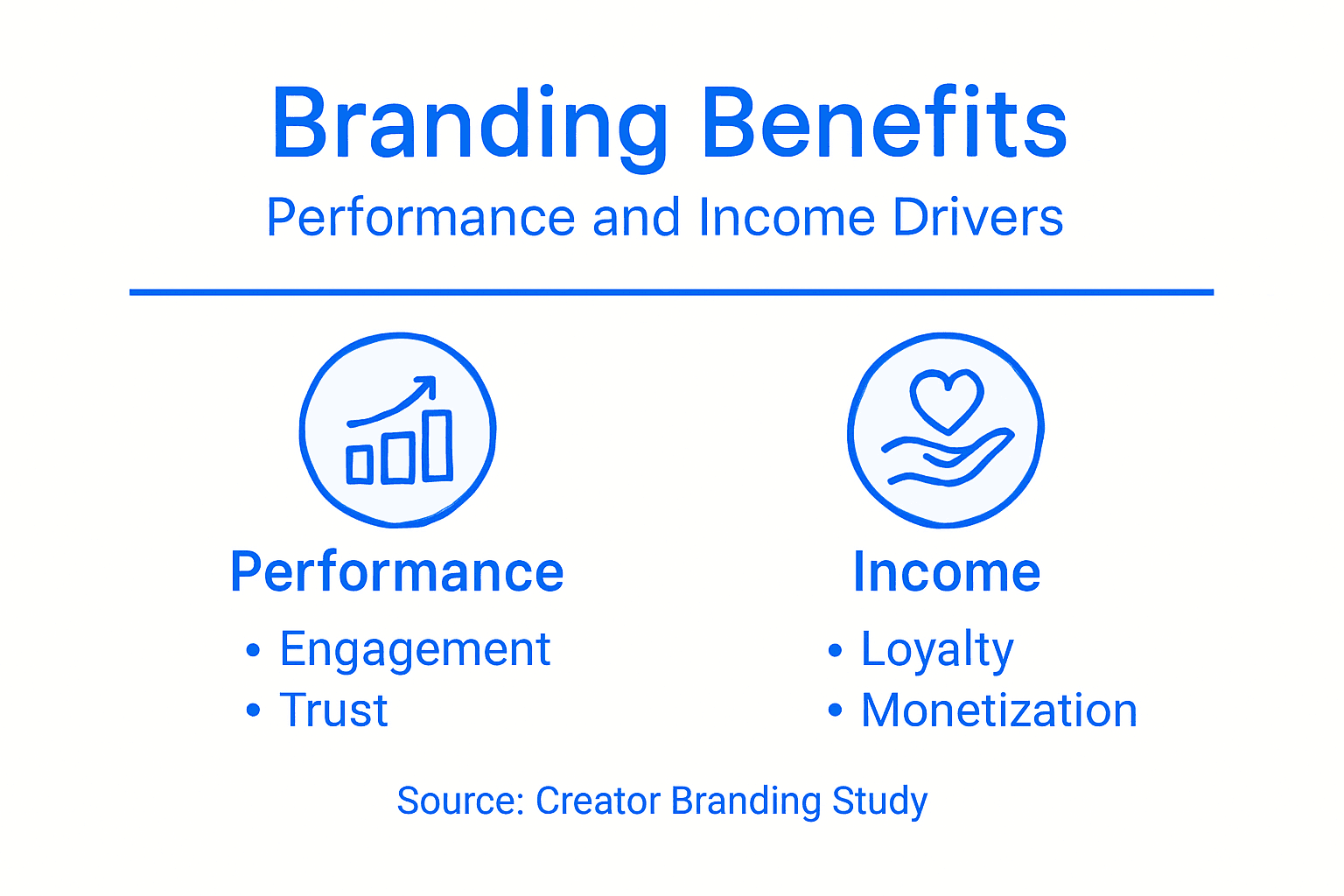
In the competitive landscape of paid creator platforms, branding is not just a marketing tool – it’s a direct pathway to financial success. Brand orientation dramatically influences creator income by establishing trust, differentiation, and audience loyalty.
Key performance drivers through strategic branding include:
- Audience Recognition: Creating a memorable visual and narrative identity
- Monetization Potential: Increasing subscriber willingness to pay premium rates
- Engagement Metrics: Boosting interaction and content consumption
- Retention Rates: Building long-term audience relationships
Successful creators understand that branding transcends aesthetic appeal. It’s a comprehensive strategy that communicates value, builds emotional connections, and positions the creator as a unique offering in a crowded marketplace. Authentic personal branding becomes a creator’s most powerful economic asset.
Branding strategies demonstrate measurable financial returns by transforming audience perception from passive consumers to active supporters. Creators who invest time in developing a distinctive brand voice and consistent messaging can significantly increase their earning potential across multiple platforms.
This summary highlights how strong branding directly supports creator business growth:
| Branding Outcome | Business Benefit | Performance Indicator |
|---|---|---|
| Trust & Recognition | Increases paid subscriptions | Taux de croissance du nombre d'abonnés |
| Audience Loyalty | Boosts retention and referrals | Monthly recurring revenue |
| Differentiation | Raises perceived content value | Rate of premium conversions |
| Emotional Engagement | Drives engagement and purchases | Repeat transaction frequency |
Pro tip: Track your audience engagement metrics to continuously refine and align your branding strategy with what resonates most with your followers.
Common Branding Mistakes and Pitfalls
Creators often sabotage their success through critical branding strategy errors that undermine their potential on paid platforms. These mistakes can dramatically reduce audience engagement and income potential, transforming promising careers into struggling ventures.
Most prevalent branding mistakes include:
- Inconsistent Messaging: Sending mixed signals about personal brand identity
- Neglecting Audience Feedback: Failing to adapt content to follower preferences
- Inauthentic Representation: Creating a persona that doesn’t reflect true personality
- Overcomplicating Brand Identity: Developing complex, difficult-to-understand personal brands
Brand dilution occurs when creators lose focus and attempt to appeal to everyone, ultimately connecting with no one. Successful creators understand that a sharp, targeted brand speaks more powerfully than a generic, unfocused approach. They maintain a consistent narrative that resonates deeply with their specific audience segment.
Branding challenges impact performance significantly when creators ignore cultural nuances and fail to continuously evaluate their brand’s effectiveness. Platforms reward creators who demonstrate strategic thinking and authentic audience connection.
Pro tip: Conduct monthly brand audits by analyzing your audience engagement metrics and soliciting direct feedback to ensure your personal brand remains dynamic and relevant.
Legal and Platform-Specific Branding Rules
Creators must navigate a complex landscape of platform policies and legal frameworks that govern digital content creation and monetization. These regulations are designed to protect consumers, ensure transparency, and maintain ethical standards across paid platforms worldwide.
Key legal considerations for creators include:
- Content Disclosure: Mandatory transparency about sponsored or branded content
- Intellectual Property Rights: Protecting original work and understanding usage limitations
- Vérification de l'âge: Compliance with platform-specific age and content restrictions
- Revenue Reporting: Accurate financial declarations and tax implications
Regulatory compliance becomes critical as platforms increasingly adopt stringent guidelines. Different platforms have unique rules that creators must master, ranging from content tagging to explicit advertising disclosures. Failing to understand these nuanced requirements can result in account suspension or financial penalties.
Digital content laws shape creator responsibilities by establishing clear expectations for transparency, consumer protection, and ethical content production. European and American jurisdictions particularly emphasize creator accountability in digital marketplaces.
Pro tip: Regularly review platform terms of service and consult legal resources to stay updated on evolving digital content regulations.
Elevate Your Creator Brand With Fanspicy
Building a memorable and authentic personal brand on paid platforms can feel overwhelming with the need for consistent messaging and emotional connections. If you are struggling with branding challenges like audience trust or content differentiation, Fanspicy offers a live cam and paid social media alternative designed to amplify your unique creator identity and maximize your income potential. Our platform supports creators in nurturing genuine audience relationships while providing clear tools to enhance engagement and retention.
Take control of your branding journey now by joining Piquant pour les fans. Explore new ways to build loyalty, grow your subscriber base, and monetize your craft with a community that values authentic connection. Don’t wait to transform your personal brand into a thriving business. Visit Fanspicy to start your success story today.
Questions fréquemment posées
What are the key components of branding on paid platforms?
Branding on paid platforms consists of visual identity, content positioning, audience engagement, and emotional connection, all aimed at differentiating a creator’s digital presence.
How does branding influence a creator’s financial success?
Branding establishes trust and audience loyalty, increases monetization potential, boosts engagement metrics, and enhances retention rates, all of which contribute to financial growth for creators.
What common mistakes should creators avoid when branding?
Creators should avoid inconsistent messaging, neglecting audience feedback, inauthentic representation, and overcomplicating their brand identity, as these mistakes can undermine audience engagement and income potential.
How can creators ensure compliance with platform-specific branding rules?
Creators should regularly review platform terms of service, understand content disclosure requirements, protect their intellectual property, and stay updated on evolving digital content regulations to ensure compliance.