

Table des matières
Trying to juggle creative freedom, platform rules, and fair payment is a daily challenge for content creators across popular live cam platforms. Without a solid understanding of content licensing, performers risk losing both income opportunities and control over their original work. This guide sheds light on how licensing agreements truly work, which terms matter most, and how making informed choices can help you seize new earning potential while keeping your intellectual property secure.
Table des matières
- Content Licensing Defined For Creators
- Major Types Of Content Licensing Agreements
- How Licensing Works On Live Cam Platforms
- Legal Rights And Intellectual Property Basics
- Common Licensing Pitfalls And How To Avoid Them
Principaux enseignements
| Point | Details |
|---|---|
| Understand Licensing Types | Familiarize yourself with the different licensing agreements, including exclusive, non-exclusive, and perpetual licenses, to make informed monetization choices. |
| Negotiate Terms Carefully | Pay close attention to licensing terms such as usage duration, geographic limits, and compensation structures to protect your rights. |
| Consult Legal Experts | Always engage an intellectual property attorney to ensure that your licensing agreements are comprehensive and safeguard your interests. |
| Avoid Common Pitfalls | Implement systematic management strategies to prevent vague contract language and ensure proper documentation and compliance monitoring. |
Content Licensing Defined for Creators
Content licensing is a strategic legal mechanism that allows creators to generate revenue by legally permitting content usage while retaining core ownership rights. At its core, content licensing enables creators to authorize third parties to republish, distribute, or repurpose their original material through structured copyright agreements.
Creators have multiple licensing options that determine how their content can be used and monetized. These primary license types include:
- Exclusive Licenses: Grant usage rights to a single entity, typically commanding higher fees
- Non-Exclusive Licenses: Allow multiple parties to utilize the content simultaneously
- Sole Licenses: Permit the creator and one specific licensee to use the content
When negotiating content licenses, creators must carefully consider several critical factors to protect their intellectual property and maximize potential earnings. Specific licensing terms regarding usage should explicitly outline:
- Duration of content usage
- Geographic distribution limits
- Permitted content modifications
- Compensation structure
- Ownership retention clauses
Successful content licensing requires creators to develop clear, comprehensive agreements that balance financial opportunities with robust intellectual property protections. By understanding different licensing models and strategically negotiating terms, creators can transform their original work into sustainable revenue streams.
Pro tip: Always consult an intellectual property attorney to review licensing agreements and ensure your rights are comprehensively protected before signing any contracts.
Major Types of Content Licensing Agreements
Content licensing agreements represent sophisticated legal frameworks that define content usage rights for creators and potential licensees. These agreements provide structured mechanisms for content distribution while protecting the creator’s intellectual property and potential revenue streams.
The primary types of content licensing agreements include:
- Exclusive Licenses: Provide sole usage rights to a single entity
- Non-Exclusive Licenses: Allow multiple parties to use the content
- Perpetual Licenses: Grant indefinite content usage rights
- Limited Licenses: Impose specific restrictions on content use
- Creative Commons Licenses: Offer standardized, flexible usage terms
Content licensing models vary significantly in their complexity and scope. Exclusive licenses typically command higher fees since they prevent creators from licensing the same content to other parties. Non-exclusive licenses provide more flexibility, enabling creators to monetize their work across multiple platforms simultaneously.

Understanding the nuanced differences between licensing types is crucial for creators seeking to maximize their content’s financial potential. Each agreement type offers unique advantages:
Here’s a comparison of major content license types and their business implications:
| License Type | Usage Flexibility | Typical Revenue Impact | Long-term Control for Creator |
|---|---|---|---|
| Exclusive | One licensee only | Highest single payment | Limited during license term |
| Non-Exclusive | Multiple simultaneous licensees | Multiple moderate earnings | Strong creator control |
| Perpetual | Unlimited duration for licensee | Upfront or recurring payments | Minimal, often transferred |
| Limitée | Specific restrictions apply | Variable, tied to limitations | Substantial, due to limits |
| Creative Commons | Public or conditional use | Usually low or no direct revenue | Maximal if terms chosen well |
- Exclusive licenses ensure dedicated revenue from a single source
- Non-exclusive licenses create multiple income opportunities
- Perpetual licenses provide long-term monetization potential
- Limited licenses offer controlled, specific content usage
Pro tip: Always thoroughly review and negotiate the specific terms of each licensing agreement, paying close attention to duration, geographical restrictions, and potential revenue sharing structures.
How Licensing Works on Live Cam Platforms
Licensing mechanisms on live cam platforms fundamentally protect both creators and platforms through comprehensive terms of service agreements. These legal frameworks establish critical boundaries for content creation, distribution, and monetization while ensuring performer autonomy and platform sustainability.
Key components of live cam platform licensing include:
- Propriété du contenu: Creators retain primary rights to their original content
- Performance Restrictions: Platforms define acceptable performance parameters
- Partage des recettes: Established percentage-based compensation models
- Intellectual Property Protection: Mechanisms preventing unauthorized content reproduction
- User Interaction Guidelines: Rules governing performer-audience engagement
Live cam platforms typically implement complex licensing structures that balance creator freedom with platform standards. These agreements often specify:
- Acceptable content categories
- Performance conduct expectations
- Revenue distribution percentages
- Geographical usage restrictions
- Duration of content availability
The licensing model creates a mutually beneficial ecosystem where creators can monetize their performances while platforms maintain professional standards and legal compliance. By establishing clear guidelines, these agreements protect both performers’ creative expressions and platforms’ operational integrity.
Pro tip: Carefully read and understand your platform’s entire terms of service, paying special attention to licensing clauses that define your content rights and potential revenue streams.
Legal Rights and Intellectual Property Basics
Global intellectual property frameworks provide creators with critical legal mechanisms to protect their original works and control content distribution. These legal protections encompass multiple categories of rights that safeguard creative output across various digital platforms.
The primary types of intellectual property rights for content creators include:
- Droit d'auteur: Protects original creative works
- Trademark: Safeguards unique brand identifiers
- Trade Secrets: Preserves confidential business information
- Performer’s Rights: Defends artists’ performance-related interests
- Digital Rights: Manages online content usage and reproduction
Understanding intellectual property involves recognizing the different legal protections available to creators. These rights enable individuals to:
- Control content distribution
- Prevent unauthorized usage
- Generate revenue through licensing
- Maintain creative ownership
- Challenge potential infringements
The international legal landscape of intellectual property is complex, with various treaties and regulations designed to protect creators’ interests while balancing public access to information. Creators must proactively understand and assert their rights to effectively monetize and protect their intellectual assets.
Pro tip: Document and timestamp all original content creation to establish a clear legal record of your intellectual property ownership.
Common Licensing Pitfalls and How to Avoid Them
License compliance risks can seriously undermine creators’ financial and legal protections if not carefully managed. Understanding and anticipating potential licensing challenges is crucial for protecting intellectual property and maintaining professional reputation.
The most common licensing pitfalls for content creators include:
- Vague Contract Language: Ambiguous terms that create legal vulnerability
- Incomplete Usage Rights: Failing to specify precise content distribution parameters
- Inadequate Record Keeping: Poor documentation of licensing agreements
- Overlooking Territorial Restrictions: Ignoring geographical usage limitations
- Neglecting Compliance Monitoring: Lack of systematic license tracking
Preventing these pitfalls requires a systematic approach to content licensing management:
- Conduct thorough contract reviews
- Define precise licensing scopes
- Maintain detailed usage documentation
- Implement regular compliance audits
- Seek legal consultation for complex agreements
Creators must proactively protect their intellectual property by developing comprehensive licensing strategies. This involves understanding contract nuances, maintaining meticulous records, and staying informed about potential legal risks associated with content distribution.
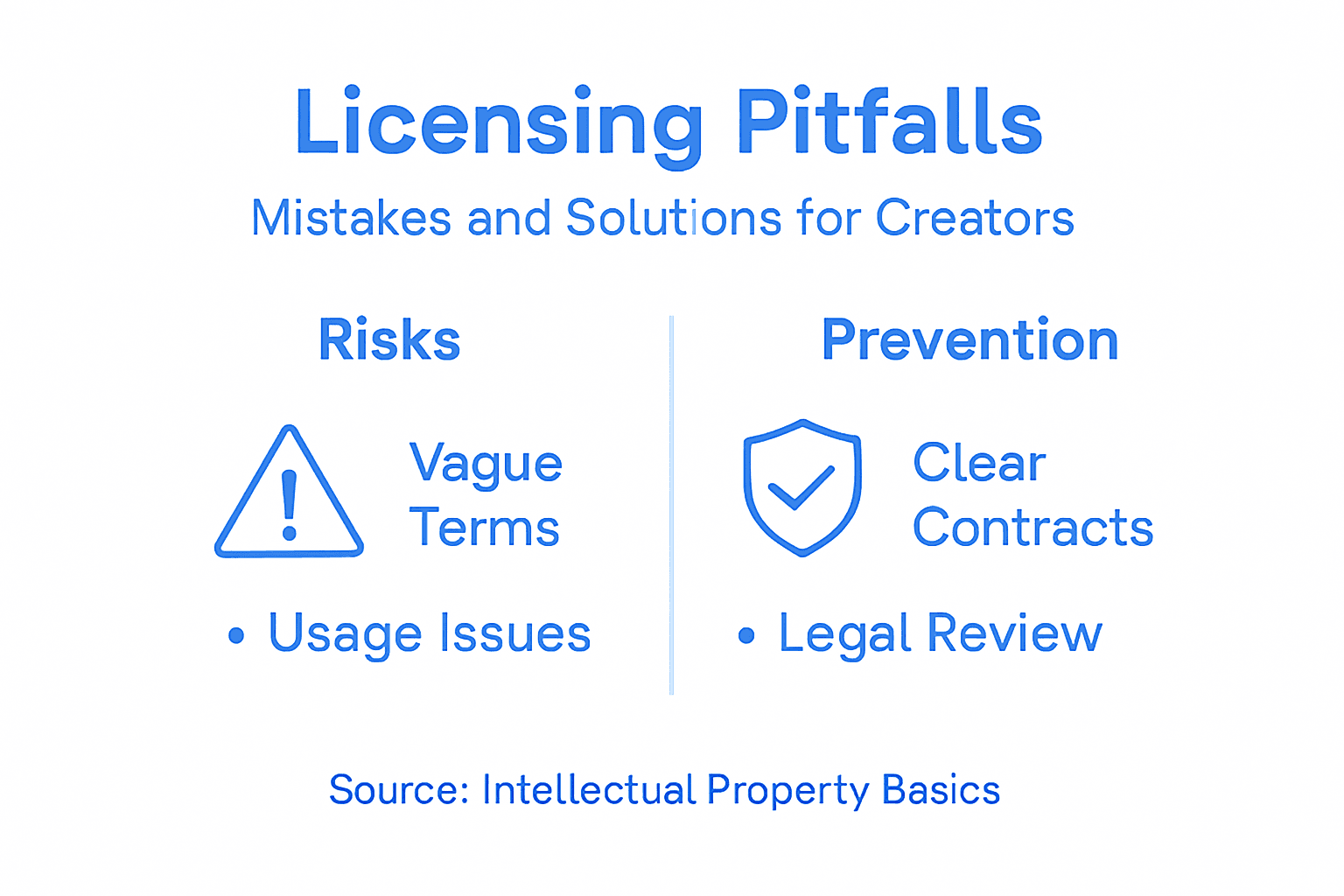
To help avoid common pitfalls, here’s a quick reference for effective licensing management:
| Risk Area | Example Problem | Prevention Strategy |
|---|---|---|
| Contract Clarity | Vague language | Use precise, detailed terms |
| Territorial Coverage | Unclear geographic scope | Specify all allowed regions |
| Record Keeping | Missing agreement documentation | Maintain organized, accessible records |
| Compliance Monitoring | Overlooked rights violations | Conduct regular license audits |
Pro tip: Create a standardized template for tracking licensing agreements, including key details like usage rights, duration, compensation, and renewal terms.
Secure Your Content Rights and Maximize Earnings with FanSpicy
Content licensing challenges such as vague agreement terms, unclear usage rights, and licensing compliance risks can put your hard-earned creative work and revenue in jeopardy. The article highlights the importance of protecting your intellectual property while navigating complex licensing models and revenue sharing structures. If you want a platform that understands these pain points and empowers you to maintain ownership and control, look no further.
Experience a live cam platform designed for creators just like you where content ownership remains yours and revenue sharing is transparent. FanSpicy offers robust protections alongside flexible monetization options so you can confidently license your content and grow your income. Don’t leave your earnings to chance. Visit FanSpicy now and take control of your creative rights. Learn more about how our platform supports licensing and performer autonomy here. Start protecting your content the smart way and maximize your returns today.
Questions fréquemment posées
What is content licensing?
Content licensing is a legal mechanism that allows creators to authorize third parties to use their original material while retaining ownership rights. It enables creators to monetize their content through structured agreements.
What are the main types of content licenses?
The main types of content licenses include exclusive licenses, non-exclusive licenses, sole licenses, perpetual licenses, limited licenses, and Creative Commons licenses. Each type varies in terms of usage rights and compensation structures.
How can creators protect their intellectual property when licensing content?
Creators can protect their intellectual property by negotiating comprehensive licensing agreements that clearly outline usage rights, restrictions, compensation, and ownership retention clauses. Consulting an intellectual property attorney is also recommended for legal protection.
What common pitfalls should creators avoid in content licensing?
Common pitfalls include vague contract language, incomplete usage rights, inadequate record keeping, overlooking territorial restrictions, and neglecting compliance monitoring. Creators should conduct thorough reviews and maintain detailed documentation to mitigate these risks.