

جدول المحتويات
TL;DR:
- A step-by-step monetization guide helps content creators build multiple income streams through a planned sequence.
- Meeting platform thresholds and setting up essential accounts are necessary prerequisites before applying for monetization programs.
- Creators should layer passive, active, and premium income sources to diversify risk and maximize revenue stability.
A step-by-step monetization guide is a structured framework that helps content creators build multiple income streams from their online platforms in a deliberate, repeatable sequence. The best creators do not stumble into revenue. They follow a proven progression: establish eligibility, activate ad revenue, layer in affiliate income, then move to premium products and memberships. This guide covers every stage of that progression, from account setup to scaling beyond platform dependence. Whether you want to know how to monetize your videos or how to monetize content across social channels, the roadmap below applies directly.
What prerequisites do creators need before monetizing?
Monetization requires meeting specific platform thresholds before any revenue flows. YouTube’s standard entry point is 1,000 subscribers and 4,000 watch hours in the last 12 months. An expanded early access tier exists at 500 subscribers, 3 public uploads in 90 days, and 3,000 watch hours. These numbers are not suggestions. They are hard gates.
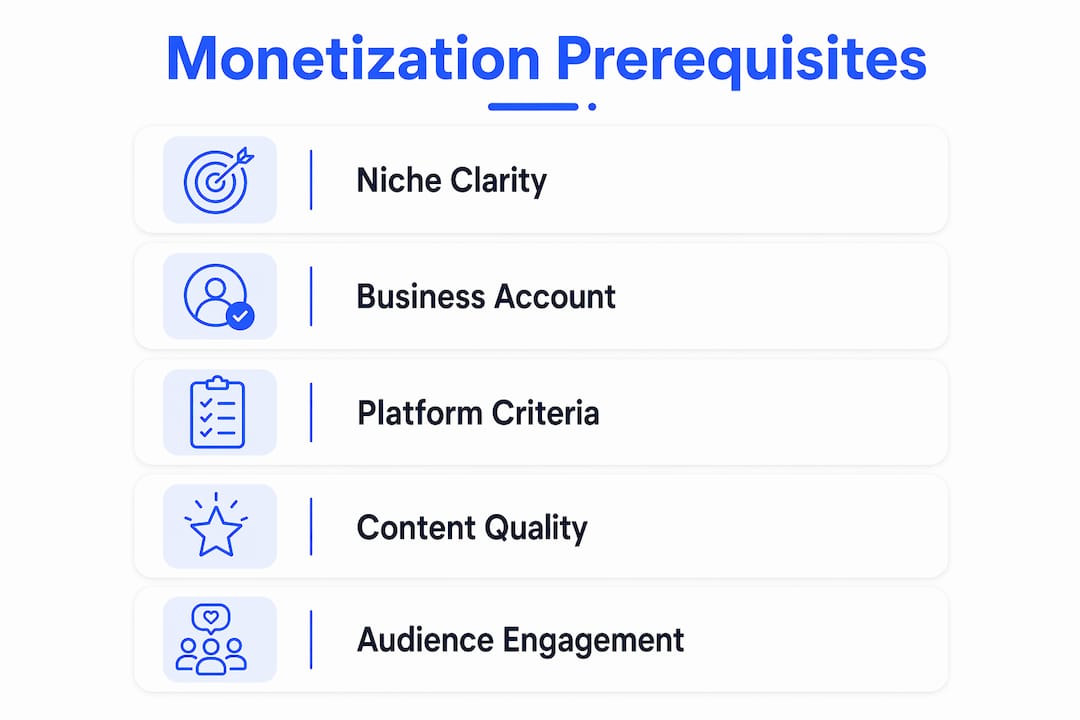
Beyond subscriber counts, you need three foundational accounts in place before applying to any partner program.
- Google AdSense account: Required for YouTube ad revenue payouts. Set it up at adsense.google.com and link it to your channel before applying.
- Payment processor: PayPal, Stripe, or a direct bank connection handles payouts from affiliate networks, platforms like Fanspicy, and brand deals.
- Analytics access: YouTube Studio, Google Analytics, or platform-native dashboards give you the data you need to prove audience quality to sponsors.
Niche clarity matters more than most creators expect. Finance, technology, and business channels consistently command higher RPM than general entertainment. That means a focused channel with 10,000 subscribers in a high-value niche can outperform a general channel with 100,000. Picking your niche before you monetize is not optional. It determines your ceiling.
نصيحة محترف: Set up a dedicated business bank account before your first monetization dollar arrives. Mixing personal and business finances is one of the most common mistakes creators make, and it creates serious tax headaches later.
Step by step monetization: activating your first income streams
The monetization process follows a clear sequence. Skipping steps wastes time and often disqualifies you from programs you could have entered earlier.
- Apply to your platform’s partner program. On YouTube, go to YouTube Studio, click “Earn,” review the terms, and link your AdSense account. The application is not automatic even after you hit the thresholds. YouTube reviews your channel manually, which takes up to 30 days.
- Enable ad placements on existing content. Once approved, turn on ads for your back catalog, not just new uploads. This activates passive revenue on content you have already created.
- Join affiliate programs relevant to your niche. Affiliate marketing is the lowest-cost entry point for creators who have not yet hit partner program thresholds. Amazon Associates, ShareASale, and niche-specific programs all pay commissions when your audience buys through your links.
- Pitch your first brand sponsorship. Once you have 90 days of analytics data, you have proof of audience behavior. Use that data in a one-page media kit and approach brands directly. Sponsored content typically pays more per video than ad revenue alone.
- Activate channel memberships or fan subscriptions. Platforms that support recurring memberships give creators approximately 70% of membership revenue after fees and taxes. Membership tiers typically range from $4.99 to $49.99 per month, with perks like exclusive content, early access, or direct messaging.
- Create and sell a digital product. An ebook, preset pack, template library, or short course requires no ongoing fulfillment. Price it between $19 and $97 for the best conversion rate at early audience sizes.
The execution timeline for steps 1 through 3 is roughly 60–90 days for a creator starting from scratch. Steps 4 through 6 layer in over the following six months as your analytics data matures and your audience trust deepens.
- Publish consistently during the application review period. Inactive channels get rejected.
- Disclose affiliate links in every piece of content. The FTC requires it, and audiences respect transparency.
- Start memberships with two tiers maximum. Complexity kills conversion at early stages.
How do you diversify and stack monetization strategies?
The most resilient creators treat their income like a portfolio. Monetization works best as a stack of multiple income streams rather than dependence on one method. A single algorithm change or policy update can cut ad revenue overnight. A stacked model absorbs that shock.
The tiered structure works as follows. Passive income sits at the base: ad revenue and affiliate commissions run with minimal ongoing effort. Active income sits in the middle: sponsorships and consulting require your time but pay significantly more per hour. Premium income sits at the top: courses, communities, and subscription platforms like Fanspicy generate the highest revenue per fan.

| Income tier | Method | Creator effort | Revenue potential |
|---|---|---|---|
| Passive | Ads, affiliate links | منخفضة | Low to moderate |
| Active | Sponsorships, services | عالية | Moderate to high |
| Premium | Courses, memberships, fan platforms | Medium (setup) | عالية |
Creators who rely solely on platform-dependent income risk sudden loss when platforms change their algorithms or monetization policies. Building an email list and directing your audience to owned platforms protects your income. An email list is an asset no platform can take from you.
نصيحة محترف: Add an email opt-in to every piece of content you publish. Even 500 engaged email subscribers are worth more than 50,000 passive followers on a platform you do not control.
Matching your monetization method to your audience size is critical. Smaller audiences benefit most from affiliate marketing and direct services, while larger audiences unlock brand partnerships and product sales at scale. Trying to sell a $997 course to an audience of 500 subscribers rarely works. Offering a $29 resource guide to that same audience often does.
How do you track and optimize your monetization results?
Tracking revenue without tracking the right metrics leads to bad decisions. The three numbers every creator must monitor are RPM (revenue per thousand views), conversion rate on affiliate links, and membership churn rate. Each one tells you something different about where your monetization is working and where it is leaking.
- RPM: Measures total revenue per 1,000 views across all income sources. A rising RPM means your content is attracting higher-value audiences or better-paying sponsors.
- Conversion rate: The percentage of viewers who click an affiliate link and complete a purchase. A rate below 1% usually signals a mismatch between your content and the product you are promoting.
- Membership churn: The percentage of paying subscribers who cancel each month. High churn means your membership perks are not delivering enough value to justify renewal.
Successful creators treat monetization as a professional business from day one. That means quarterly tax preparation, separate business finances, and monthly revenue reviews. Neglecting these basics is the fastest way to lose money you have already earned.
When your YouTube Partner Program application gets denied, the most common reasons are insufficient original content, community guideline violations, or a channel that looks inactive. Fix the specific issue cited in the rejection email, wait 30 days, and reapply. Audience burnout from over-promotion is a separate problem. The fix is a content-to-promotion ratio of roughly 4:1. Four pieces of pure value content for every one monetized piece keeps your audience engaged without feeling sold to.
الوجبات الرئيسية
Sustainable creator income requires stacking passive, active, and premium revenue streams rather than relying on any single platform or method.
| Point | Details |
|---|---|
| Meet platform thresholds first | YouTube requires 1,000 subscribers and 4,000 watch hours before standard monetization applies. |
| Niche drives RPM | Finance and technology channels earn higher RPM than general entertainment, regardless of audience size. |
| Stack income streams | Layer ads and affiliates first, then sponsorships, then premium products and memberships for stability. |
| Own your audience | Build an email list early so platform algorithm changes cannot cut off your income. |
| Track the right metrics | Monitor RPM, affiliate conversion rate, and membership churn monthly to catch problems early. |
Why I think most creators monetize in the wrong order
Most monetization advice tells creators to chase ad revenue first. I think that is backwards. Ad revenue is the least efficient income stream available to a creator with under 100,000 subscribers. The payout per view is small, the eligibility requirements take months to meet, and a single policy change can wipe it out. Creators who start with affiliate marketing and direct fan support build income faster and with less platform risk.
The creators I have seen succeed consistently do one thing differently. They build audience ownership before they build audience size. An email list of 2,000 people who trust you is worth more than 20,000 followers who scroll past your content. Fanspicy is one of the platforms that makes this model concrete. Creators there earn directly from their fans through subscriptions and exclusive content, which means their income does not depend on an algorithm deciding whether to show their posts.
Patience is the part no one wants to hear. The first 90 days of monetization rarely produce meaningful income. The creators who quit during that window never see the compounding effect that kicks in around month six. Consistency during the slow period is what separates creators who build real income from those who treat it as a side experiment.
The other thing I would tell any creator starting out: do not wait until you feel “ready” to diversify. The right time to add a second income stream is the moment your first one is working. Waiting until one stream plateaus means you are always starting from zero.
— fan
Fanspicy: a platform built for creator monetization
Fanspicy gives creators a direct path from content to income without waiting for platform eligibility reviews or algorithm approval. The platform supports paid subscriptions, exclusive content, and live cam features that let you earn from your audience on your own terms.
Creators on Fanspicy like ellemay و Scarlett Maddison demonstrate what direct fan monetization looks like in practice. Subscriptions, exclusive posts, and live sessions all generate revenue without the ad revenue thresholds that slow down early-stage creators. If you are ready to put your monetization roadmap into action, فانسبيكي is built for exactly that.
الأسئلة الشائعة
What is the first step in a monetization guide for creators?
The first step is meeting your platform’s eligibility requirements and setting up a linked payment account. On YouTube, that means reaching 500 subscribers and 3,000 watch hours for early access, or 1,000 subscribers and 4,000 watch hours for full partner program access.
How do I monetize my videos if I have a small audience?
Affiliate marketing and direct fan subscriptions work best for smaller audiences. Both methods generate income without requiring large follower counts, and affiliate links integrate naturally into existing content.
What is RPM and why does it matter?
RPM stands for revenue per thousand views and measures total earnings across all income sources per 1,000 views. A higher RPM means your content attracts more valuable audiences or better-paying sponsors, making it the single most useful monetization health metric.
How many income streams should a creator have?
Most stable creator businesses run three to five income streams simultaneously. Starting with two (ads plus affiliates, or affiliates plus memberships) and adding one new stream every three to six months is a practical pace.
Does niche selection affect how much creators earn?
Niche selection directly affects RPM and sponsorship rates. Finance, technology, and business niches consistently command higher advertiser rates, meaning a smaller focused channel in those categories can outperform a much larger general entertainment channel on total revenue.